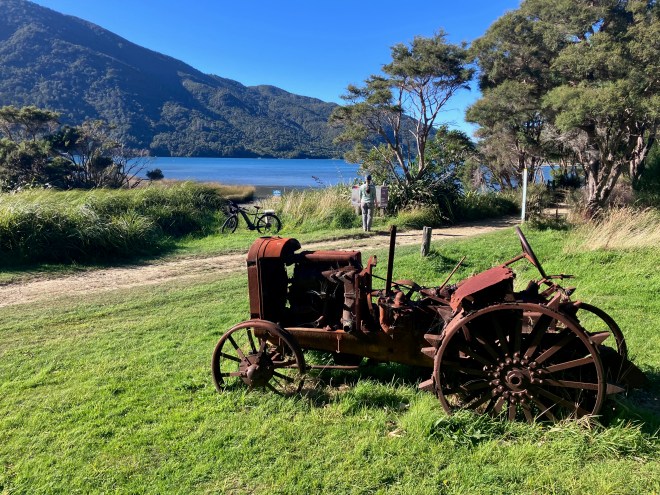
Everywhere we traveled in New Zealand, we found natural beauty, biodiversity, extraordinary flora and fauna, and visitors and residents alike taking advantage of the great outdoors. Because New Zealand was so remote historically, one thousand miles southeast of Australia, the plants and animals of these islands adapted to their environment in unique and specialized ways. It wasn’t always so, but the people who live here seem to now recognize the treasures they have. While New Zealand, like other colonized countries, has a long history of humans destroying native plants and animals, we also learned about many examples of individuals banding together to take whatever steps they could to protect it, restore it when necessary, and conserve it for future generations to see.
Little Blue Penguins
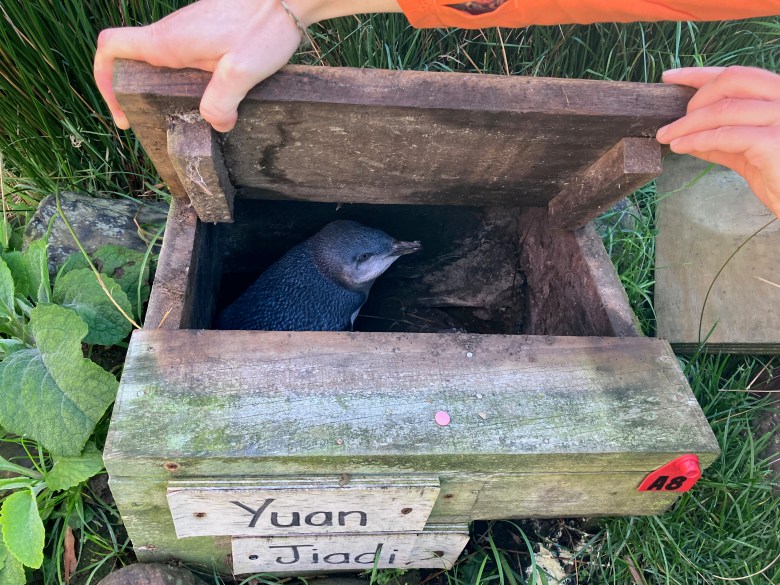
When we arrived for a kayak tour at Flea Bay, a remote inlet on the Banks Peninsula south of Christchurch, our guide led us through a curious flock of black-faced, wooly sheep. “Don’t leave anything unattended. These animals eat everything!” she warned us. Besides watching our step as we navigated around the droppings, we skirted what looked like a village of wooden fairy houses scattered across the farmland. These tiniest of tiny houses, each bearing a pair of names like “Pickle” and “Jar” or “Yuan” and “Jiadi”, were built by the owners of those voracious sheep—but they have nothing to do with raising livestock. Turns out there is a colony of critically endangered penguins who call the wee bay home and are truly only still alive because of the couple who own the sheep farm: the aptly named Helps.
This husband and wife team have dedicated their energy, time, resources, and land to protecting the White Flippered Little Blue penguins who feed and nest there. Fifty years ago, the Helps noticed that these cute little flightless birds were building nests on their land, but with invasive carnivorous mammals (mainly weasels, feral cats, and rats) prowling around, the penguins and their chicks did not stand a chance. So the Helps sprang into action to rid their property of vermin while also building tiny safe houses in which the birds could mate and raise their babies. Despite repeatedly asking the government to lend a hand and provide some funding, the Helps were told that the penguin population was already so decimated that the government could not bother putting resources towards protecting them. The Department of Conservation essentially gave up on this endangered species.
Undeterred, the couple created an eco-tourism business (which now included our kayak tour) to bring awareness to the plight of the penguins and to raise much-needed funds to further their conservation efforts. Their work has paid off: Since the couple started this project, they have trapped close to 10,000 predators and installed approximately 500 penguin houses. Flea Bay is now home to the largest little-penguin population on mainland New Zealand. They also created the Pohatu Marine Reserve, protecting the animals who call Flea Bay waters their home.
Royal Albatross
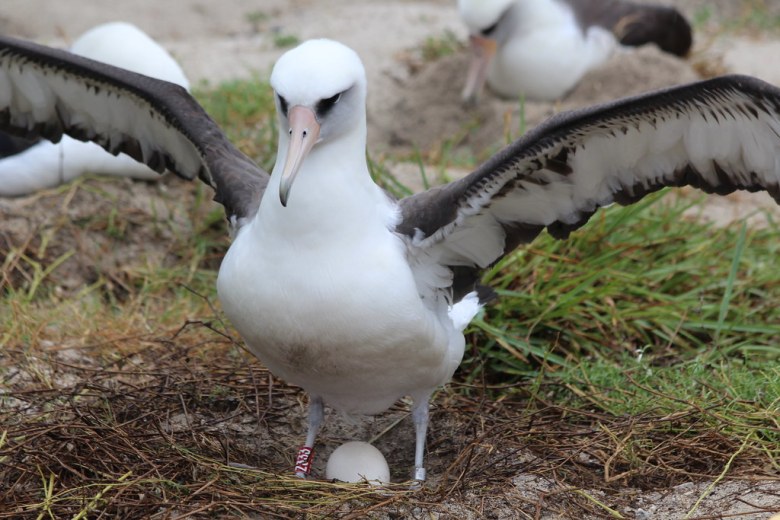
In addition to Little Blues, New Zealand is also home to the Royal albatross, whose wingspan can be nearly 12 feet—equal to the length of an adult tiger. These mighty birds spend about 85% of their lives at sea, landing every two years to reunite with their life partner, hatch an egg, feed the demanding chick, and return to the ocean skies. Unlike most birds, they have only one egg at a time. If something happens to that egg, they wait another two years before attempting a family again. We visited a small hill on the Otago Peninsula near the city of Dunedin on the wet, windy coast of the South Island that is the only place on Earth where Royal albatross and humans coexist. To be honest, I wasn’t all that interested to see the albatross. I figured they are basically just oversized seagulls, and I’ve seen plenty of those birds in my lifetime. But as soon as I spotted one soaring gracefully on an updraft just off shore, I understood the appeal. And I am not alone.
Lance Richdale, a mild-mannered science teacher who lived in the area in the 1930s, became interested in the birds after learning that, though persistent birds continued to nest on the peninsula, their eggs kept falling victim to overeager collectors and predators. And still the birds returned. In November 1936, Richdale spotted a male Albatross incubating a large white egg. Regrettably, that egg was also stolen by an intruder, but the theft sparked Richdale into action. He vowed to dedicate the following season to ensuring the safety of the nesting pairs, their fragile eggs, and any resulting chicks. Richdale successfully campaigned for a barrier to shield the colony from human interference and wandering dogs. When the birds arrived back from their travels, four nests were established. Two held eggs. One was destroyed by a vandal while Richdale was away, leaving a single egg. He remained vigilant, determined to see this sole egg hatch. Finally, in February 1938, a chick emerged. Richdale sat watch over the young bird through the cold, wet, windy winter, much like a doting parent, until it successfully fledged seven months later. Thanks to Lance Richdale and the attention he brought to these resilient birds, today there is a thriving colony of Royal albatross who call the Otago Peninsula home and a non-profit conservation trust to protect them. (Watch them on a live webcam at https://albatross.org.nz/).
Trekking Trails
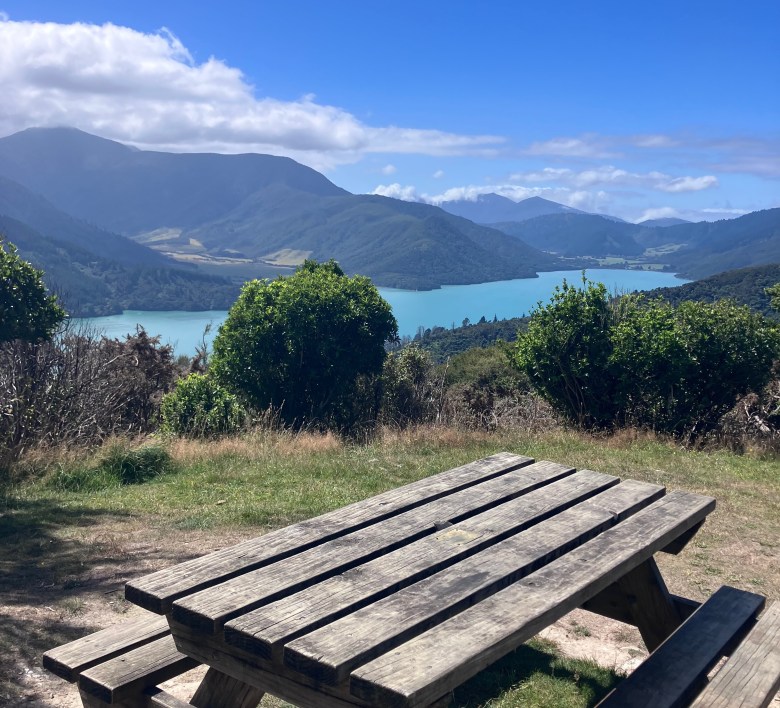
About as far from the albatross colony as one can get on the South Island, in the far northeast corner, the Queen Charlotte track snakes over, around, up and down the lushly forested hills overlooking the many bays and inlets of Marlborough Sound. The multi-day hike we did there ranks among my top outdoor adventures of all time. Like the albatross colony, this hiking route owes its existence to one man with a vision, some hand tools, and a lot of determination. During the 1980s, Rod Eatwell owned a piece of land along the Kenepuru ridge. One day an employee of the federal Land and Survey department approached Rod to suggest connecting some old bridle tracks that passed through his land and that of his neighbors in order to create a walking path. Rod jumped at the idea and immediately enlisted his kids and grandkids to take up shovels, machetes, and wheelbarrows to clear the tracks. Rod then inspired his neighbors to do the same and a path was established.
Like so many government projects that start out with best intentions and decent funding, this one’s money dried up before the trail was complete. Rod was undeterred and convinced his neighbors to form a cooperative with the goal of keeping the track clear and the land available for public use. Today, everyone who enjoys the Queen Charlotte Track pays a small use fee to help maintain it. There is even a steep spur track you can take to a 360 degree panoramic overview dedicated to Rod Eatwell, “grandfather” of the QCT.
Glowworm Caves
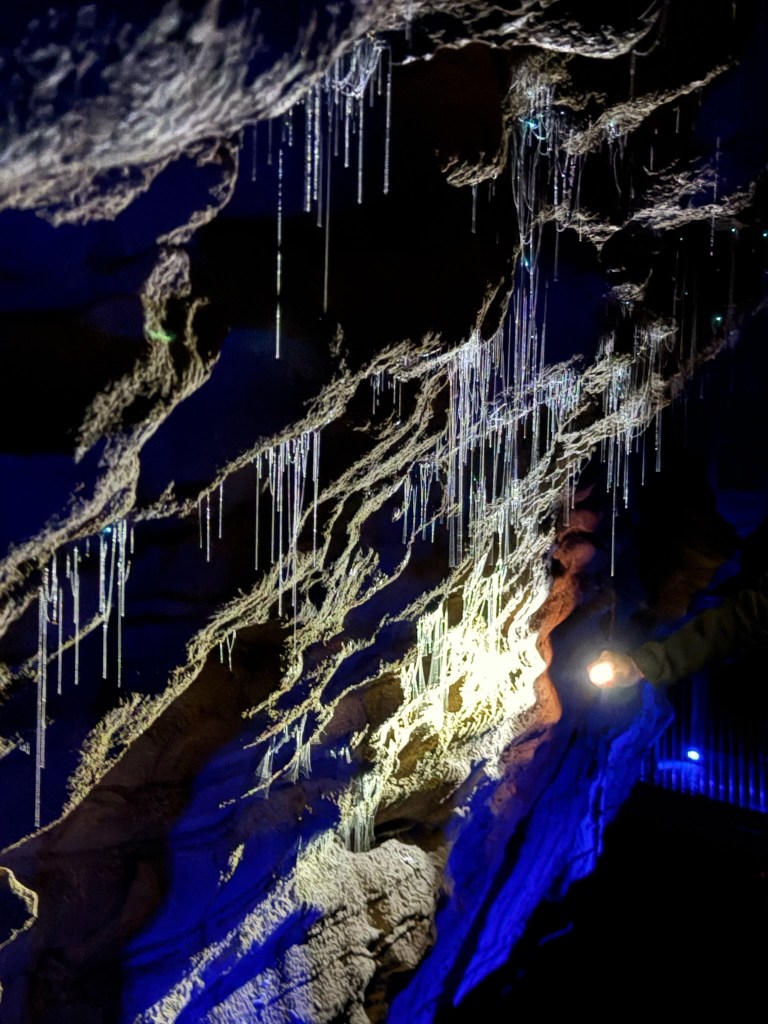
Glowworms are a phenomenon in New Zealand, and a major tourist attraction. Picture a blanket of twinkling stars covering the rocky ceiling of a damp cave, where humans gaze up as if at the night sky. But as one guide told us, they are actually the larvae of small flies that drop sticky threads dripping with their saliva to capture prey attracted to their bioluminescence. So tourists are basically paying to see gnat spit. Of course, we were also paying to see some incredible stalactites, stalagmites, shell fossils, and other limestone formations while walking hundreds of feet underground in Ruakuri Cave, part of a network of “glowworm caves” near Waitomo on the southwestern side of New Zealand’s North Island. While not the work of a lone hero, the fact that Ruakuri Cave is open to tourism at all is a tale of collaboration and preservation.
In 1904, a local landowner named James Holden began escorting paying customers into Ruakuri, which local Maori tribes had known about for centuries but never explored deeply. The caves were considered “tapu,” or sacred, and were occasionally used for burials. A mummified woman’s body was even found there at one point, so needless to say, nosy tourists were not exactly welcome there. Nevertheless, a tourism company took over the business and continued to offer expeditions inside the cave until 1988, when disputes over access, money, and land ownership came to a head and closed the gates. The Holden family sought compensation for the use of their land, under which much of the cave could be found, and Maori leaders wanted their tapu site respected. The Department of Conservation (DOC) also got involved, both to mediate the dispute and minimize the environmental impact of tourism in the cave. It took more than a decade of negotiations and planning, but in the end an agreement was reached that would build a new entrance to the cave away from the Maori burial grounds and create a new joint venture with fair compensation all around. It was the first successful mediation of a Maori land dispute under New Zealand’s 1990 Historic Places act, requiring extensive consultation with local leaders to preserve the site’s spiritual significance. And it enabled the Holden Family Trust, the DOC, and a new developer to reopen the site to the public, so people like us can appreciate its splendor and local people can benefit from tourism dollars.
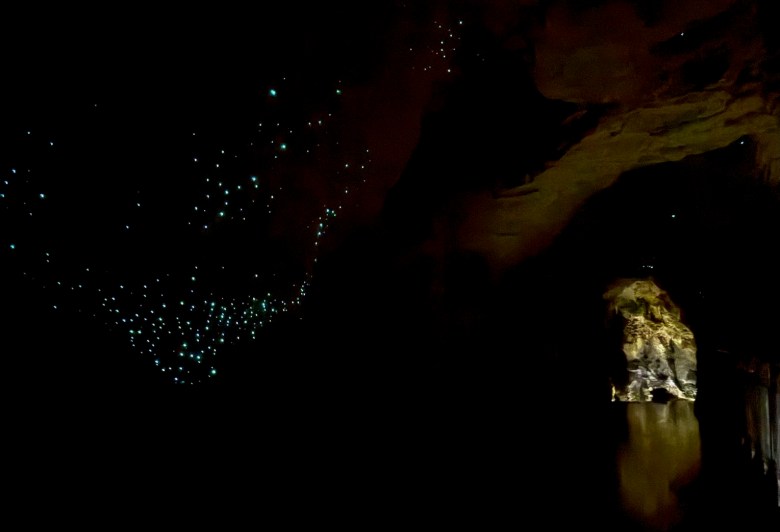
“Never doubt that a small group of thoughtful, committed citizens can change the world; indeed, it’s the only thing that ever has.” —Margaret Mead


Good morning, Rachel,I hope th
LikeLike
Rachel, multi thanks for these beautiful, inspiring and uplifting stories. It helps to have evidence that Margaret Mead’s words are true and fills me with hope.
LikeLike