“Sweet as! Trampin’ in the wops are ya? Need a bach when yer done?”
For the first time during our five years of travels, the country we chose has English as its predominant language. Easy, right? Little did we know how much we would have to learn. Take that phrase at the top. When we first got to New Zealand, it would have baffled us as much as a sentence in another language. After a crash course in living with Kiwi slang (in this case, Kiwi means the people, not the national bird or the fruit, and it is decidedly NOT derogatory), we can tell you what it means: “Cool! Awesome! Going for a nice long hike, way out in the countryside? Do you need a small house to stay in when you get back?”
“Sweet as” is a particularly common expression that we came to love—and it’s not to be misheard as a compliment of one’s derriere. It likely started as an abbreviated version of a longer expression, like “sweet as candy” or whatever your preferred treat might be. But now you hear it everywhere, with the end of the simile dropped, meaning just “cool” or “awesome” or “great,” and I doubt anyone would say it sounds like it’s missing something at the end.
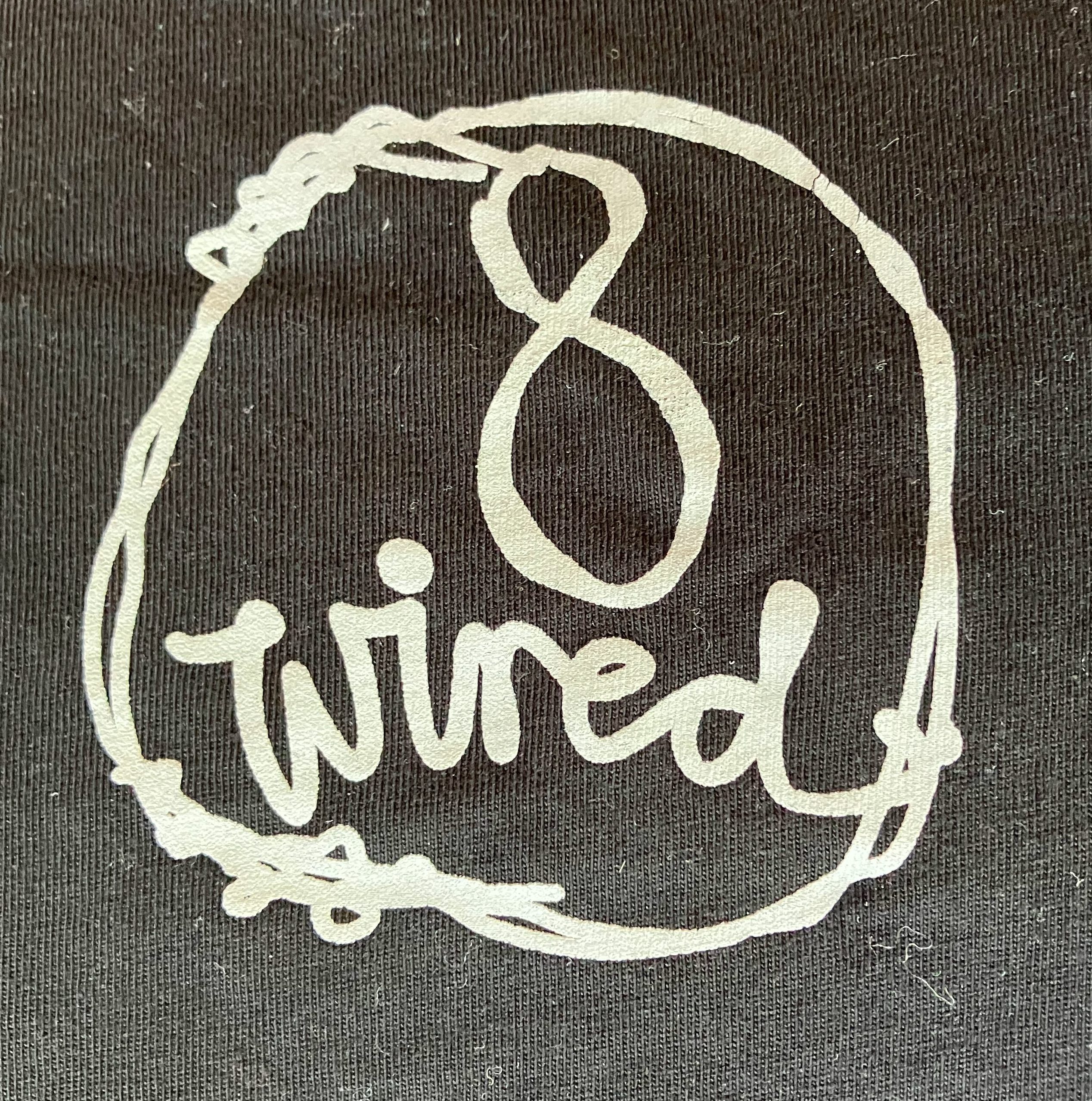
Another of my favorites is “8-wired.” And it’s not my favorite because it’s the name of a delicious craft beer, I swear. Or because it’s on the only t-shirt I brought home from from New Zealand. To 8-wire something is to solve problems using the materials available to you in the moment, like we might say “jury-rig” (a horrible expression that sounds more criminal than making the best of a challenge) or “MacGyver” (based on a TV show from the 1980s). In New Zealand, farmers have long used wire with a gauge or thickness of “8” to mend fences and fix just about anything, so it has become a symbol of the island nation’s resourcefulness and ingenuity. We have plenty of resourceful people in the States, but we need a more ingenious phrase than something adopted from a TV character. Or maybe that’s just appropriate.
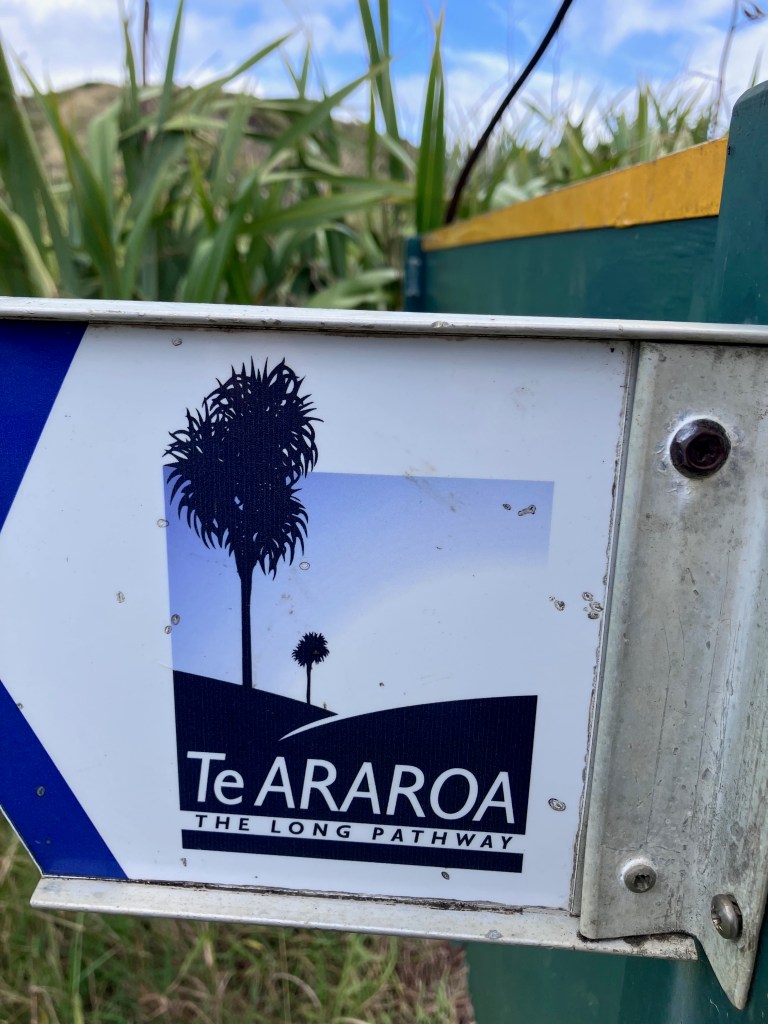
It’s not just slang that makes Kiwi English unique – it’s also the seamless integration of native Maori words with English. For example, Aotearoa is the Maori name for New Zealand, meaning the land of the long white cloud. You’ll often see or hear it used interchangeably or along with New Zealand, or “Aotearoa/New Zealand.” Likewise, Te Araroa is the Maori word for “the long pathway” and it is now the name of a long trail like the Appalachian Trail, running the length of both islands. Add expressions that are common in British English (like “boot” for the trunk of a car) and some that are uniquely New Zealand (like “lolly” for any kind of candy) and you have a musical variety of English that reflects New Zealanders’ dry humor, love of shortening long words, and overall cultural stew.
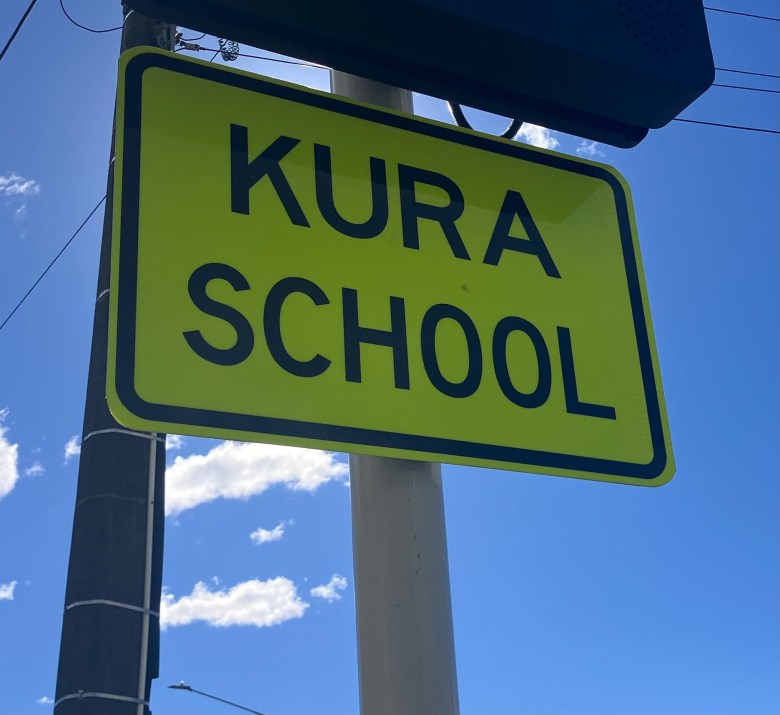
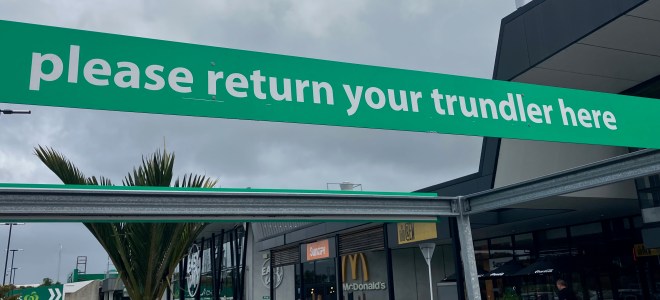
There are also lots of road signs in New Zealand that you just won’t find in the U.S.—or anywhere else that I’ve been. Some of these can be confusing if you don’t know any of the Maori language. I once wondered why so many schools were named the Kura School, for example, but it turns out Kura is not the name of one school, but the Maori word for any school. Other signs reflect the natural peculiarities of the country, like having lots of eels, sheep, and penguins. And some signs, well, they just made me laugh. So for your entertainment and edification, here are two slide shows of some of my favorite signs, along with a glossary of the terms that we heard most and were new to us.
Cheers, mates!
Slide Show #1: click on arrows to advance
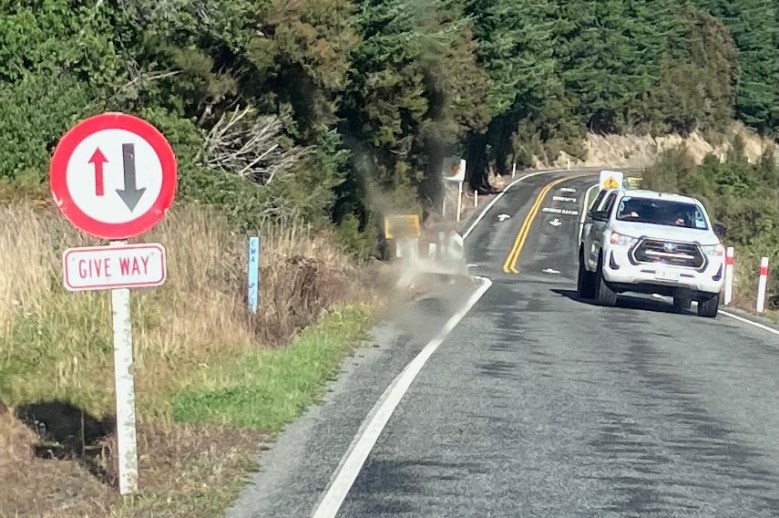
This sign indicates that a one-lane bridge is coming up and cars coming at you have the right of way. Drivers must stop and wait for the bridge to clear before proceeding. 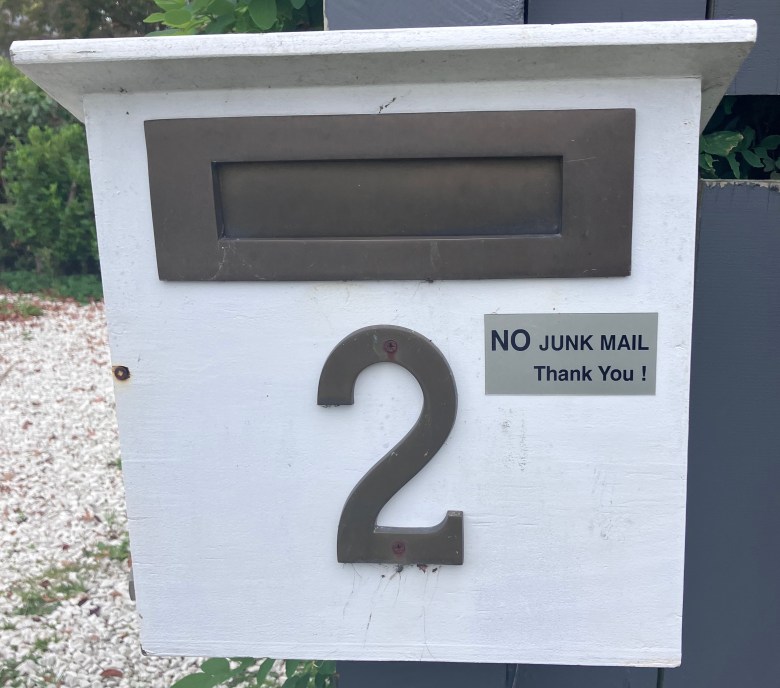
Nearly every mailbox we saw has a “No Junk Mail” sign on it (this one is New Zealand nice). I don’t know who decides which pieces of mail are junk but apparently people have the right to stop receiving it! 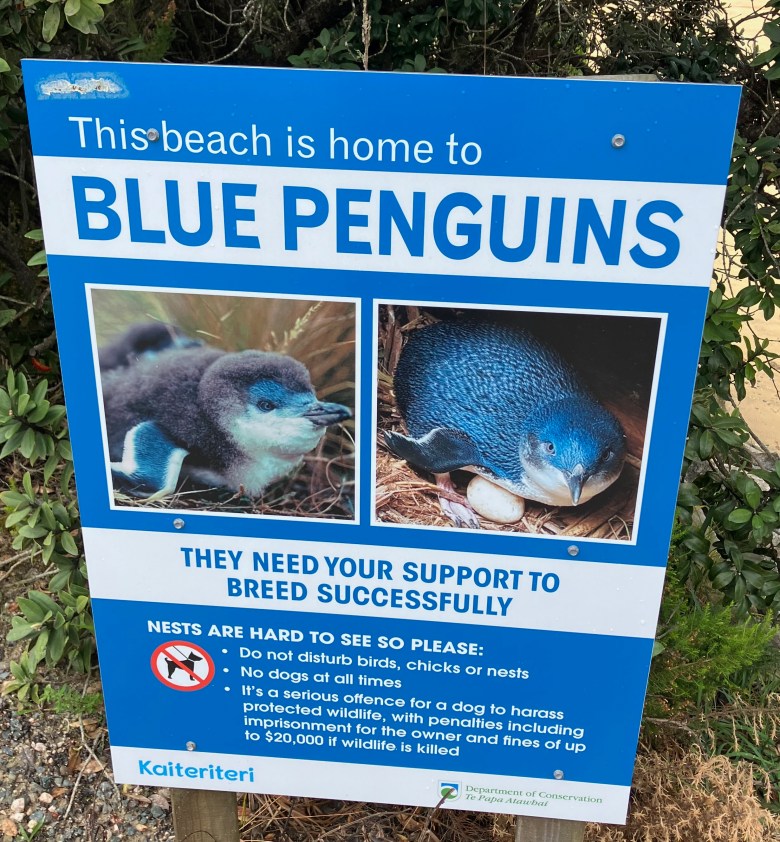
Little Blue Penguins are hard to spot but the signs to watch out for them are everywhere along the coast. 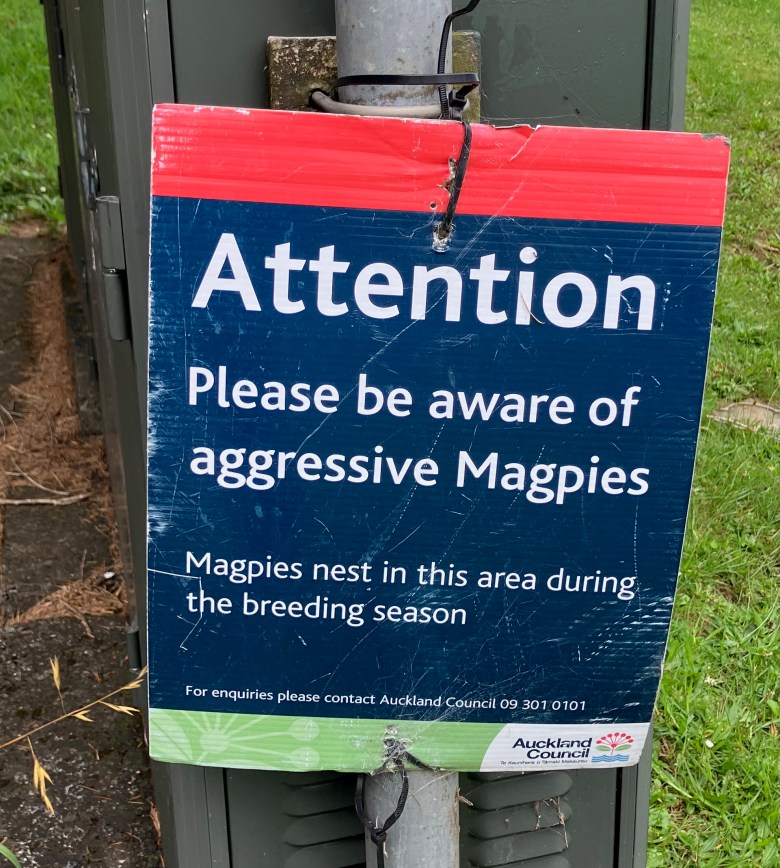
If aggressive magpies are the most dangerous animal I need to be aware of in New Zealand, I think I’ll be okay. 
Seriously? Tame eels, like in a petting zoo? 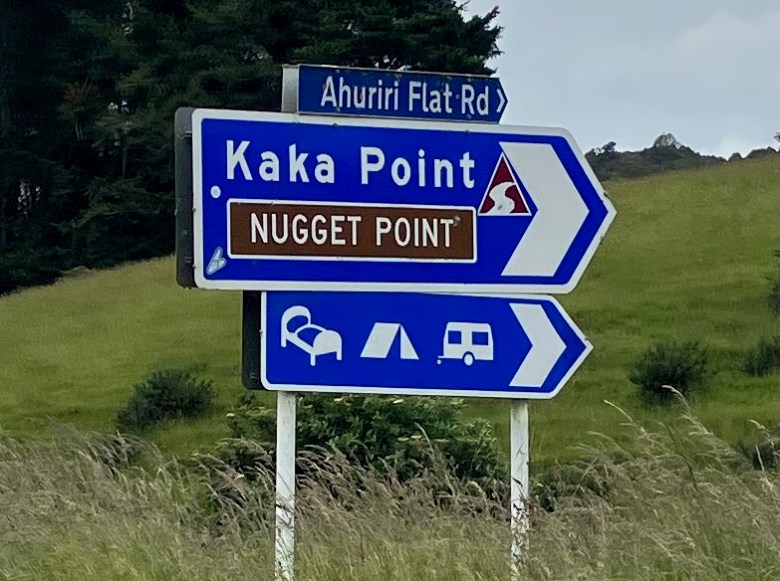
Okay, sometimes the use of native place names sounds scatalogically funny to us Yanks. 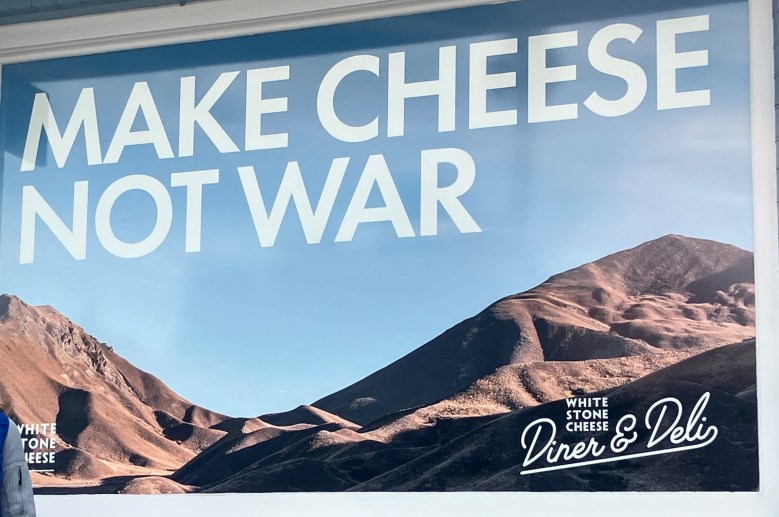
This billboard for a dairy farm/cheesemaker captures the pacifist mindset of post-WW II New Zealand. 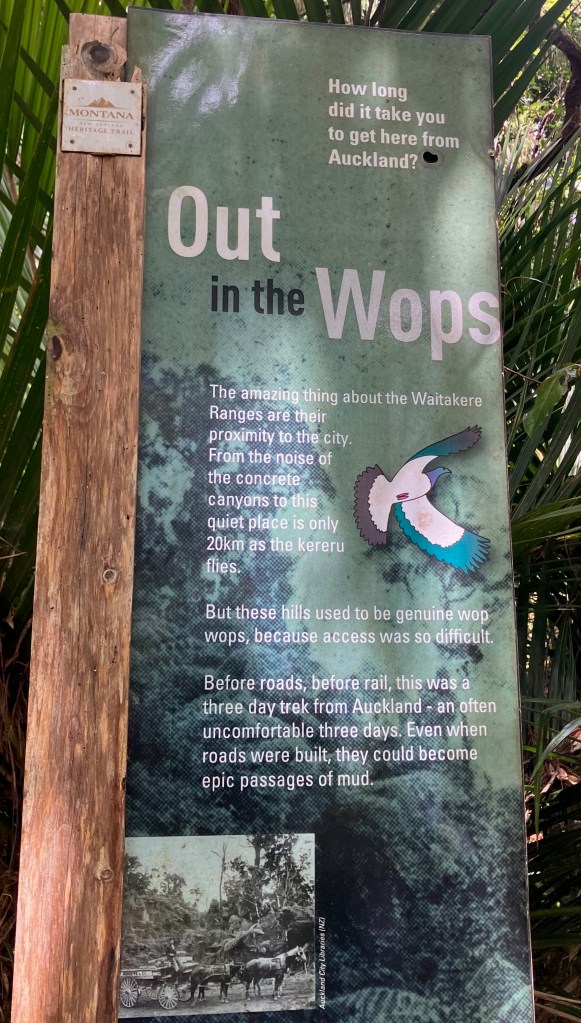
“Out in the wops” is not a slur, but an old expression for being in the middle of nowhere, like the boonies. This was an interpretive sign in a national park. 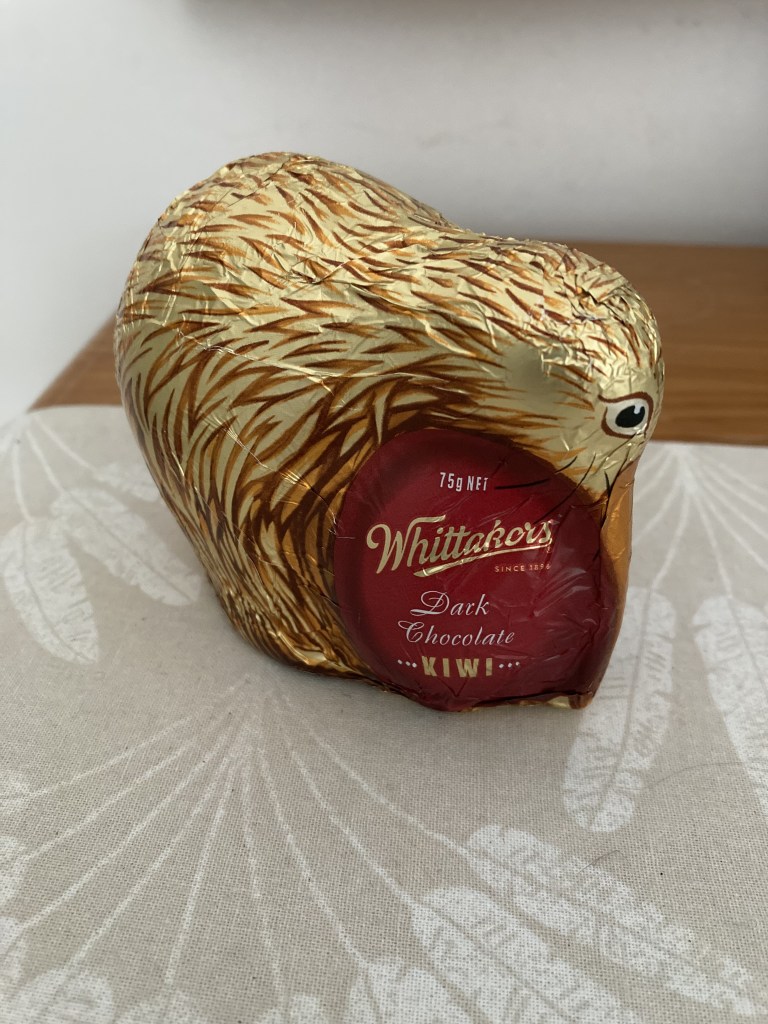
Chocolate kiwi birds for Easter, anyone?
Kiwi Slang: A Selected Glossary
Bach – holiday home
Boot – car trunk
Bush – New Zealand’s native forest
Chemist – pharmacy, drugstore
Chocolate fish – a common treat: chocolate-covered marshmallow in the shape of a fish
Dairy – corner convenience store
Flat white – the equivalent of a latte, but stronger and with more milk
Feijoa – a popular backyard tree and its edible fruit
Footie – a game of rugby
Hokey pokey – honeycomb often found in ice cream and chocolate bars
Jandals – sandals, flip-flops
Lolly – any kind of candy
Op shops – thrift stores
Pakeha – non-Maori person
Pressie – a present or gift
Slice – a piece of a sweet, dense cake in various flavors (ginger was our favorite)
Sweet-as! – Cool! Awesome!
Toastie – Toasted sandwich
Track – Hiking trail
Tramping – Hiking
Wops or Wop-wops – Remote or rural area, the boonies
Yeah, nah – A soft way of saying no. Often used with “You’re all good” to mean “I acknowledge your question and, no, you don’t need to do anything else.”
You’re all good – It’s okay, thanks
Zed – the letter “Z”
Slide Show #2: click on arrows to advance
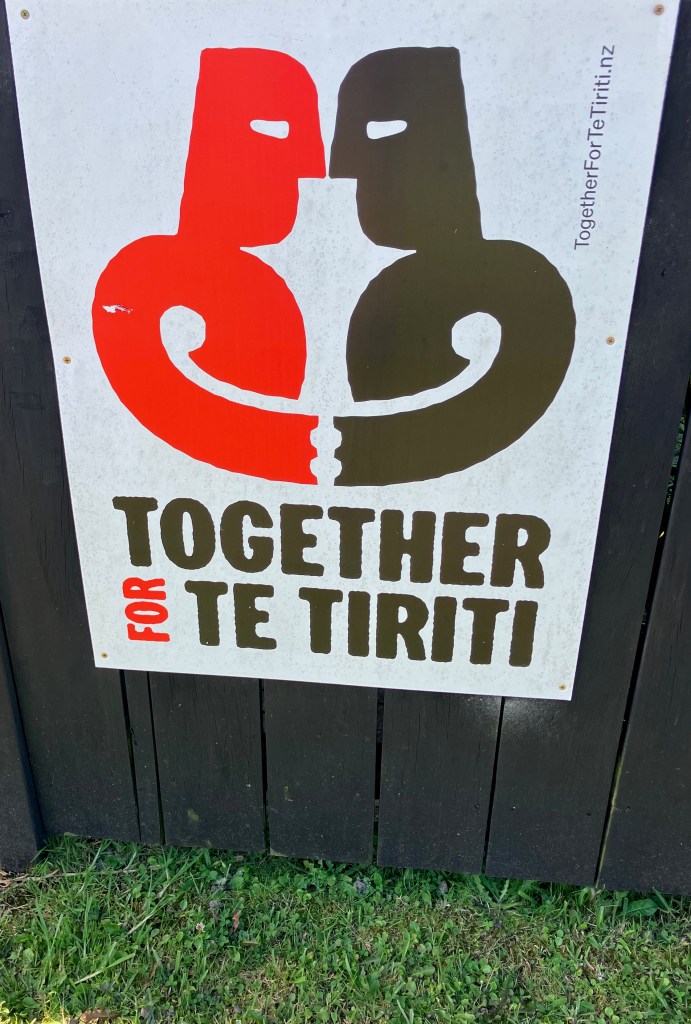
Te Tiriti is Maori for The Treaty, referring to the Treaty of Waitangi, the agreement that created a nation where Maori and English could live together. What happened after that is not so idyllic, but this sign is an attempt to recapture the original spirit of living together in peace. 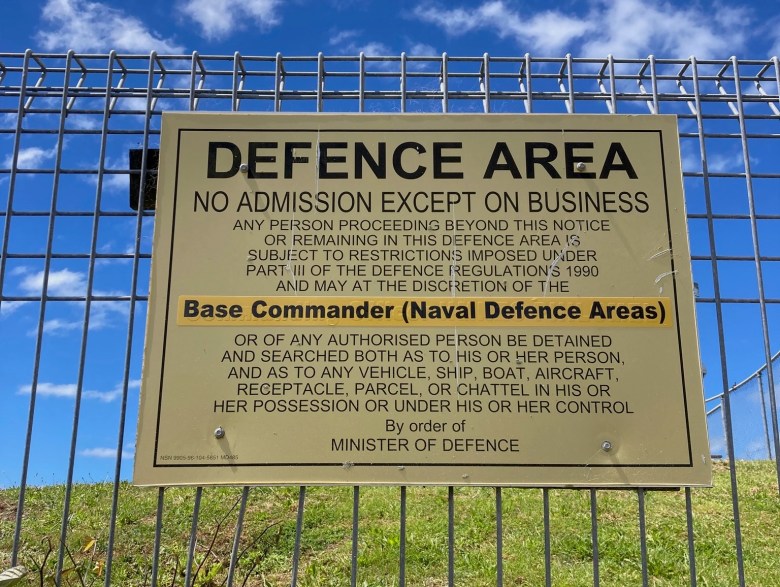
It’s de Fence of Defence! C’mon – posting the British spelling of defense ON a fence is a pun waiting to be shared. 
Huh? (Turns out “manchester” is a Kiwi/Aussie term for “bedding”.) 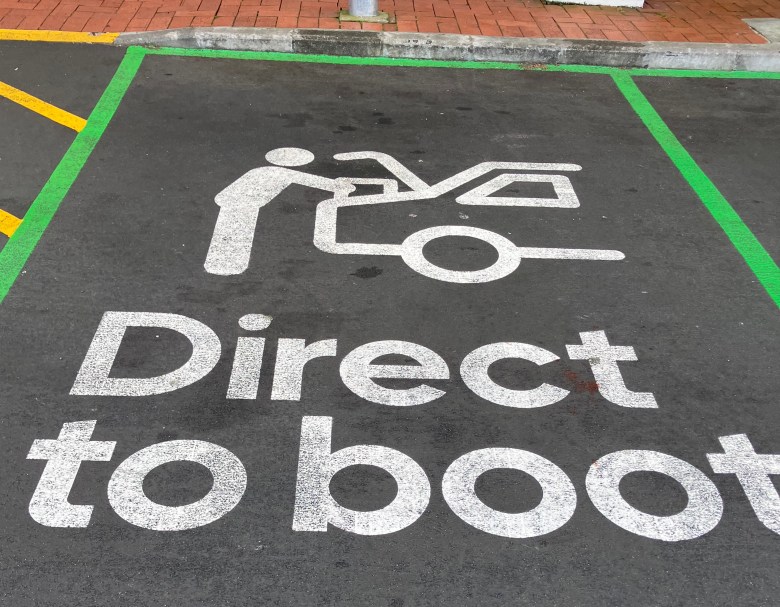
The picture gives away the meaning of course, but “Direct to boot” is just not something you’d see in the States. 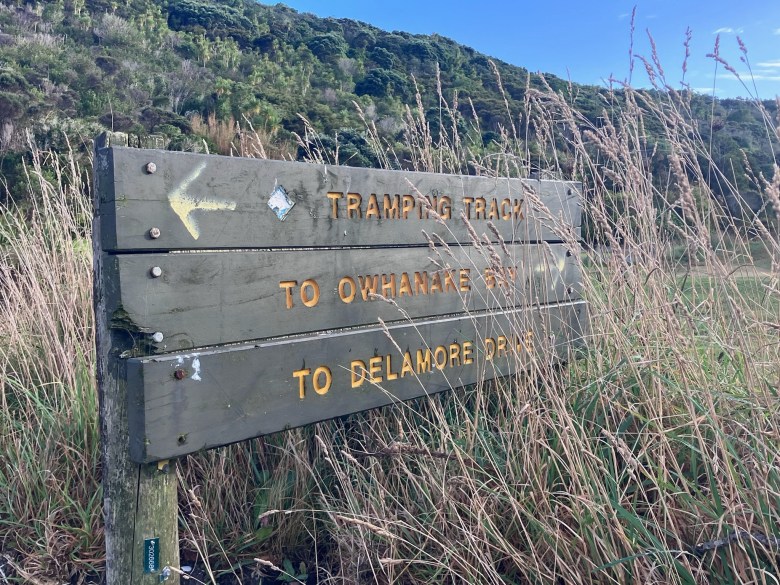
Tramping Track = Hiking Trail 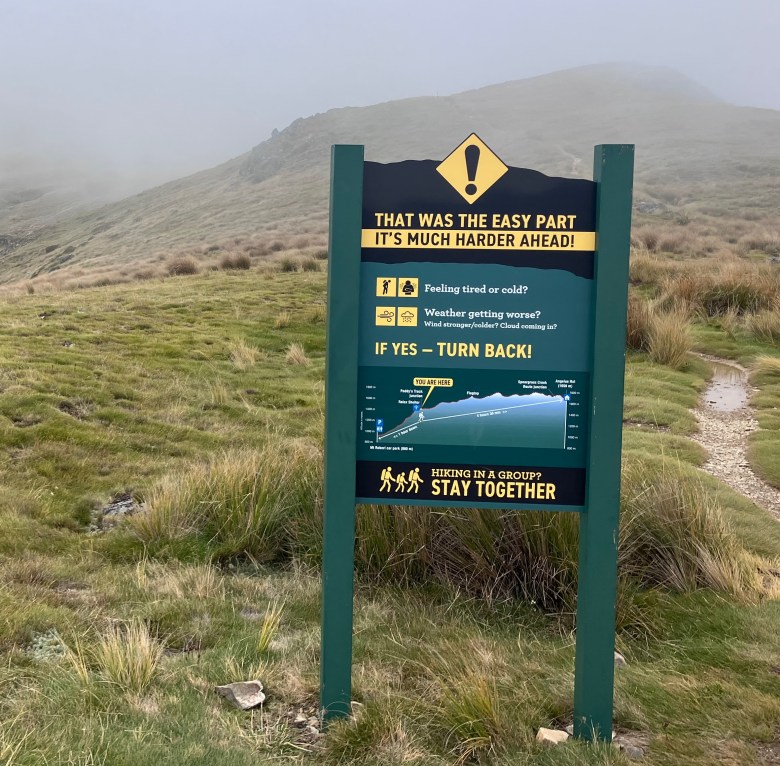
Once you’re on the track, there are often lots of signs suggesting that trampers who are not prepared should turn back! 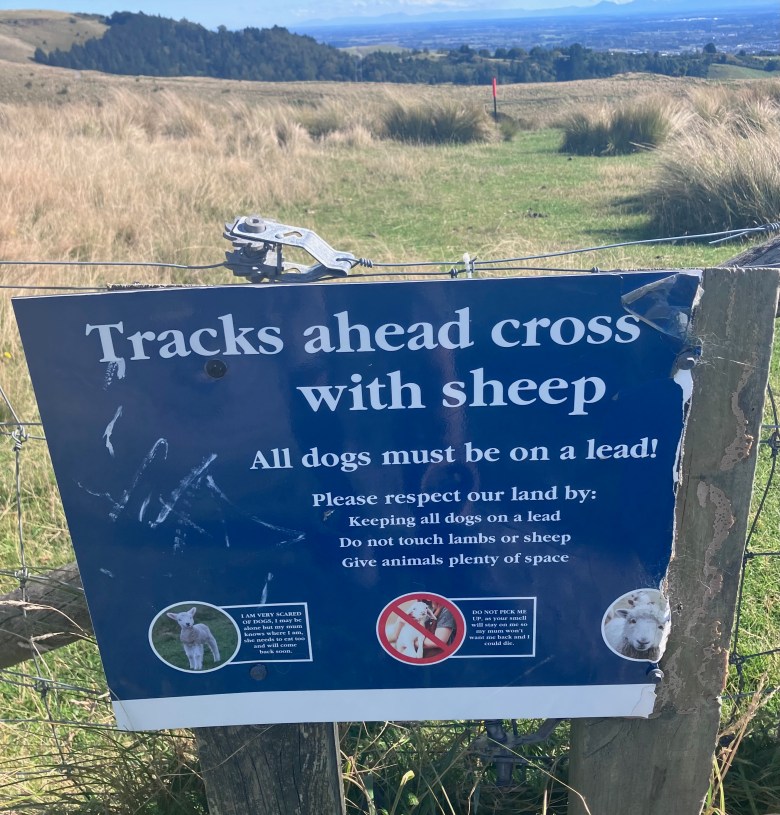
One reason you might turn back is if you don’t want to cross the sheep. 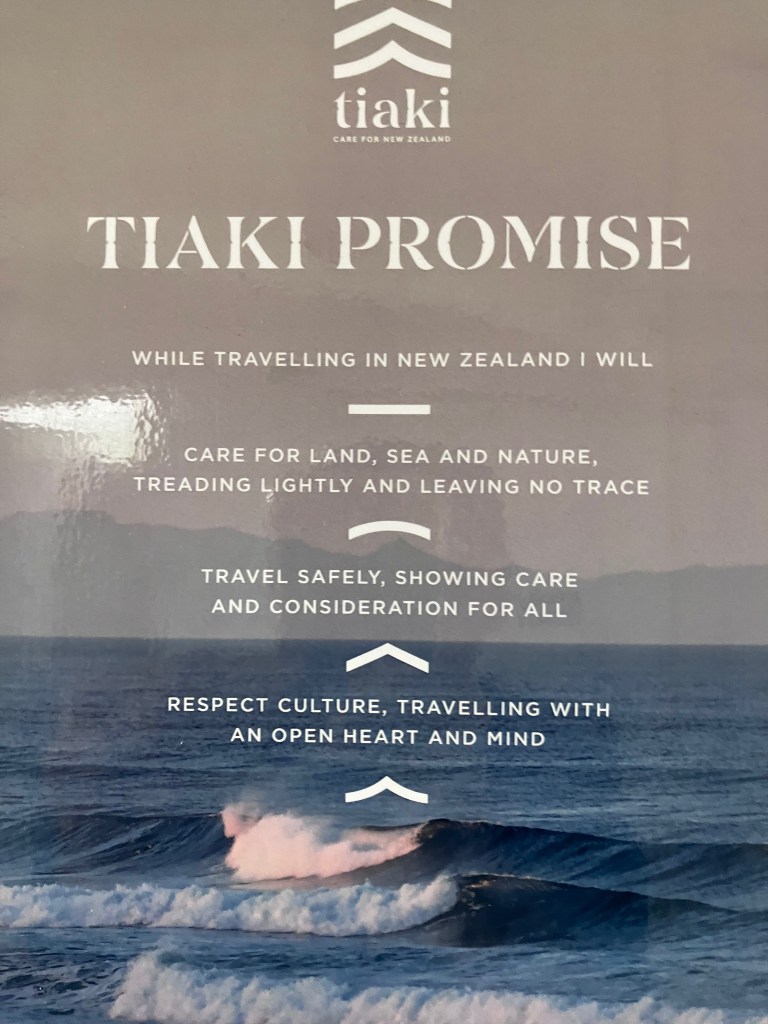
Tiaki Promise signs are posted in most recreation areas frequented by tourists. I wish we could ask all travelers to promise these things wherever they go. 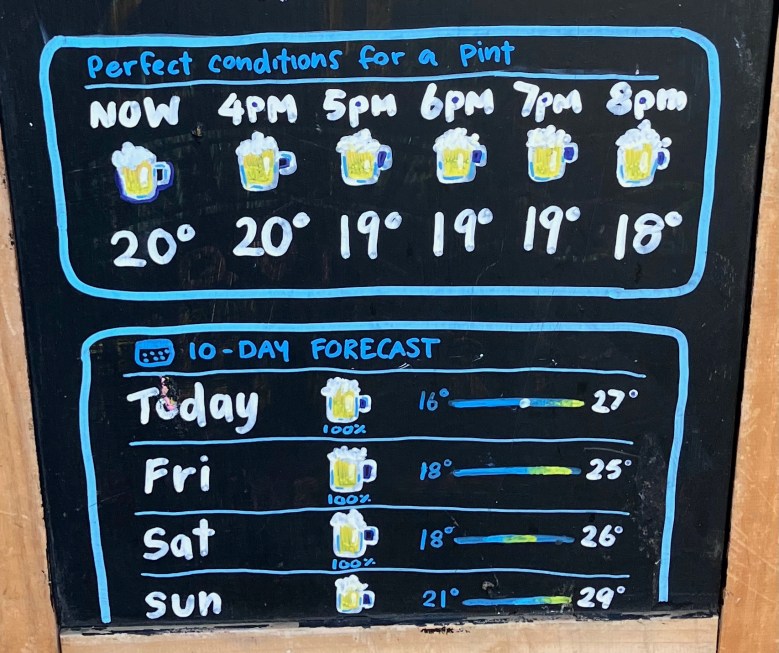
Pretty much captures the beer culture mindset in New Zealand—it’s always perfect conditions for a pint!


This was a fun romp! Sweet-as! Multi thanks.
LikeLike