It’s possible I have eaten more new-to-me foods in my first 12 days in Japan than in the previous 12 years combined. I admit I have not loved every bite equally—and some bites I never need to have again—but I am loving the adventure of it all.
While gaijin (foreigners) typically recognize four seasons in the year, Japanese divide those into 72 microseasons, which capture subtle changes and acknowledge which ingredients are perfectly in season during each five-day period. This has led to the concepts of shun, meaning “eating fresh and local”, kaiseki, which is a seasonally based tasting menu, and omakase, literally “I will leave it up to you”, in which the diner is treated to a meal of a dozen or more small dishes prepared at the whim of the chef and typically made of the freshest ingredients.
Japan spent more than 200 years, from 1633 to 1854, in self-imposed isolation from the rest of the world. They call this period sakoku, meaning “closed country” and it had a huge impact on their culture that reverberates to this day. While you will now find Starbucks, KFC, and McDonald’s in the big cities, and hamburgers and pizza are becoming common fare for locals, for the most part Japanese cuisine has retained its unique flavors, textures, and ingredients. We may not always be able to appreciate (or even identify) them but they are always interesting!
Crunchy, slimy, chewy, mushy
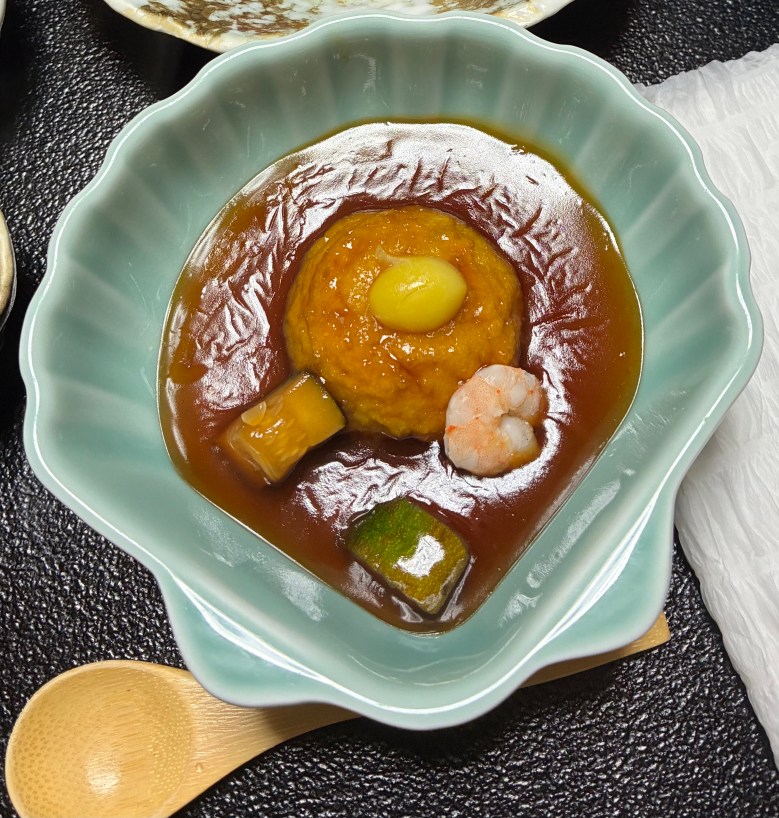
Japanese food is at least 50% about the texture. Crunchy pickles are a must-have at every meal and they seem to be able to pickle and ferment just about anything. We’ve had pickled mustard greens (very bitter), radishes, persimmons, winter melons, soy beans, cabbage, and many things we have not been able to identify. Dessert is usually not especially sweet, contains red bean paste instead of chocolate, and is typically gelatinous. So you might get something that looks like pudding or flan but tastes like salted tofu with a molasses sauce. Sometimes you have to work to catch a slippery morsel in your chopsticks and, if you can manage that trick, once it’s in your mouth it will bypass your teeth and head directly down your throat before you can detect its flavor. Perhaps that is for the best…
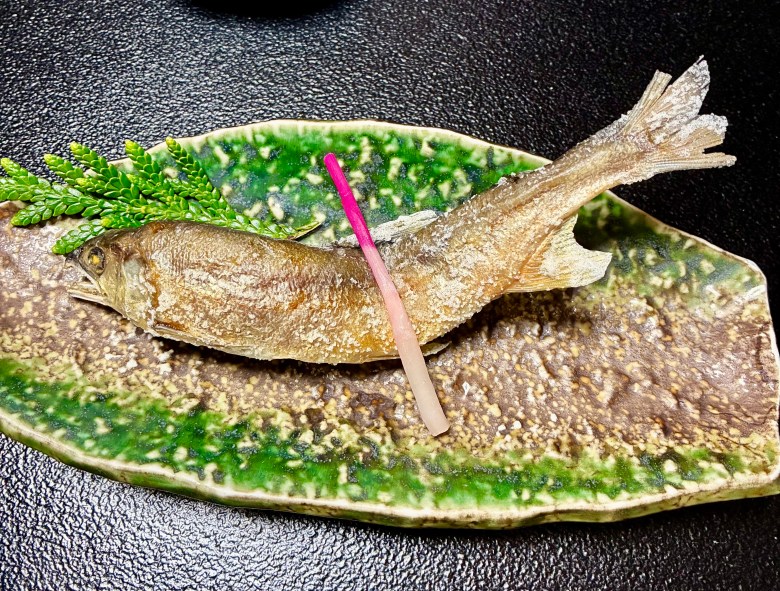
In one ryokan we were each presented with a whole, salted, eel-shaped fish (ayu) at every meal (yes, including breakfast!) and were told to just pick it up by the head and tail and bite into it—picture corn on the cob with eyes, but you eat the cob too. Well, this ticked all the texture boxes. It was equal parts crunchy (the bones), tough (the salted skin), mushy (the flesh), and slimy (I don’t want to think about it). It was one of the few items we just found unpalatable. We were praying for a hungry cat to pass through at just the right moment, but no luck there.
What passes for food
When we travel we always keep an open mind to new experiences, and that includes toward food. This is being put to the test in Japan. It isn’t just the textures that are challenging us. There are ingredients and flavors that are, shall we say, interesting. Soy beans are used in a wide variety of ways. One is a paste known as miso, which is made when soy is fermented and mixed with salt and a particular kind of mold. For Westerners, miso is most familiar as a base for soup but here you might also find a lump of the paste on a fresh chestnut leaf, grilling over a small burner and served with rice. Definitely a salt bomb. At most meals, including breakfast, we’ve been served a bowl of miso soup. We have had about a dozen bowls and each one has been distinctly different from the others. Ingredients we have found in our soup include tofu, mushrooms, seaweed, unidentified vegetables, and tiny shrimp, to name just a few.
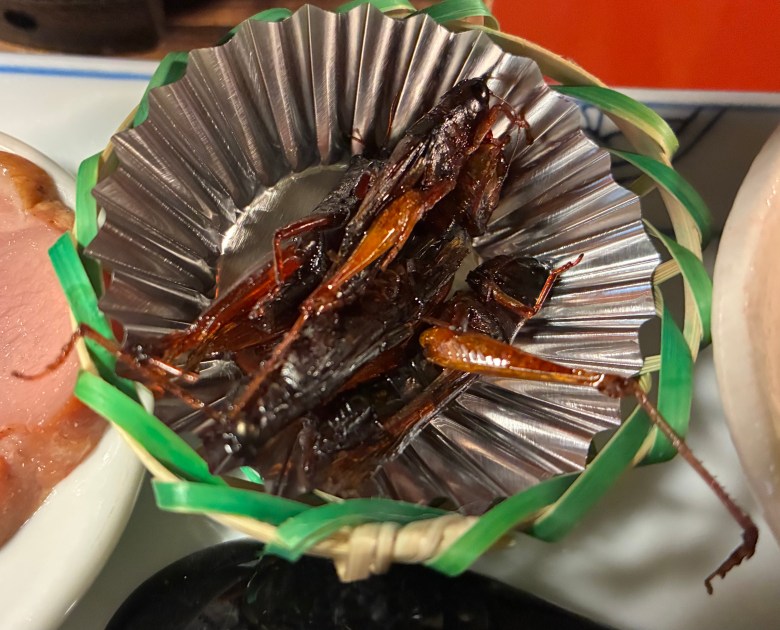
At one village ryokan (inn), we were presented with a tray of small dishes that included, to our great surprise, fried crickets (yaki kogori) with a soy glaze and horse meat sashimi (basashi). The crickets were unexpectedly tasty. The horse meat sashimi was actually tender and edible, surprisingly, since we had last encountered raw horsemeat in New Zealand as an expensive food for dogs with digestive issues. Fun fact: grasshoppers are kosher, but crickets aren’t. It has something to do with the number and purpose of the legs—4 for walking, 2 for jumping?—but I suggest you fact check this if you keep kosher and are presented with either insect. On the other hand, horse meat is most certainly not kosher. Full stop.
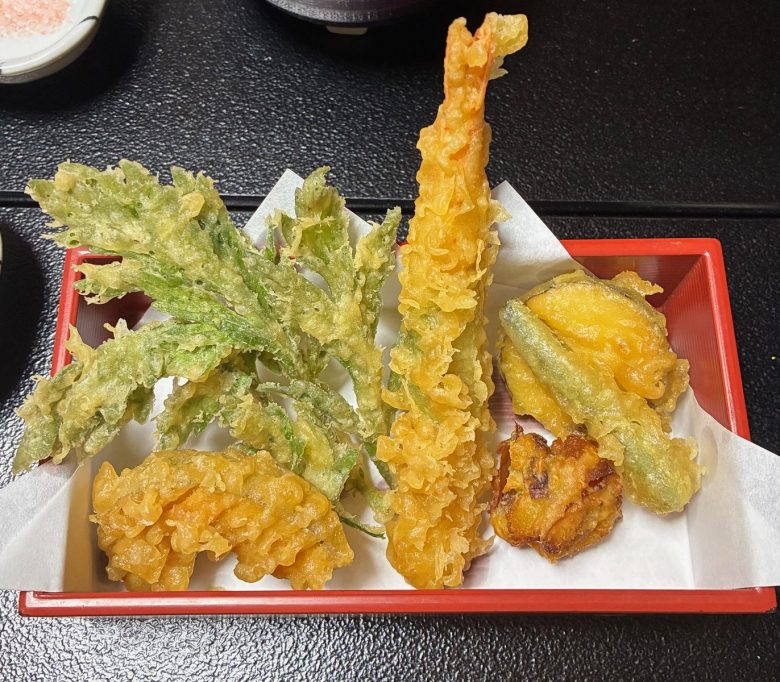
The tempura (batter-fried foods) have been a delight. We have been served beautiful plates of tempura vegetables including lotus and taro roots, sweet potato, eggplant, green beans, and my new favorite, mugwort leaves (yomogi). All had batter that was so light it vanished on our tongues, though sometimes they serve the tempura in a bowl of soup. This immediately saturates it, causing it to feel like chewing on wet cotton balls, so we’re gonna stick with the dry, freshly fried version.
Fish for breakfast
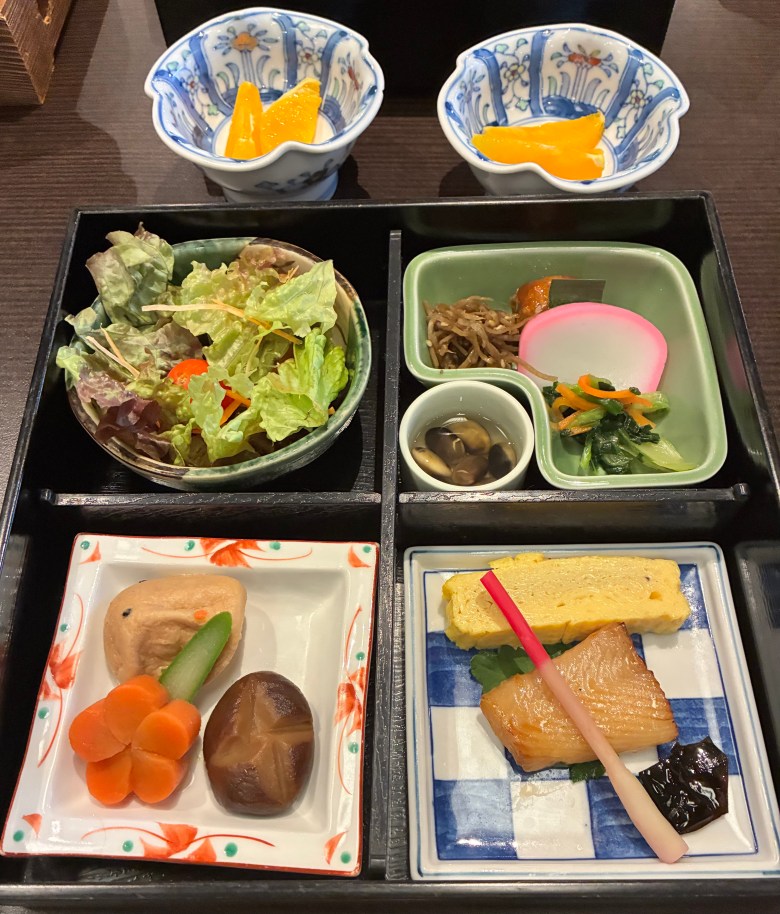
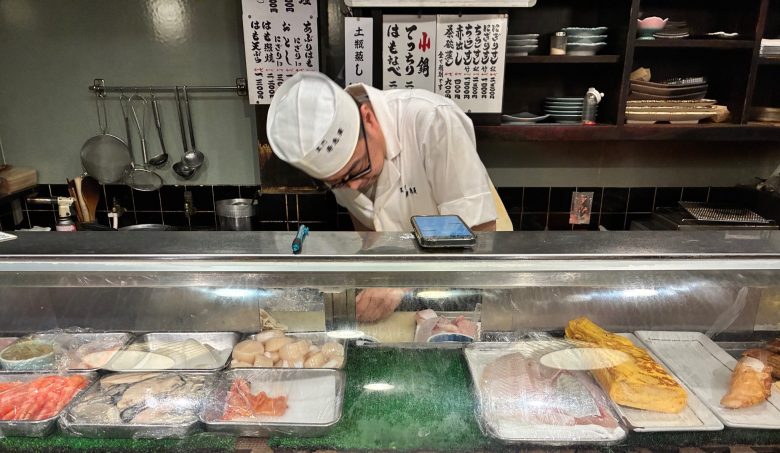
In an island nation, where you are never more than about 100 miles from the sea, fish and seafood feature on pretty much every menu and at every meal. Raw seafood, thinly sliced (sashimi), is typically served alongside pickles. We love having such easy access to delicious sashimi and sushi, given that it can be hard to find in Central Maine, but somehow, seeing fish on the plate in the morning was not as appetizing. One omakase breakfast at an inn came with a small, cold, plain omelet and alongside it a piece of dried, salted fish. In the adjacent dish was an assortment of pickled vegetables with, you guessed it, a slice of fish cake. I was happy to see a small green salad, having been craving raw veggies, but wouldn’t you know it, they snuck in some rings of soy-soaked squid, just to keep things surprising. Since then, we’ve been quite happy to stock our refrigerator (when we have one) with yogurt, fruit, and granola for breakfast!
Veni, vidi, vending…and other ways to get food
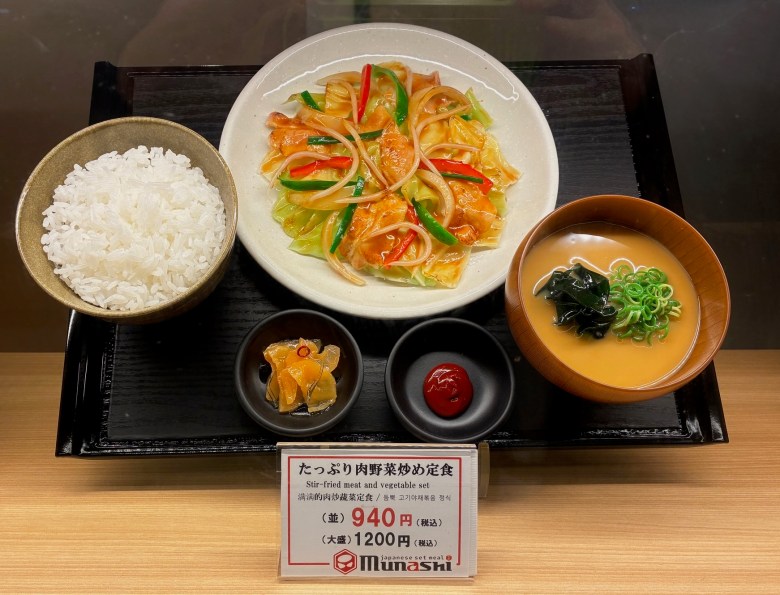
In Japan, it seems, you are never far from your next bite. Restaurants the size of small U-Hauls line alleyways, one after the next, most seating only ten people shoulder to shoulder at a counter and with limited menu options. And they are often filled, with more people waiting to get inside. Many menus have pictures on them (convenient for tourists to point at something rather than figure out the language) as well as an abundance of plastic food models like the photo above that purport to look like the dishes served inside. We’ve also encountered several places that have a QR code you can scan with your phone (or a touch-screen machine as you walk in the door) with an English menu option, and that is how you order. There’s no wait staff, and you can hear the “ping” in the kitchen after you place your order.
Take-away food can be purchased at any convenience store (7-Elevens being the most prevalent example) and it is not anything like gas station food in the US. There are no day-old, steamed hot dogs or stale doughnuts, for example. No. Japanese konbini (convenience stores) carry a wide array of fresh, delicious, inexpensive meals and snacks to go, such as onigiri, which are palm-size rice balls filled with something yummy and often wrapped in nori seaweed. Maybe that doesn’t sound good to you but trust me, they are delicious.
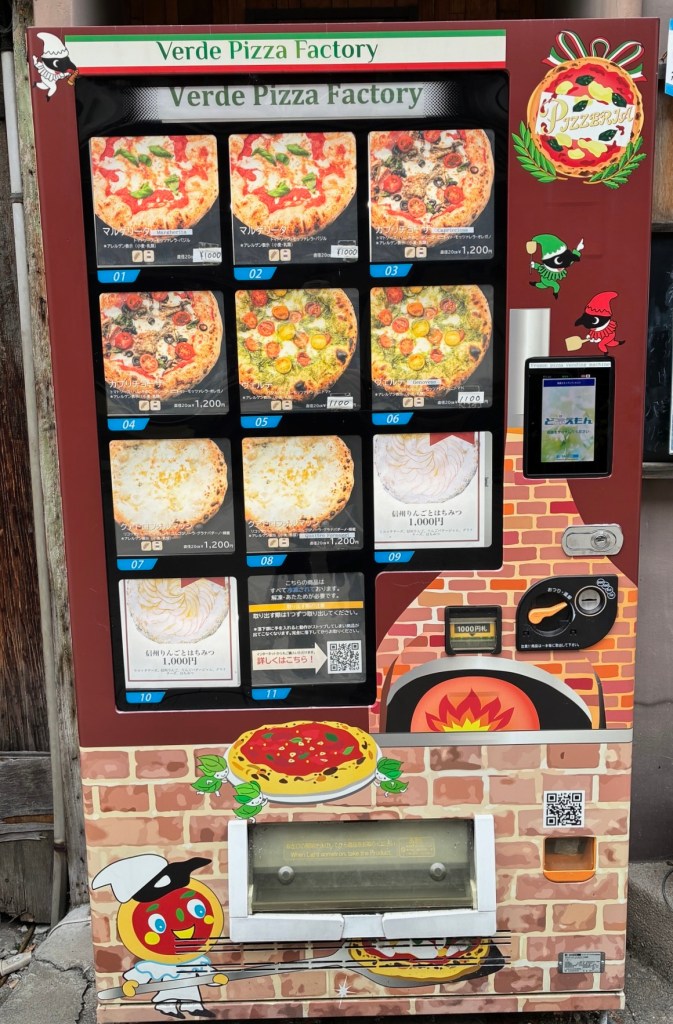
If you don’t feel like going into a store or restaurant for some food, don’t worry, you can easily feed yourself by using the ubiquitous vending machines. Honestly they are everywhere. I have heard that there are even dozens of vending machines at the top of sacred Mt. Fuji. And they don’t just have candy bars and soda. We have seen hot pizza, ice cream, onigiri, and even entire hot udon noodle soup bowls for sale.
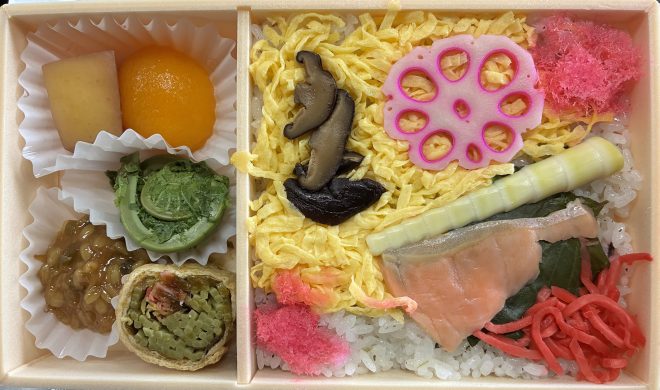
A popular lunch for school kids, office workers and people traveling is a bento box. Basically it is a complete meal with separate sections, much like our T.V. dinners of the past, but with much tastier food (see top photo for an example). We attended a traditional Japanese kabuki play, and between each act the people around us pulled out their beautifully wrapped bento boxes and proceeded to eat full meals of noodles, fish, vegetables, and salad.
The one catch to all this take-away food is that it generates a lot of trash, and Japan no longer has public trash bins thanks in part to a 1995 act of terrorism in which sarin gas was placed in Tokyo’s subway trash cans. Despite the fact that there are no bins, the streets are incredibly clean. Everyone has learned to just carry their trash home with them.
When in Rome…er, Kyoto
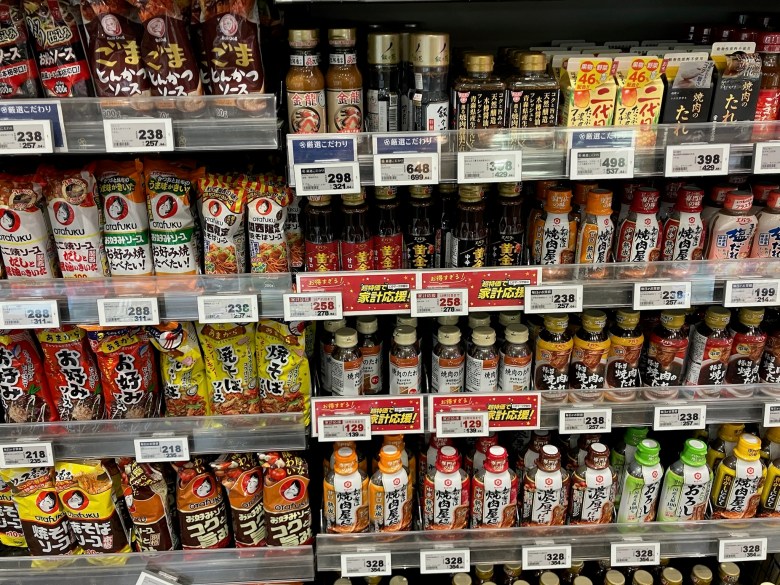
We are now in Kyoto for a few weeks in an apartment with a tiny kitchen. This means we can go grocery shopping, which always gives us a different insight into a country’s culture. We rely heavily on Google Translate and a great Japanese app called Payke to read labels, so that we can confirm that what we are putting into our grocery basket is in fact soy sauce and not shoe polish. Many markets have amazing prepared foods, including fresh, delicious sushi, for just a few dollars. Typically we enjoy making meals for ourselves when we have the option, but when we checked into our current place we realized there was no way to cook. Our host seemed surprised when we asked for a hot plate and a frying pan. I guess people don’t come to Kyoto to make their own dinner, since everywhere you look, delicious, unusual, and fresh food is available. And we, too, have found ourselves eating out most of the time because, well, we’re only in Kyoto once and the food is just so darn delicious and different from our usual cook-at-home fare.
As the Japanese micro-seasons unfold, the days are getting noticeably shorter and the maple leaves are just starting to turn from green to red. (We’ve heard that even the maple leaves, momiji, are eaten here, as tempura chips!) We are seeing the last of late summer foods such as mushrooms and ayu (remember that salted fish we couldn’t stomach?), and saying hello to the tastes of autumn, what Japanese people refer to as shokuyoku no aki or “the season of appetite” since it is harvest time and food is abundant. We are learning how to eat persimmons (like a cross between an apple and a peach) which are now prevalent in the markets and are growing everywhere we look. We are seeing lots of chestnuts, pumpkins, sweet potatoes, daikon root, and salmon, to list just a few fall foods. In fact, we recently bought a “two-hour baked” sweet potato from a street vendor as a snack and it was delicious! I can’t wait to discover the creative ways these and the other seasonal ingredients are put to use. But it’s hard to imagine that there might be even more variety and choices during the autumn—aren’t they all “seasons of appetite” in Japan?


Aren’t you the little girl who got kicked out of a French restaurant because you refused to eat pigeons? Your intrepidness is astonishing, remarkable, enviable and dare I say it frightening. I don’t think I’d be a very good Japanese traveler at my age. Where do you say I can get those one day old steamed hot dogs
LikeLike
I have come a long way since my days as a staunch vegetarian. I know better now, that one way to understand a culture and its people is through the food they eat. That said, I don’t plan to make a habit of eating insects (yet). I think you would do fine in Japan except maybe the part about sitting on the floor for meals and sleeping on a futon on the ground. Getting down isn’t so bad, it’s the standing that can be a bear.
LikeLike