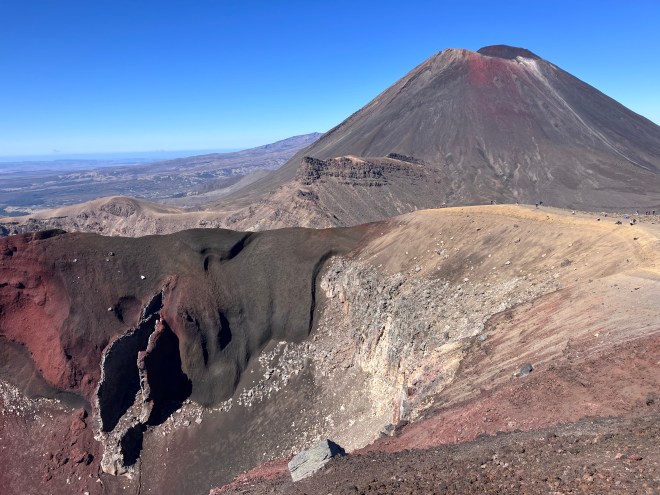
Driving down Volcanic Loop Highway (yes, that’s really the name of the road), it may be unsurprising to see a large, classic cone-shaped volcano jutting up above a flat plain strewn with volcanic rocks, but it is still starkly beautiful. Hiking the Tongariro Crossing, an all-day trek that cuts between three volcanoes, the landscape is even more impressive. These volcanoes are broad-shouldered and tall, ranging from around 6,500 feet to over 9,000 feet, and clearly have all blown their tops at one time or another, with the most recent eruption a mere 13 years ago. They are brown, gray, and rust-colored from volcanic ash and sprinkled with red, orange, and white from various lichen, the first plant that returns after an eruption.
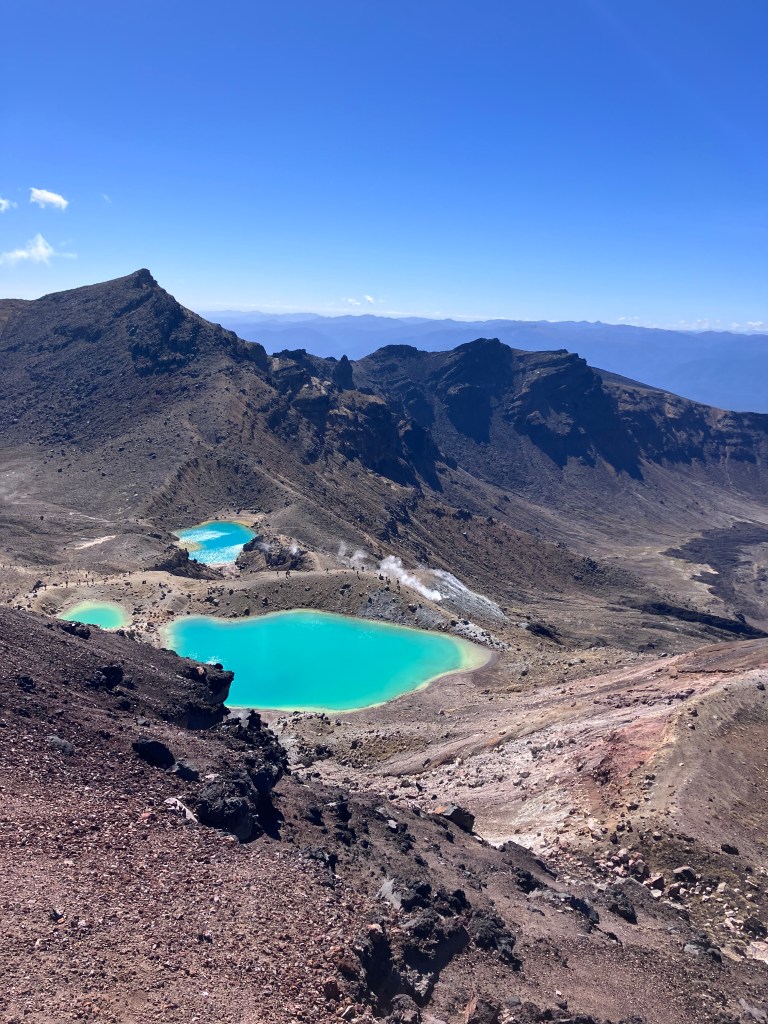
Huge, jagged gashes in the sides of mountains have been ripped open by the forces beneath. Mineral-dense water fills leftover craters with sapphire pools so bright they strain the eyes. Massive boulders ejected from the cones, some as large as a car, are jammed into the earth up to 3 kilometers away. Steam still pours out of fissures in the rock. The power below lives on, like a horror movie villain that never dies. That steam is the equivalent of the tense music that plays to let you know that the villain is not dead yet, while thousands of hikers pass by the danger that lurks in the depths.
The South Island of New Zealand was primarily formed by the crashing of tectonic plates that built the Southern Alps and the glaciers that carved its fjords, while the North Island was primarily formed by volcanoes. Driving the Thermal Explorer Highway (another real road name!) led us to the Taupō Volcanic Zone, midway between Auckland and Wellington and the epicenter of geothermal activity here. Within the zone is Tongariro National Park, site of that long hike as well as a popular ski area on the side of the largest volcano, Mount Ruapehu.
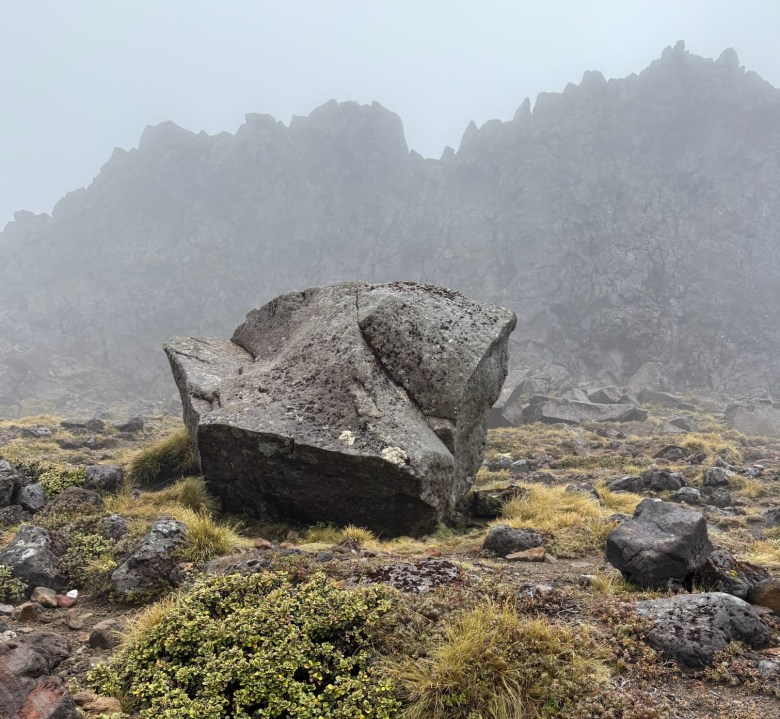
We rode the ski area’s gondola through dense clouds, only to find a foot of new snow at the top—and this is peak summertime here, mind you. Breaks in the clouds allowed us to see a volcanic landscape that must need six feet of snow at least to cover the jumbled piles of jagged rocks underlying the ski runs. This is not a forgiving landscape—you will not see dirt and grass patches if the snow gets thin. You will see massive, sharp black rocks. No trees break up the runs because there has not been enough time since Ruapehu last erupted for dirt to fill in around the rocks and plants to take root in it. But there has been plenty of time to build a ski area, which was founded in the 1920s! That’s the difference between human time and geologic time—what for us is generations is just a blink for a volcano.
Outside of the park, the big attraction in the region is Lake Taupō, the largest lake in New Zealand with about 240 square miles of surface area and reaching 600 feet deep. Amazingly, Lake Taupo itself is a volcanic caldera, having filled with water after a super-eruption 25,000 years ago. This is a big lake – bigger than Lake Tahoe, for example, and ten times the land area of Manhattan. Imagine the forces that created a hole in the ground that big.
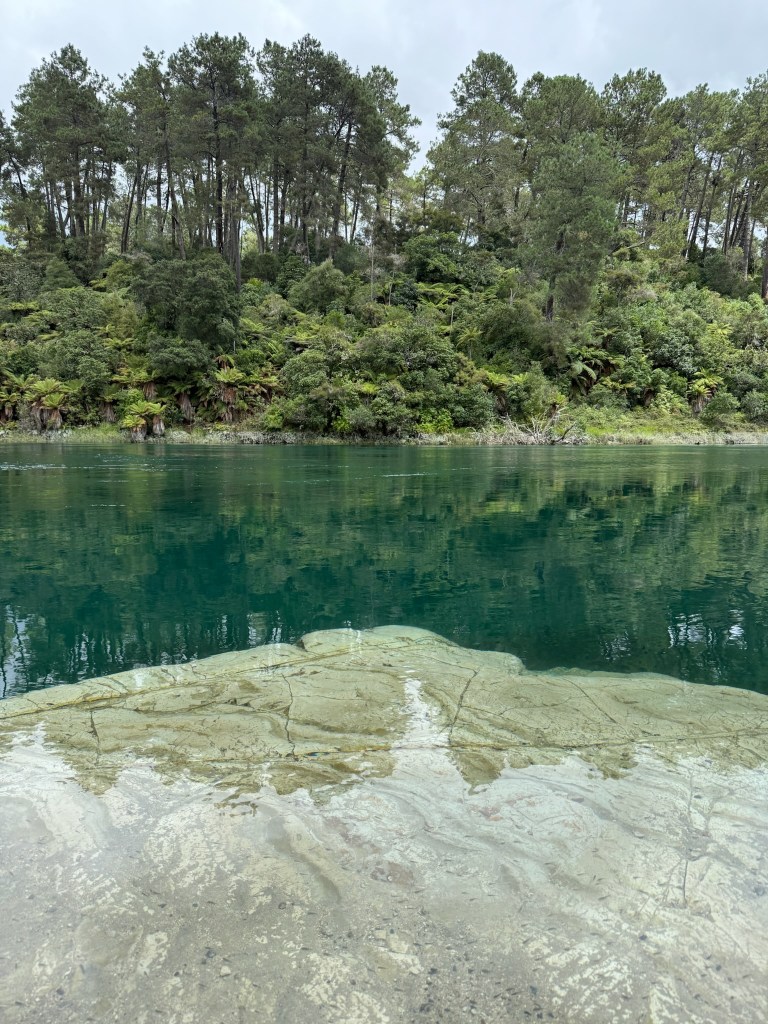
And the volcano underneath the lake is still classified as active! Taking a sailboat ride and going for a swim in the lake’s cool, crystal-clear water—truly I have never swum in clearer water—you would never know that a boiling cauldron of magma lies just below the lake floor. The only hints of the action below are a couple of natural hot springs you can pay to soak in and the steam that leaks out of them. Taupō is a popular destination for all kinds of recreation, complete with million-dollar vacation homes and all of the thriving tourist businesses that make a resort town buzz with activity. And all of it sits atop an active volcano. Of course, the most recent eruption of this volcano was 2000 years ago, but to a pessimist, that could mean it’s overdue. Fortunately most New Zealanders we’ve met are not pessimists.
Another famous geothermal attraction in the region is Rotorua, which offers several ways to tour rocky, sulphuric fields with geysers, bubbling mud pools, and steam vents. A number of nearby towns also host similar features at different levels of wow-factor, cost, and amenities. At the low end is a free public park with a lovely riverside hike and a spot where hot water flows into the river, creating warm pools for visitors to soak in. At the high end is a fully guided tour on a site owned by a Māori tribe that also includes a traditional haka dance, a kiwi sanctuary where the nocturnal birds can be viewed during the day, and a feast cooked in hot steam vents in the ground. More moderately, you can pay for access to self-guided walks through active geothermal fields that require a boat to get to. We did all three variations, and though we skipped the feast we saw the crew preparing it, settling a bag of tubers and meat into a hole in the rocks where steam clouds spouted up from underground.
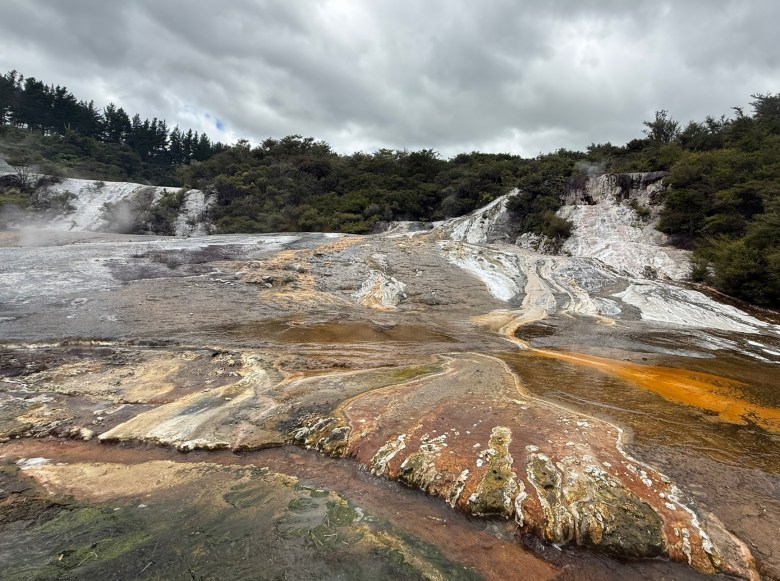
In the more intense geothermal spots, a strong sulphur smell can make your eyes water and the landscape is otherworldly. Steam vents emit wispy gray clouds. Pools of blue-green water and puddles of gray-brown mud bubble and pop, continuously aboil. Multicolored algae and a few hardy scrub bushes cling to life on the heated rocks. Every so often, one of the bubbling pools spurts water skyward, then bursts up like a vertical fire hydrant, then settles back down to a steady simmer. Yellows and pinks and whites coat the rocks like a massive paint spill marring the hillside. Cliffs coated in clumpy white silica look like frozen walls of snow and ice, preserved forever in rock. I’ve seen too many photos of toxic waste spills that look like this to think of these geothermal sites as beautiful, but that’s probably just a reflection of how narrow my definition of beauty is. In fact they are as natural and healthy for the Earth as a glittering glacial lake – maybe more so.
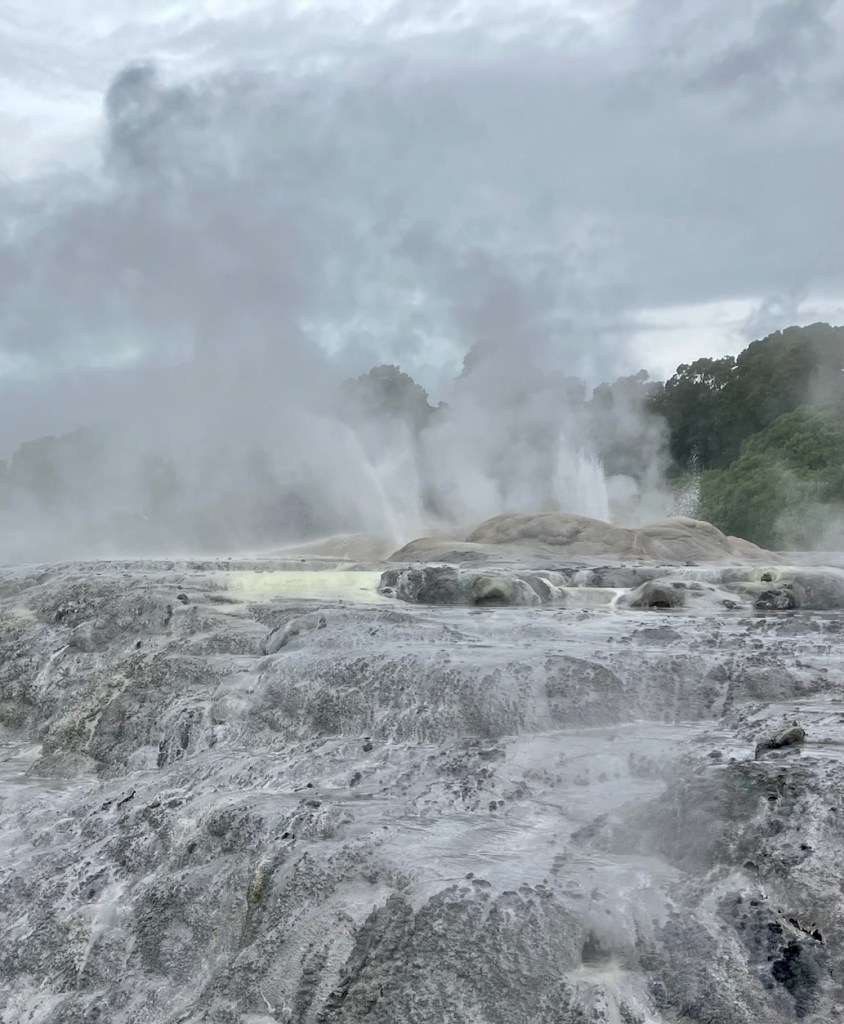
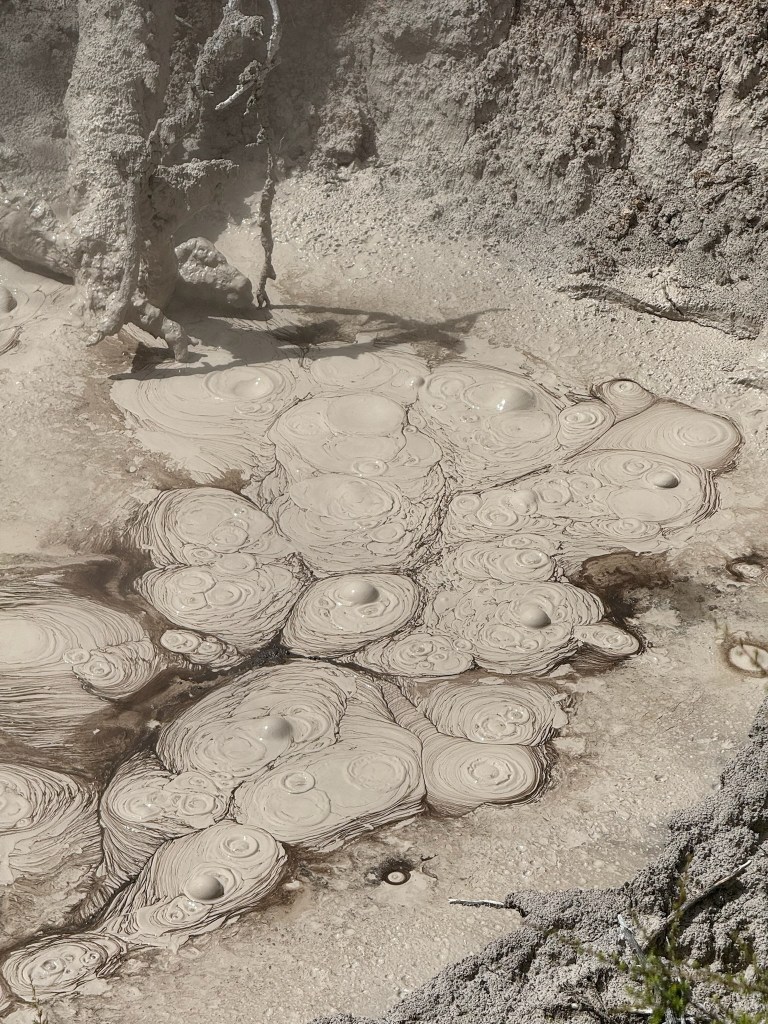
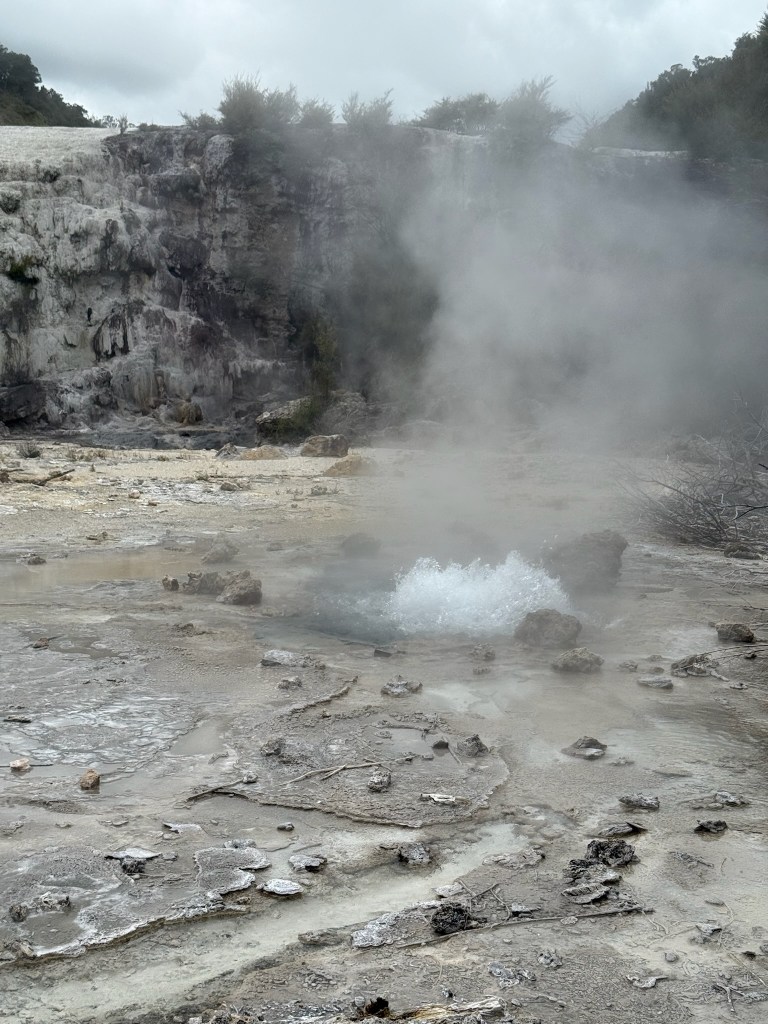
They are healthy because both volcanoes and geysers are vents from the underworld. They periodically release the tension that is constantly building miles below the surface, where intense heat and toxic gases mix in highly combustible ways. Releasing tension is a good thing—the problem is that humans can’t survive exposure to what explodes from these releases. Because geological time is incomprehensible to us, we become complacent to what’s going on below over the course of millennia. We expect the world to stay just as it has been in our short memories. We build houses and whole cities on fault lines, in flood plains, and in the shadow of active volcanoes.
Prior to starting our travels five years ago, I had managed to live my whole life without ever seeing a volcano, but now it seems like we’ve spent a lot of time around them. We saw an active eruption in Hawaii, skied on and lived under a volcano in Chile, and hiked the Avenue of the Volcanoes in Ecuador. In Kenya, we saw (and smelled!) the largest geothermal energy plant in Africa, in the Atacama Desert of Chile we saw geysers at sunrise, and now here in New Zealand we’ve hiked among, played in the snow on, and had a range of close encounters with volcanoes, geysers, and bubbling hot vents of many kinds. Now that I’ve seen the Earth’s powerful forces, shouldn’t I be just a tad more fearful of what could happen?
In fact, living in constant fear of an eruption or any other kind of natural disaster is untenable. It’s not just willful ignorance—it’s a survival mechanism humans have developed over eons to live without losing our minds. Being constantly vigilant of every danger in the world would overwhelm us. It’s true that we are all living a few miles above a boiling cauldron of molten rocks and toxic gases that could explode at any time, but hey, life goes on! So instead of living in constant fear, we mostly take reasonable precautions, act on the things we can change, and do what we think is best for ourselves and our loved ones. That very human attitude has evolved because it allows us to survive, to thrive, and to experience joy in a hazardous world. It’s a pretty nifty cognitive trade-off, really: I’ll take joy over fear any day.
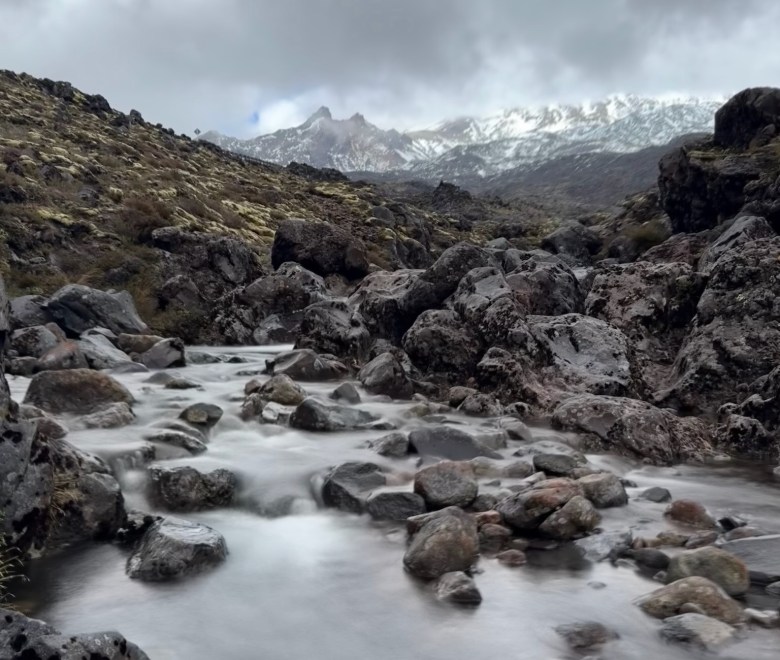
Special thanks to Zeba McGibbon for sharing her awesome photos.
 Seeing the World, One Year at a Time
Al, I can near your voice throughout this essay. So inspirational when we live in a world where fear daily. Thanks for the lift.
LikeLiked by 1 person
This geothermal landscape sounds so other worldly and so beyond the scope of anything I have ever experienced. Thank you for your vivid descriptions and Zeba for her photos. Your conclusion was a balm.
LikeLike