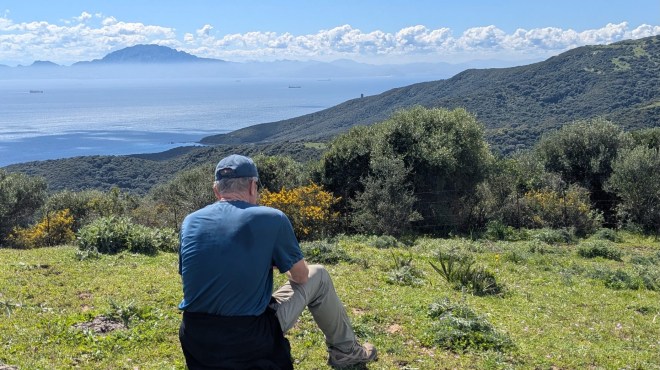
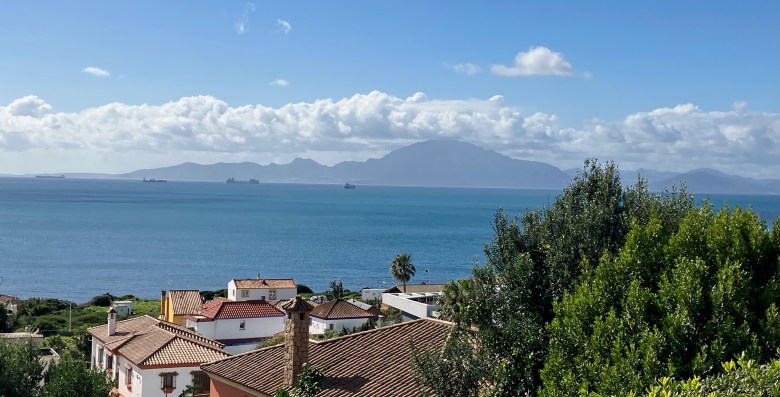
From the beaches in Tangier, Spain looked like a smudge on the horizon. Hazy hills rose up across the sparkling Mediterranean as a ferry arrived from Tarifa, the southernmost tip in Spain. We knew the Strait of Gibraltar was narrow here, but actually seeing Europe across the water after traversing Africa for six months was an unexpected thrill. A few days later, after flying 30 minutes from Morocco to Spain, we sat on a bluff in Algeciras, near Gibraltar, the narrowest part of the Strait. In the bright sunshine, the stony cliffs of Morocco’s Rif mountains looked so close I felt I could almost swim to them.
Knowing the true distance—around nine miles—and seeing the white-capped choppy waves as well as the endless line of sea-monster-sized tanker ships in between, I did not try. But I could imagine the temptation this view must exert on people even today who are desperate to leave Africa due to persecution or poverty. Similar temptation must have also gripped persecuted people desperate to leave Europe in ages past.
Standing on the edge of the Strait, that connection to history felt powerful and real. We had just visited a Moroccan museum charting the courses of exploratory missions through the ages. The records started around 3,000 years ago with the Phoenicians, who sailed in wooden galleys from the Middle East to Corsica, then to North Africa, and on to Europe. I could imagine people across time standing on one side and wondering what it was like on the other. Were there riches there? Fertile land? Unknown dangers?

Seen from Spain, the coast of North Africa looks mountainous and green, belying the fact that behind the mountains lies the biggest expanse of desert in the entire world. Seen from North Africa, the Spanish shore is equally mountainous and green, but the unseen lands behind the shore are hardly desert, with fertile valleys and all of Europe beyond. Once they knew that, it’s no wonder Arab and North African people (known to Europeans as “Moors”) decided that the Iberian Peninsula might be a good place to add to their empire in the 8th century. Heading south? Seemingly endless desert. Heading north? Verdant valleys. Not a tough decision!
When we lived in Spain two years ago, we saw the Moorish influence over and over again. Treasured historic sites like the Alcazar in Seville, the Alhambra in Granada, and the Mezquita in Córdoba draw millions of tourists from all over the world. There we admired ornately carved geometric tile designs, fantastically intricate wood and gold carved ceilings, horseshoe-shaped arches, and peaceful, fragrant courtyard gardens with their melodic fountains and ingenious water systems. All these and many more sites across southern Spain reflect the 800 years in which Spain and Portugal were ruled by the Moors until the Reconquista (reconquest), when Christian armies drove them out in the late 15th century.
Over those eight centuries, the Moors developed their own distinct culture. They named the Iberian peninsula Al-Andalus and built upon the traditions, arts, crafts, and agriculture they had brought with them, as well as making significant new advances in mathematical and scientific knowledge. This was not utopia—the Moors were warriors who ruled by force, just like all of the other previous conquerors of the region. But they left an unmistakable stamp on the region of Spain that is now known as Andalucia.
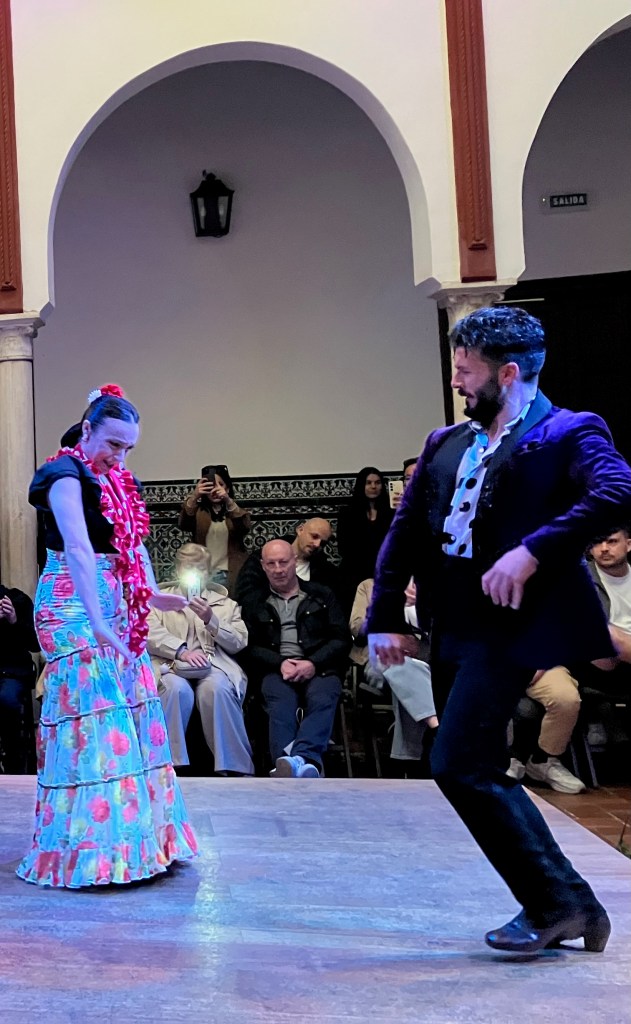
Beyond the noteworthy architecture, the mark of the Moors can be seen on the streets of southern Spain, which are lined with trees that grow bitter-tasting oranges. These were imported by the Moors not for eating, but to perfume the streets with fragrant blossoms in a time when the lack of modern sewage systems left most cities foul-smelling. Since we visited Andalucia in the spring this year, the sweet, soft smell of orange blossoms was everywhere. There’s also flamenco, the signature dance of Spain, which arose from combining music and dance brought by Roma migrants from eastern Europe with Arab musical styles, which can be heard especially in the singing that accompanies the dance.
It was not until we were in Morocco that we learned that this Andalusian culture traveled back across the Mediterranean after the Moors (and Jews) were expelled in 1492. In Morocco, we had expected to find much older, original sources and inspiration for the Moorish monuments in Spain. Instead we found that the oldest historical buildings that appeared similar to the famous ones in Spain dated only to the early 16th century—after the expulsion from Spain. The ornately decorated riads that Morocco is justly famous for all incorporate intricate, colorful tiles, magnificent wood-and-gold domed ceilings, horseshoe-shaped arches, and plaster walls carved in detailed geometric designs. Sound familiar? This is known to Moroccans as the Andalusian style of architecture, and it was brought to Morocco by the former residents of Al-Andalus in Spain—who had gone there from North Africa in the first place! (Insert “mind blown” hand gestures here.)
Quick quiz: which photo was taken in Spain, and which in Morocco? (answers below)
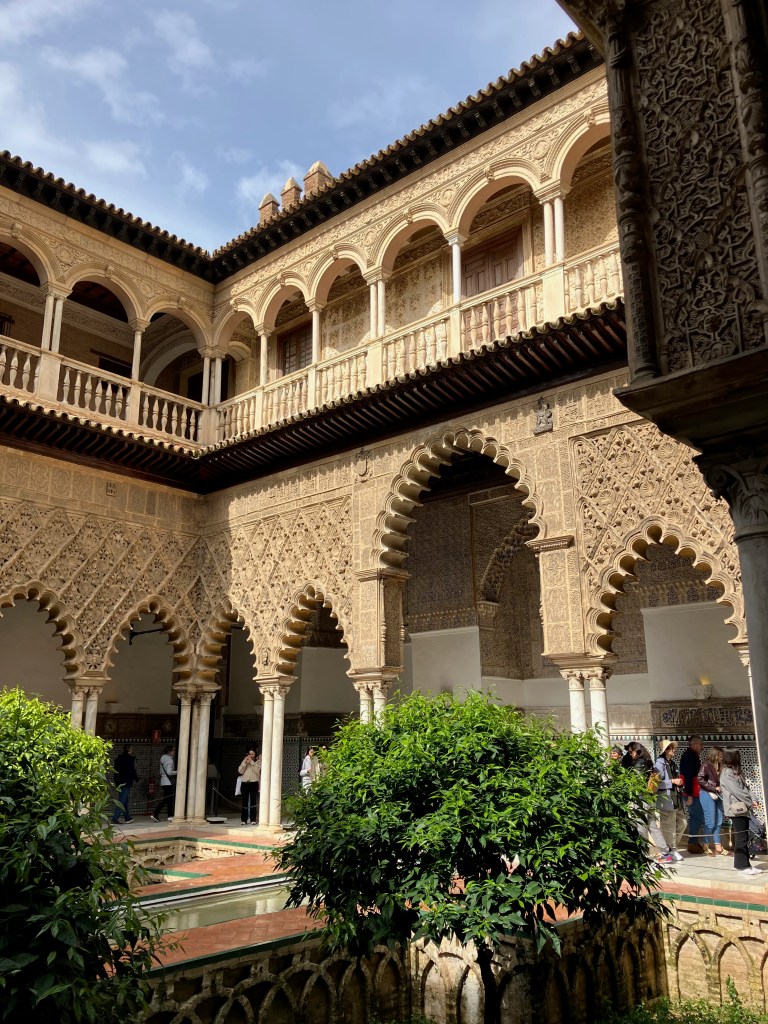
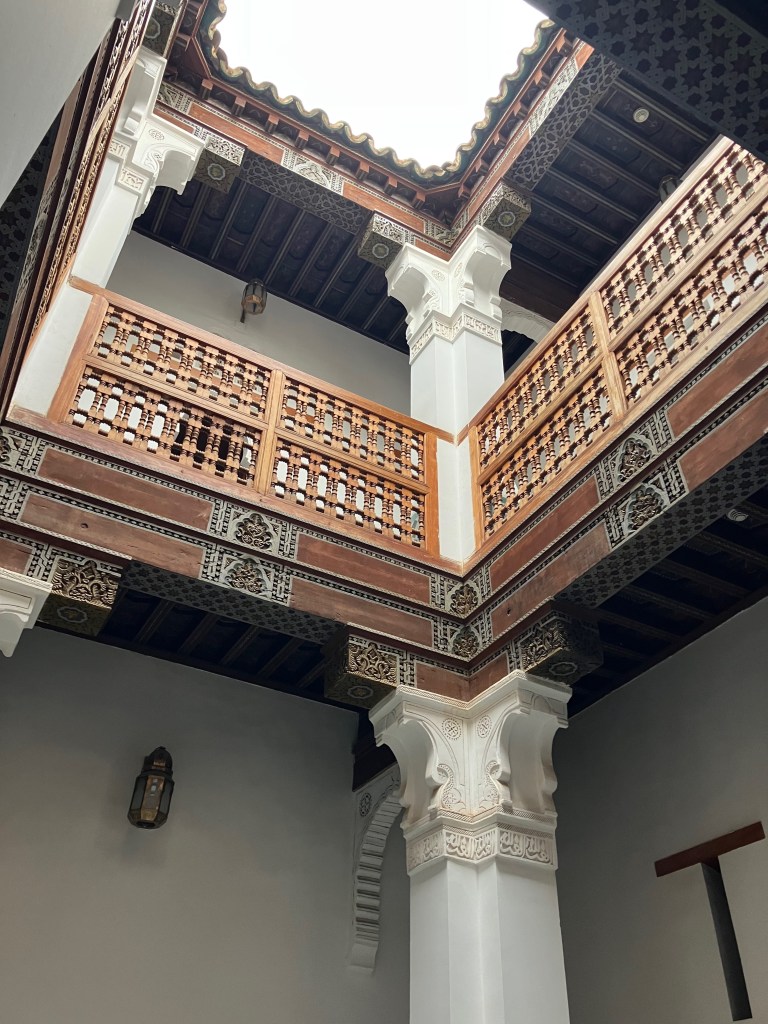

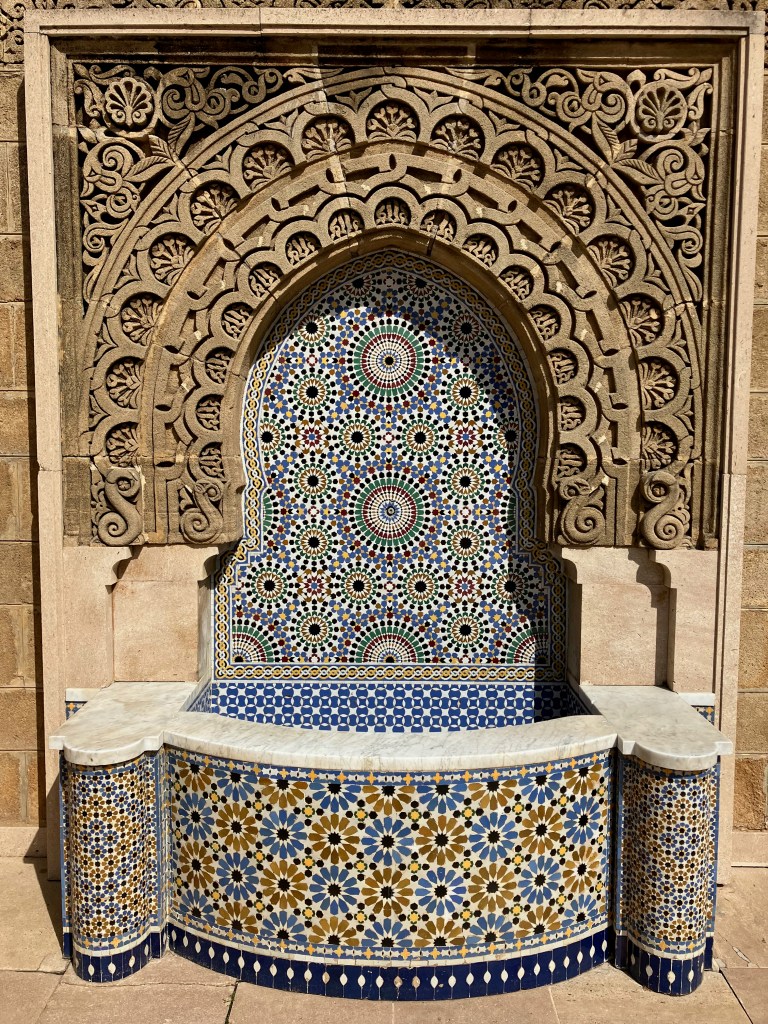
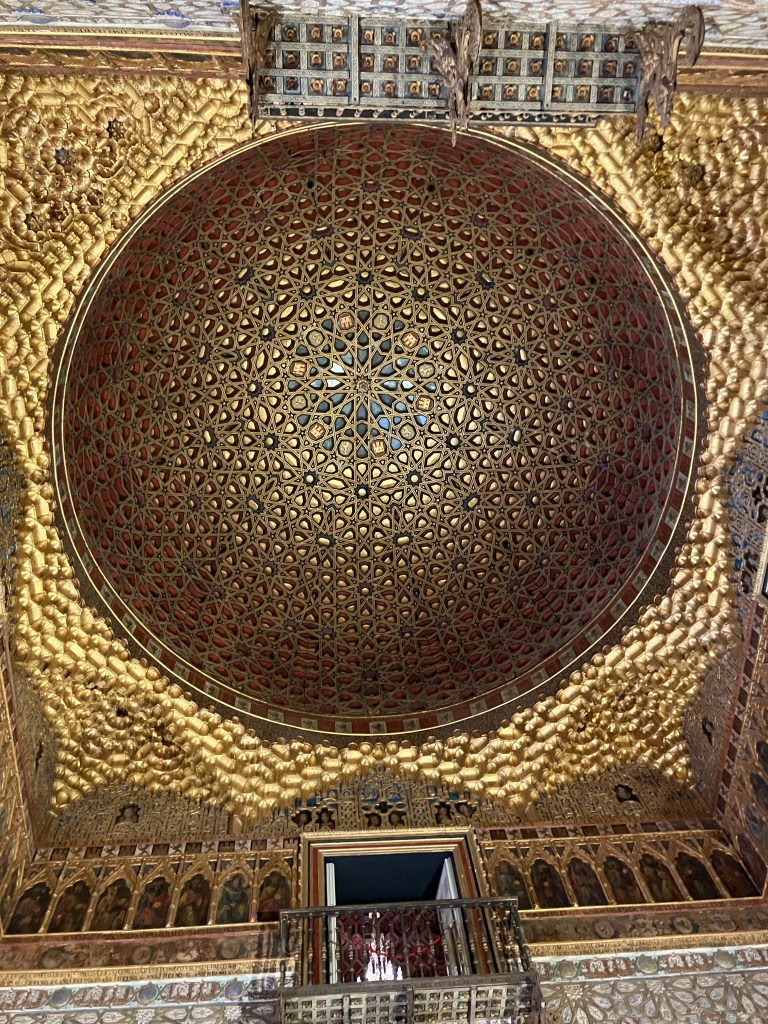
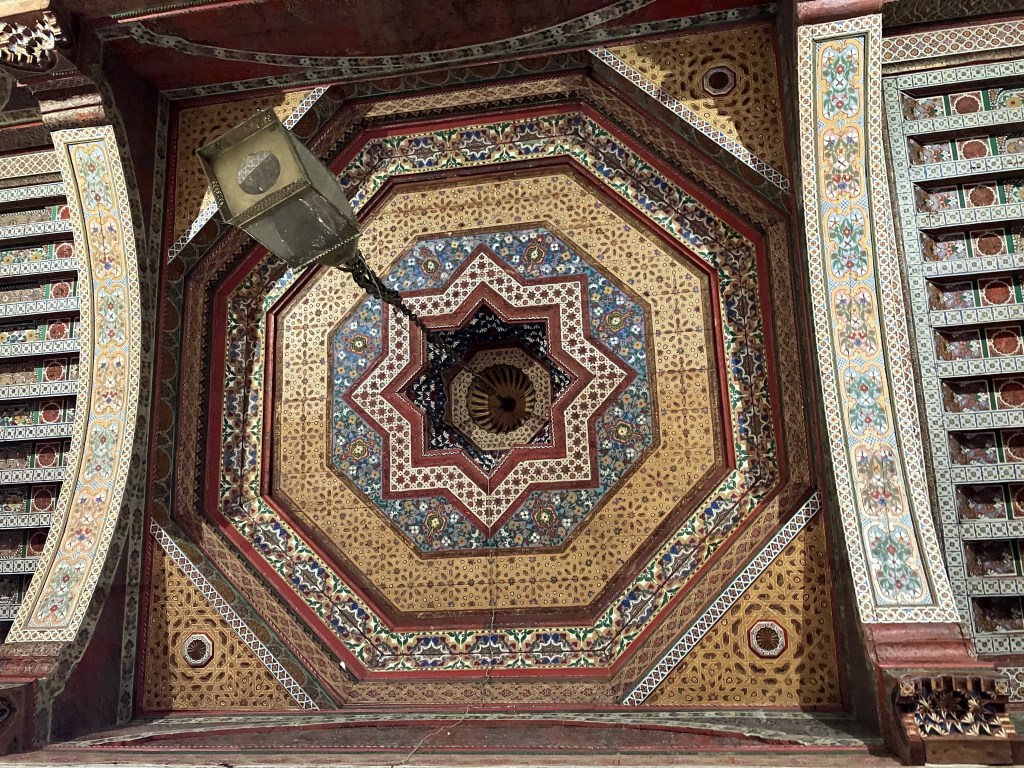
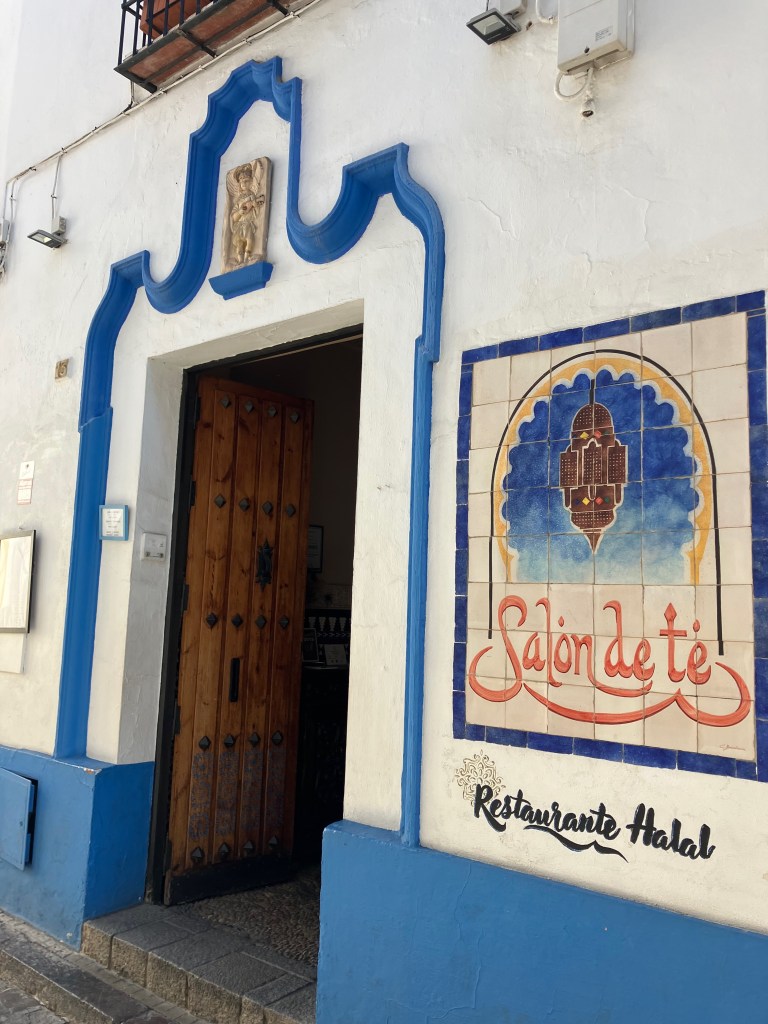
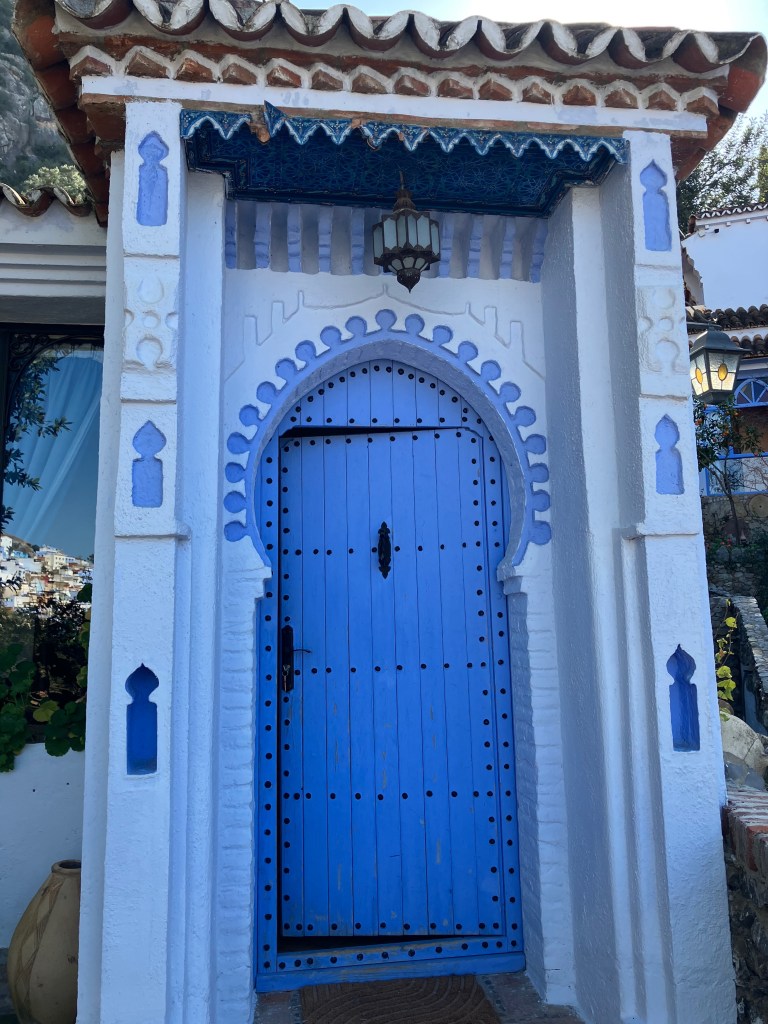
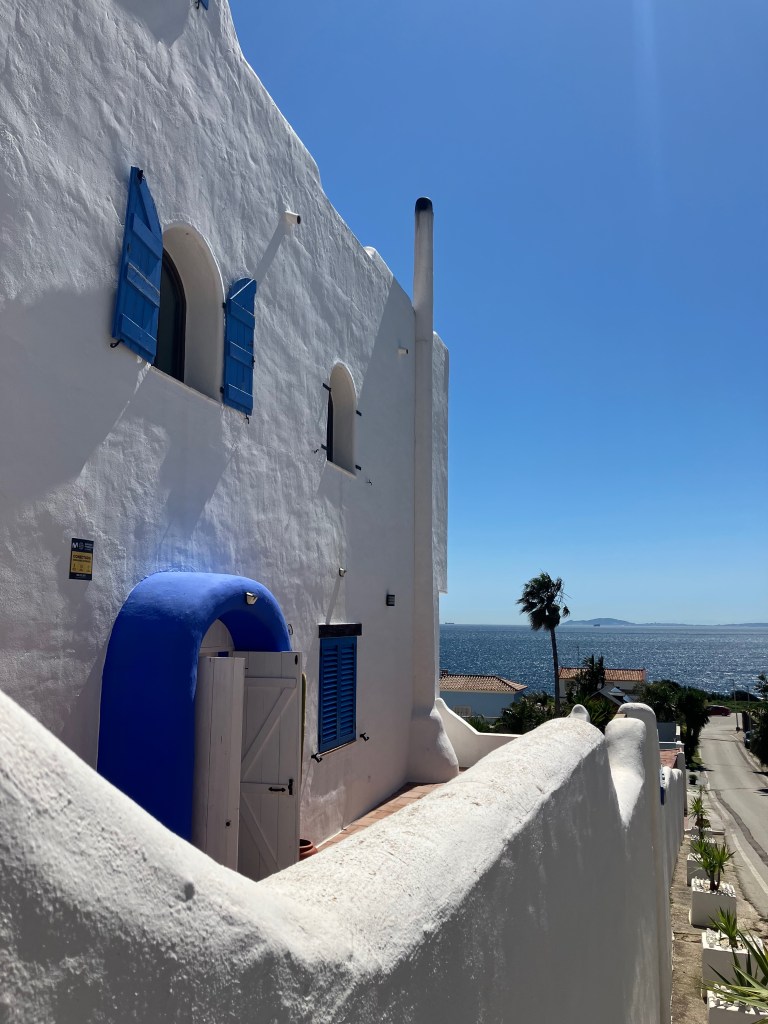
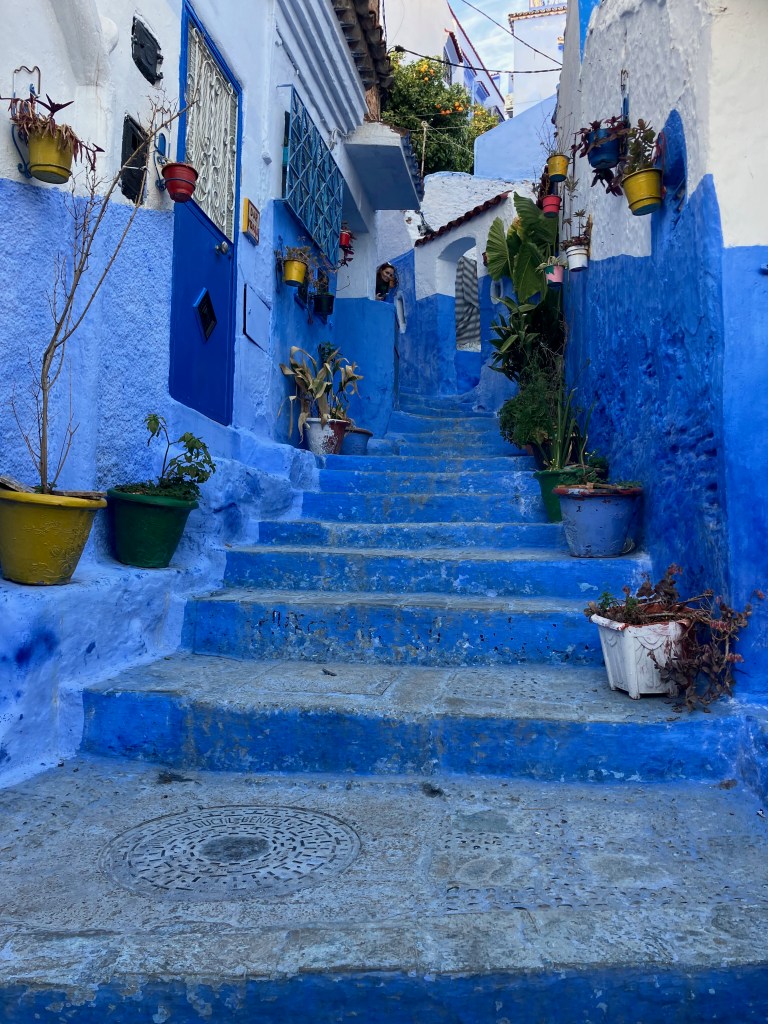
Quiz answers: All “A” photos were in Spain. All “B” photos were in Morocco.
I imagine the Mediterranean as a giant, roiling Jacuzzi tub filled with ships, firing cannons, taking prisoners, and trading cultures and populations for three millenia. After the Phoenicians, the Romans also set up camp on both sides of the Mediterranean, leaving their own architectural, artistic, and political legacy that can still be seen today in both North Africa and Europe. In fact, some of the best-preserved Roman ruins we have seen in our travels—outside of Rome—were in Spain and Morocco.
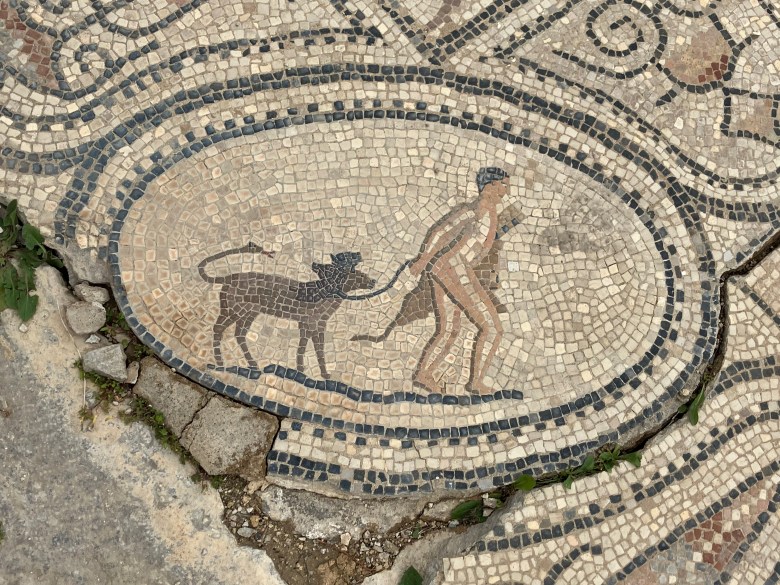
For example, Volubilis in northern Morocco is a bit off the beaten tourist track, but it is a stunning site, with the remains of a sizable city. Its decorated tile floors have been exposed to the elements for 2000 years, yet somehow still reveal clear images of Roman gods, Hercules walking his dog (I’m not kidding), and animals from all over the world—lions, tigers, bears, and even what appears to be a moose (which made our Maine hearts soar).
In the 16th, 17th, and 18th centuries, the straits of Gibraltar were the piracy capital of the world, as Muslim, Dutch, and British privateers (pirates authorized by the state to plunder the ships of the state’s enemies) hid out in coves along the Atlantic and Mediterranean coasts of Morocco to steal the riches Spain and Portugal had plundered from West Africa and the Americas. In the midst of all this, the USA was born and wanted to send merchant ships to the Mediterranean without being attacked. So John Adams and Thomas Jefferson signed a protective treaty with the Moroccan Sultan in 1786, making Morocco the first country to recognize an independent USA and our longest unbroken treaty partner—a fun fact that several Moroccans were delighted to share with us.
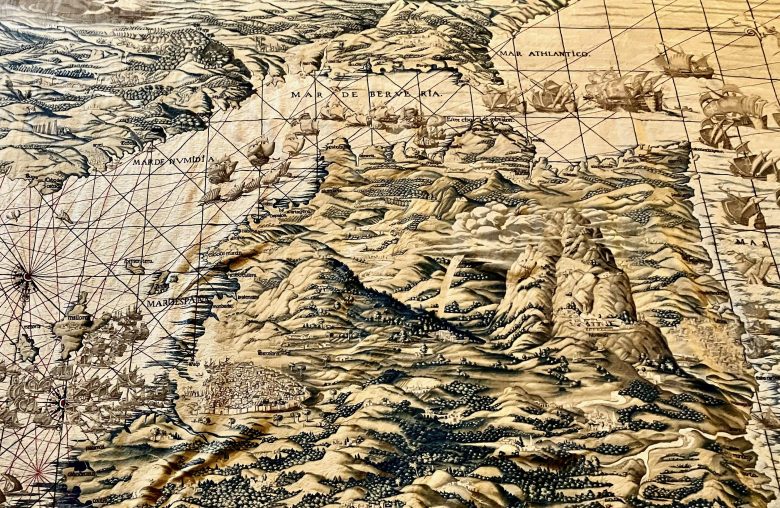
And don’t get me started on the World Wars! Germany, Italy, England, France, and the U.S. all tried to control North Africa for both its strategic location and its wealth of resources, fighting each other, spying on each other, and drafting Africans into European wars. They especially wanted to control who could pass through the narrow Strait of Gibraltar. The rock itself is now laced with tunnels built by the British and Americans in their effort to rule that critical access point. And Morocco found itself caught in the middle of being a French “protectorate” under Nazi rule and providing the US Navy with safe harbors. Not to mention being the site of Humphry Bogart’s famous awakening to the importance of fighting the good fight in Casablanca! (Oh wait, that was fictional…)
Even today this crazy quilt of boundaries and influences remains. Gibraltar, on the southern tip of Spain, stands as a long-disputed territory of the United Kingdom. On Morocco’s north coast, directly across from Gibraltar, lies Cueta, a small city that remains a disputed outpost of Spanish property on the African continent. Much of Morocco speaks French as a second language (along with Arabic) due to just 40 years of French influence, while other parts of the country speak Spanish and disdain French. And the cycles continue to spin—an increasing number of North Africans now call southern Europe home, and their influence is seen in the marketplaces, sports teams, and politics of today.
Phew. All this makes the staying power of the European Union—and the recent stability of Morocco—even more remarkable. The fact that all of these countries can now be friends and allies after all they’ve been through boggles the mind. There are so many historical twists and turns in this region, up to and including today’s rapidly unfurling political and economic chaos and the E.U.’s attempts to maintain a hold on sanity. I feel like I’m watching the latest sequel in the longest-running epic movie series ever, and I’m peering through the gaps in my fingers as I hold my hands over my eyes for fear of how it will all turn out. Seems like each era of history has its own form of bloody, cruel, short-sighted pain for those who live through it. I guess we can only hope that, after all is said and done, we can still stand on the shore and admire the view.
 Seeing the World, One Year at a Time
Whew, a mind boggling overview of history. How on earth did you manage to get such an amazing grasp on all that complexity? Multi thanks.
LikeLike
Thanks Shirley! It’s so interesting to be there and imagine all that has happened there for millennia, and the museums and historic sites make it understandable. I’m just trying to put all of the pieces we heard or read into a much-too-simple capsule!
LikeLike
Thanks for the history lessons-
Fascinating!
LikeLike
Thanks Carolyn!
LikeLike
Hi, Al and Rachel,
I couldn’t help but chuckle upon reading your wonderful description of the Gibraltar area, not because of your terrific research, but because Rob and are now in Granada and heading to Ronda tomorrow. We’ll finish up our trip in Sevilla on Sunday and fly home from Madrid, where we also spent time after visiting Barcelona. So you see, we’ve had a whirlwind trip, though meeting and spending a night with Adriana and Toni in Sitges when we first arrived last week was such a fun way to be introduced to this marvelous country. Btw, they asked about you both!
LikeLike
Thanks for the note, Leslie, and please do give our best to Adriana and Toni–they are such fun people. Hope you love Spain as much as we have!
LikeLike