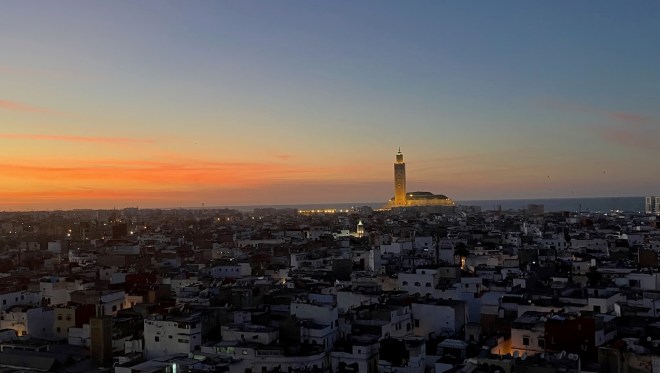
Five times every day we hear the call to prayer, from crackling loudspeakers attached to the towers of mosques. This month is Ramadan, so the call at sunset is the most anticipated—it means people can break their daily fast that lasts from sunup to sundown. Recently we walked along a sidewalk in Rabat, Morocco’s capital, heard the sundown call to prayer, and watched the street life transform.
It looked like some men (always men) had been sitting at sidewalk cafes with an untouched cup of coffee and unlit cigarette, waiting for the call that meant they could finally have their caffeine and nicotine. Further along, we saw a man hustling toward a mosque as his son ran alongside as if helping a marathoner, handing him a bottle of milk and a couple of dates (traditional ways to break the fast). He sucked them down and then dashed to the door of a nearby mosque, shucked off his shoes, and went inside to pray. We continued along and passed through a set of 30 or so family-sized tables on a wide stretch of sidewalk. Animated people young and old chatted happily, drinking milk or orange juice, eating dates, and dunking bread in their harrira (thick chickpea noodle soup), all elements of the Iftar or breaking-of-the-fast meal.
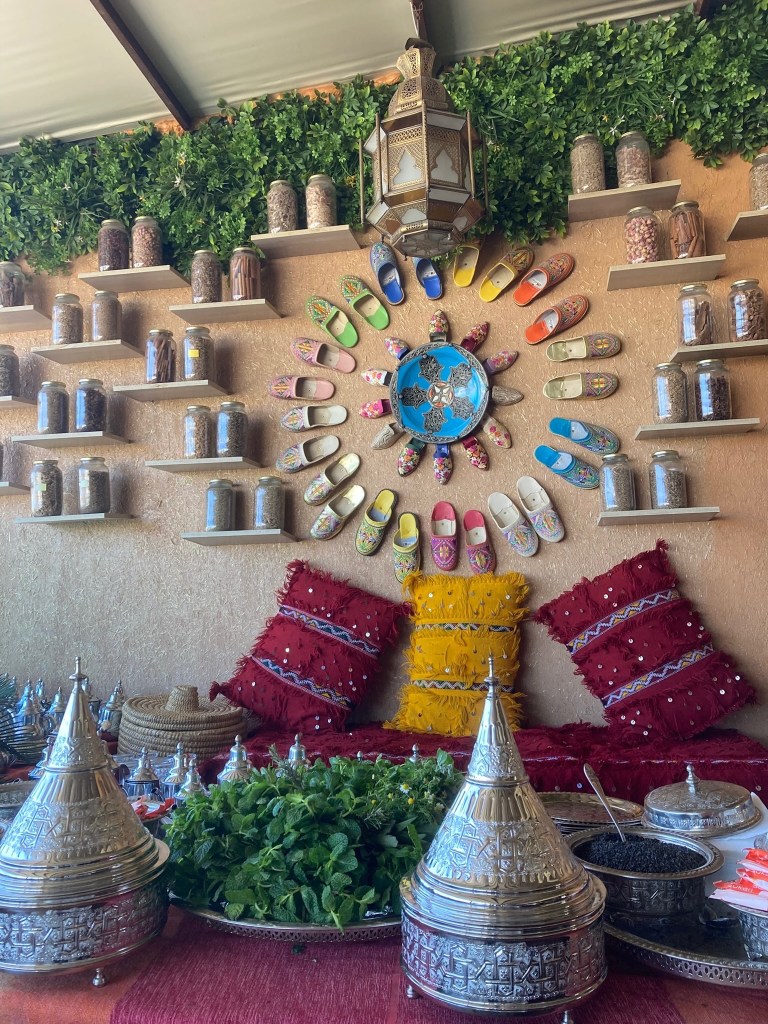
When we finally reached our destination, a restaurant we had enjoyed previously, we saw people streaming inside and staff efficiently finding tables for everyone. Our table, like all of them, was already set up with juice, water, a variety of breads, hard-boiled eggs, and of course dates. We soon learned that the restaurant’s Ramadan menu was designed to get a lot of food to a lot of people quickly. For a fixed price (about $20 each), we were served a big bowl of deliciously seasoned soup, our choice of a main course—tagines or a few other dishes that could be pre-cooked—and for dessert, cookies with sweet mint tea. Some (foreign) customers near us left when they learned they couldn’t order a la carte, but they missed out, not only on the feast (which fed us for two nights after we took one of the dishes home) but also on the experience of breaking the fast in a traditional way.
A lot of travel blogs we read before coming to Morocco warned against traveling here during Ramadan because of the disruptions to typical daily life. We certainly didn’t target Ramadan for our time here. But as luck would have it, half of the six weeks we’ve been here have been during Ramadan, which follows a lunar calendar and therefore falls in a different 28-day span every year. We’ve found it fascinating to learn about this holy month—it has added to our experience here, not detracted from it.
We have found that the rhythm of the days is different now. First off, the country sets its clocks back by an hour only during the month of Ramadan. Obviously the number of hours they must fast hasn’t changed, but I guess psychologically it’s preferable to end your fast at 6:30pm instead of 7:30. Mornings are quiet and slow-paced. Most shops and cafes don’t open until mid-afternoon. Few people are out walking on the city streets, although plenty of cars still ferry people to their jobs. Even many museums and other tourist attractions keep irregular hours; often opening late and closing early.
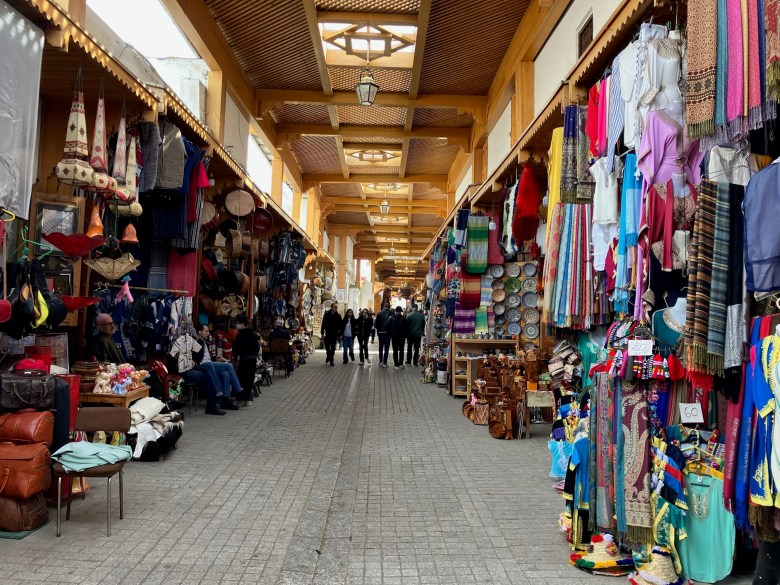
Then around 3pm, the pace quickens. People emerge and hurry through the medina (old city) shopping area, picking up honey-sweetened pastries, bags of dates, meat and fish, and always freshly baked bread. The ovens in the medina issue heavenly aromas—how bread bakers and pastry makers refrain from eating while the smells of warm loaves and sugary treats surround them is a mystery to me. By 5pm, last minute shoppers are frantically making their rounds like Christmas Eve shoppers in the U.S., picking up gifts of prepared food to bring to their families and friends that evening. The lines for a taxi or bus stretch down each block as people rush to get home, or to join their families before that sundown call to prayer blasts from towers across the city.
We’ve heard that people manage the art of fasting in different ways, although everyone we’ve talked with has said it’s really no big deal. They are used to it; they feel healthier and closer to God; it’s a time of spiritual and physical cleansing; a time for family and joy. One young man told us he just reverses his day—he sleeps most of the daylight hours (except for prayers) and stays up all night when he is free to eat. Another said that approach is not exactly in the spirit of Ramadan—the whole point is to practice restraint, not find ways to get around it. And people who work during the day have no choice; they have a late snack before bed, get up around 4 or 5am, before the sun, have a filling meal, pray at dawn, and then just go about their day.
We had heard that people get cranky at the end of the day when they are hungriest, but we have not seen that. No one seems bothered by us eating food or drinking water during the day (yes, the fast includes all beverages too), although we have tried to respect the people around us and hide out somewhere to do it. We did give up alcohol for the month, although truth be told, that’s mostly because even wine and beer are scarce during Ramadan!
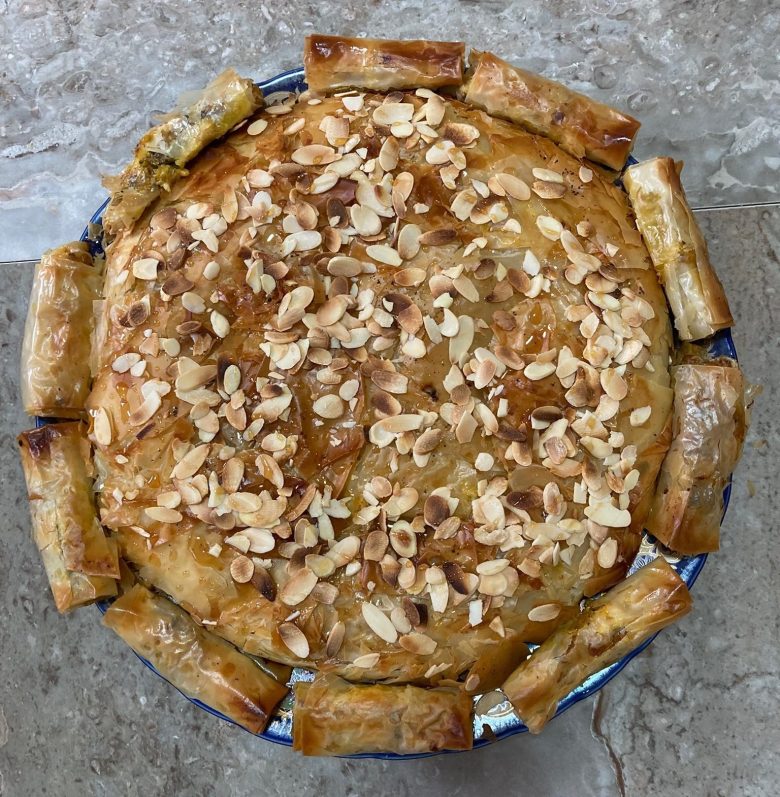
We took a cooking class one morning, in which a local Rabat woman invited a small group of visitors into her home kitchen and walked us through what seemed like a hundred steps to making pastilla, a meat pie made with layers of filo dough and enough spices to make a Mexican molé proud. Along the way she would ask us to taste the various components to make sure there was enough salt or sweetness, as she could not even do that herself. While we ate the delicious results and the intoxicating aromas filled her home, she disappeared back into the kitchen, presumably to begin making food for her family to enjoy later that day.
Fasting during Ramadan is one of the “Five Pillars of Islam”—the others being a declaration of faith, praying five times per day, practicing charity, and making a pilgrimage to Mecca. Some exceptions are allowed. For example, a pregnant woman or person who is sick is not expected to fast; a person with no means to travel is not expected to make a pilgrimage to Mecca. Praying and charity are also of heightened importance during Ramadan. We have seen numerous people asking for charity (and receiving it), particularly outside of mosques. We’ve heard that families often spend their evenings, after breaking the fast, reading the Koran aloud with their children. In addition to daily prayers, we’ve been told that the big celebration known as Eid al Fitr, on the last night of Ramadan is actually an all-night prayer fest. Families and friends go to their local mosque, listen to the imam reading passages from the koran, maybe take a break for some food (it’s nighttime after all), and continue all night, feeling the joy of celebrating together.
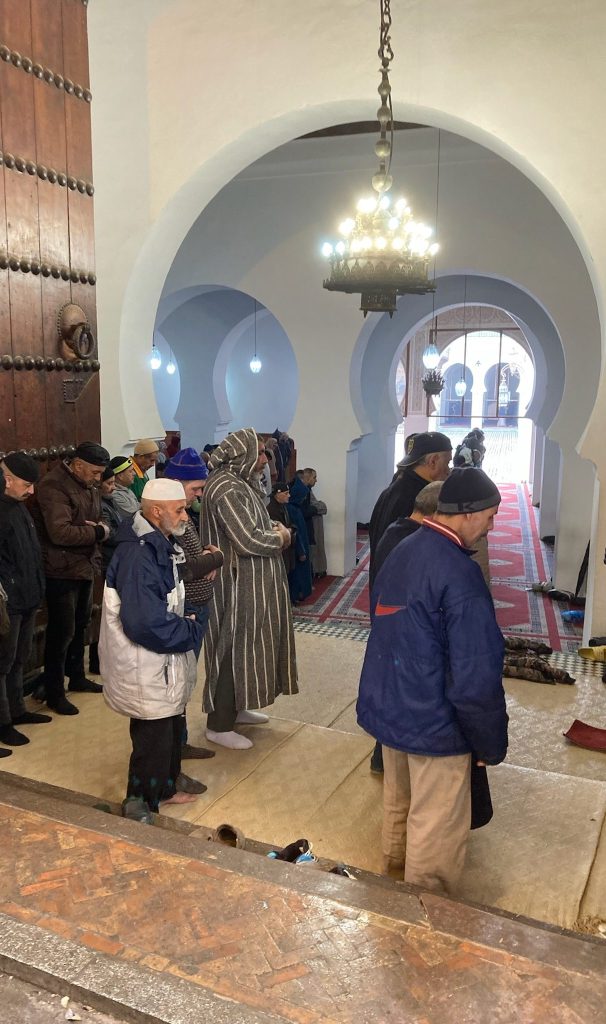
Morocco has been my first visit to a Muslim country. It is 99% Muslim and their Constitution declares Islam to be the religion of the state, although it also guarantees everyone the freedom to “practice their religious affairs.” What that looks like in practice, I can’t say, but I will say that we have seen Moroccans and tourists alike dressed in all manner of clothing, so the dress code at least is not strict. For women, at one extreme is black burkas covering them from head to toe, with only their eyes exposed. At the other is more typically western style dress, makeup, and uncovered hair. In the middle is the most common style—typically a head scarf (all colors seem to be acceptable), face exposed, and casual dresses or robes. There even seems to be a style of wearing fuzzy animal-print pajamas, slippers, and bathrobes with the head scarf, not because they just climbed out of bed, but because it’s just what they want to wear. Men’s clothes are less varied, but they range from Western-style business suits to jeans and casual shirts to djellabas, head-to-toe hooded robes that to my movie-influenced (and culturally sheltered) eyes look like old-style monks’ robes or Obi-Wan Kenobi in Star Wars. But in truth this is just how they keep warm.
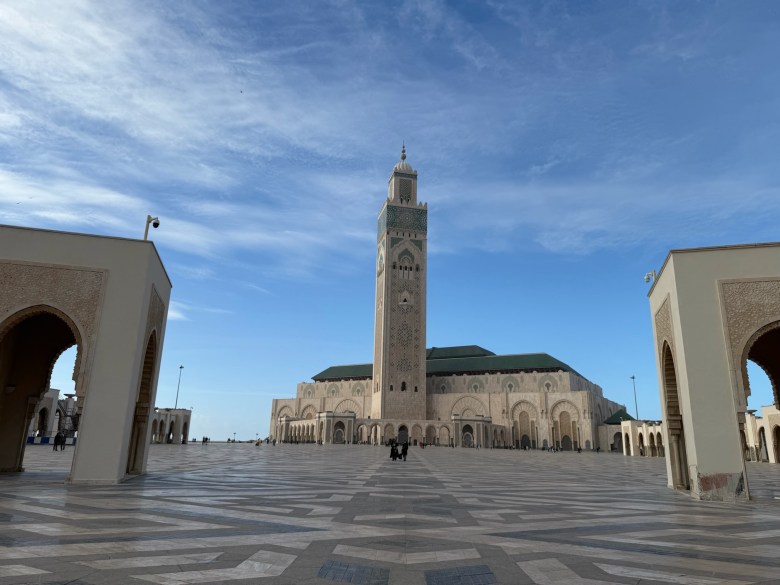
Just as every village in Spain has a church and a castle, every place we’ve been in Morocco has a mosque, with a tower that rises above the other buildings. Even if you can’t see the mosque tower, you can hear it—five times a day. When we first arrived, I found the call to prayer kind of harsh to the ears; a bit atonal, blasted through tinny loudspeakers. After a while, I began to appreciate the musicality of it more. Now, nearing the end of our stay in Morocco, with a mosque tower exactly next door to our latest apartment, it sounds more like a hymn to me, or a cantor in a church or temple who sings the call to worship. I hear it not as an interruption of the day, but as the structure to the day. I may not share the faith with 99% of Moroccans, but I can share the rhythm of their holy month and take home a richer understanding of their lives. So to anyone who celebrates it, I wish you “Ramadan Mubarak” (Happy Ramadan).
 Seeing the World, One Year at a Time
Multi thanks for sharing your insights and understandings about the celebration of Ramadan. I have always wondered how it worked, the fasting, the praying, the special foods…and how people kept working. I’ve been amply educated, and as always, the photos are an illuminating addition to the text.
LikeLiked by 1 person
When you get to a restaurant on Morocco and the table already has those snacks/appetizers for you to eat, is that included in the meal price or do you pay extra for them?
PS: We finally made it to the Pucon area and marveled at Volcan Villarrica. 🙂
LikeLike
The bread etc. is typically included, even when it’s not a fixed price menu. Unlike Chile and some other places, where often they put bread on the table and then charge extra for it. We found Morocco to be super affordable. And yay on making it to Pucon — glad you are liking it! Do take the chairlift up the volcano at sunset if you can.
LikeLiked by 1 person
Thanks for the clarification, Al! I think that chairlift might only be available during ski season? I didn’t see any info about it, but we’ve moved on by now, so unfortunately no view from on the volcano.
The weather has been incredibly windy and a tad rainy lately as well. We camped at the foot of the volcano to a nice view of it and by morning, it had disappeared from sight due to the rain.
LikeLike