To get to the wide-open spaces of our Kenyan safaris, we first had to squeeze through an epic Kenyan traffic jam. The narrow highway that started out free-flowing was suddenly choked on both sides with lines of idling container trucks stuck in an unannounced construction detour. As it turned out, the uninterrupted line of stalled trucks continued for at least 30 miles and had been stuck like that for 14 hours already.
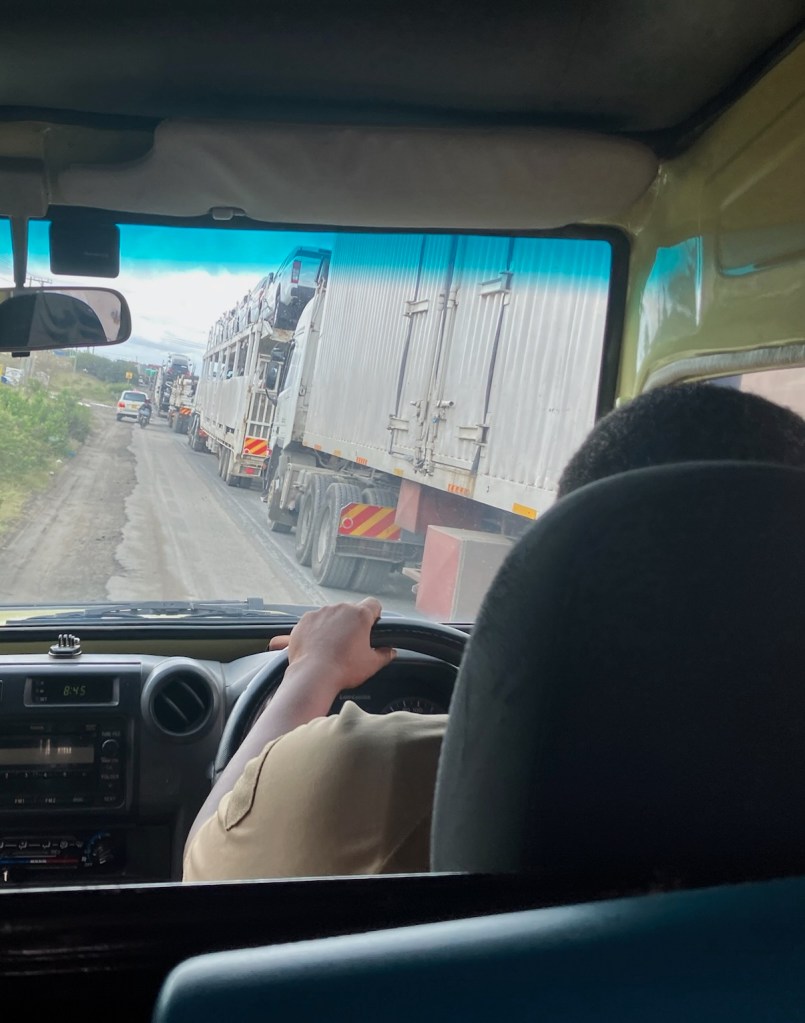
Cars careened in and out of small gaps in the line, bouncing along the road shoulders and dodging other cars coming at them. Being in a four-wheel-drive safari truck paid off, as our driver took us across ditches, down rutted dirt roads, and through dusty villages in search of an open route around all those trucks. This clogged artery, punctuated by dozens of speed bumps and the occasional herd of goats, is Kenya’s primary road between Mombasa (its biggest port), Nairobi (its capital city and economic hub), and inland countries like land-locked Uganda and South Sudan. It also passes directly through Tsavo National Park, the largest game preserve in the country.
Arriving at Tsavo sweaty, stressed, and covered in dust, we took a deep breath from our hotel’s terrace and gazed at a muddy watering hole, through heat waves, and across the open savannah. The afternoon sun cracked the surrounding red clay and frazzled the high, dry grasses waving in the breeze like a wide tawny ocean. Kind, welcoming hotel staff brought us cool, fresh pineapple juice and showed us to our room, with a balcony overlooking the watering hole. White storks, yellow baboons, and muddy warthogs dipped in the water and, within minutes, a parched elephant waded through the grass and into the water, spraying it over his back some 20 yards away from our balcony. Ahh.
I think most of us know what to expect from a safari. We’ve seen the nature videos, the photo albums, the social media shares from people who have been on a safari. We’ve heard stories and read books about safaris, then and now. Most visitors to Kenya go on a safari—the most common question we got while on the coast after “where are you from?” was “did you go/are you going on a safari?” Around 300,000 visitors each year travel to the most famous park, the Maasai Mara, which borders Tanzania’s Serengeti. After much research, consideration, and advice from a friend-of-a-friend’s recommended tour operator, we decided on the road less traveled. For nearly the same cost as a three-day trip to the Mara, as locals call it, we could visit three equally abundant game parks and see three different Kenyan landscapes across eight days. In addition to Tsavo, we spent several days in Ol Pejeta Nature Conservancy (particularly known for both Black and White rhinos) and Samburu National Park (known for big cats and endangered species). We were not disappointed—beyond all the animals we saw, we found surreal peace and even solitude that we’ve heard is hard to come by in the more-visited parks.
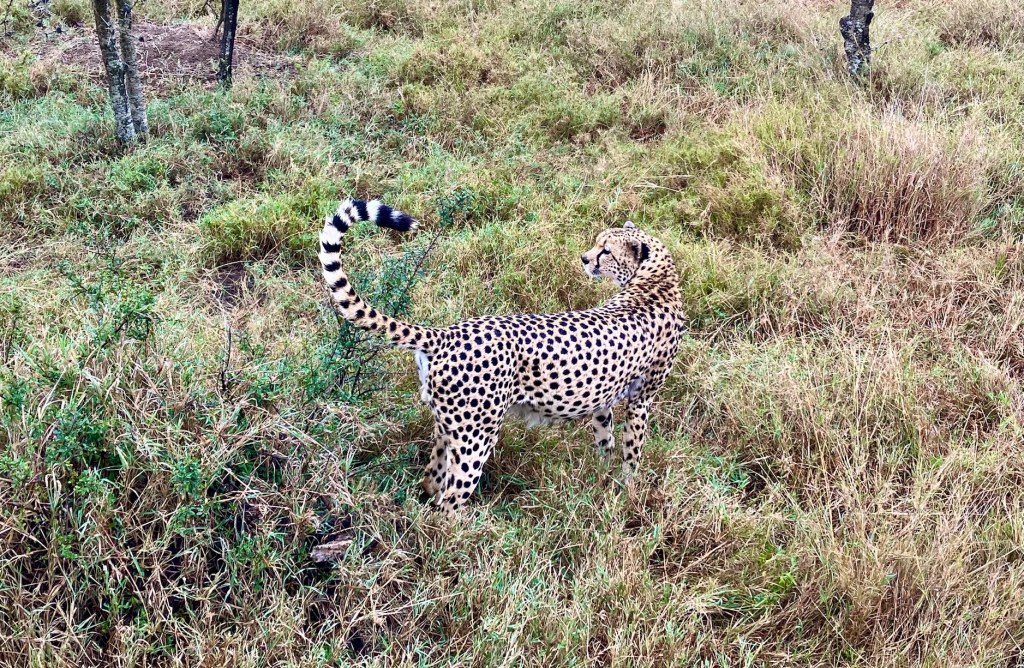
Did I mention animals? In Africa, the safari Holy Grail is known as the Big Five: lions, leopards, elephants, rhinos, and cape buffalo. Originally, they earned this designation because they were the most challenging and dangerous animals to hunt, but the mystique continues for shooting photos instead of bullets. Lions, leopards and endangered Black rhinos can be elusive; elephants and buffalo are less concerned about hiding but are awesome to behold. Personally, I would add my favorite big cat—sleek, powerful cheetahs—to the list, and yes, we saw all six. Up close. With babies. Often in silence, with no other safari trucks around. And they are magnificent. How anyone could shoot one of these supremely well-adapted creatures for pleasure is beyond me. I would weep.
In Northern Kenya, there’s another, less formal grouping called The Special Five or The Northern Five. All are endangered or threatened. They include:
- the reticulated giraffe, sporting a distinctive geometric pattern much neater than the brown-camo splotches of the more numerous Maasai giraffe;
- the East African oryx, a burly antelope with distinctive white-and-black markings and straight, sharp antlers up to 4 feet long;
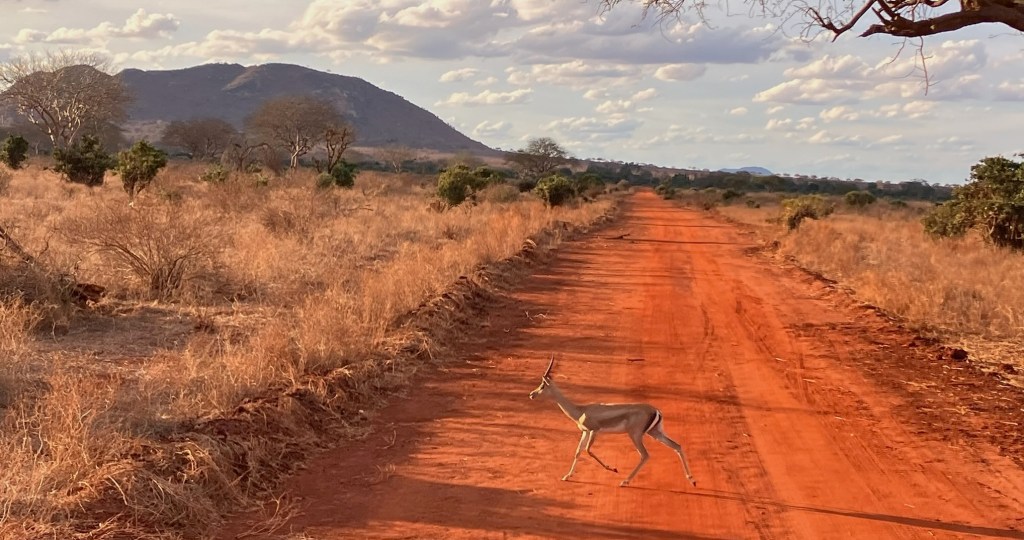
- the “giraffe gazelle”, which makes up for its small size with a long neck and ability to stand on two feet in order to reach tree leaves;
- Grevy’s zebra, a variation of the common zebra with more condensed stripes, bigger ears, and a longer nose;
- the Somali ostrich, with a blue-gray neck and legs as compared to the common ostrich’s pink.
Calling any ostrich or zebra “common” seems inapt, but it’s true that all of the Northern Five exist in much smaller numbers than their better-known counterparts and are only found in northern Kenya. We felt just as much joy spotting these beautiful, rare animals as the Big Five. And then there’s the Ugly Five. We actually thought we were making this up, but it turns out there really is an Ugly Five list! We only saw four of these: the vulture, the hyena, a particularly hideous stork with a face like a flesh wound, the wildebeest (the one we missed, as they had already migrated south), and Rachel’s favorite, the warthog (known in Swahili as pumbaa, same as Disney’s Lion King character).
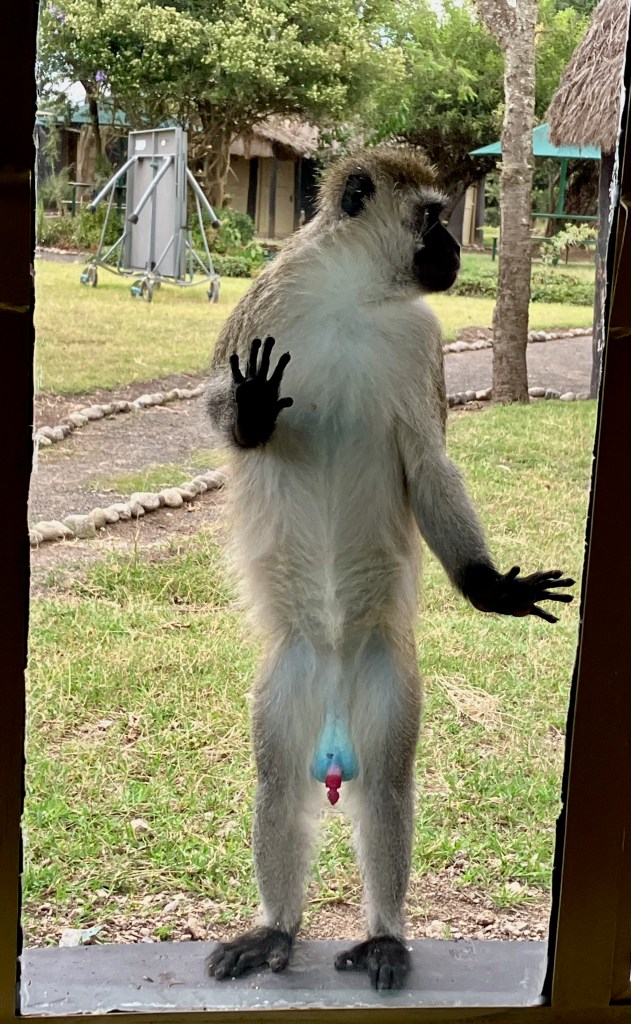
While more plentiful and less inspiring than the others, we smiled every time we saw the silly, chaotic warthogs snuffling and trotting about. We were mesmerized by one family of hyenas that were using their super-powered jaws to crunch through the bones of a leftover kill, while two pups played keep-away with a hairy zebra leg as long as their bodies. And don’t even get me started on the monkey with neon-blue testicles who flashed us at our camp window. Ugly, odd, or beautiful, these are just not things you see in your everyday life.
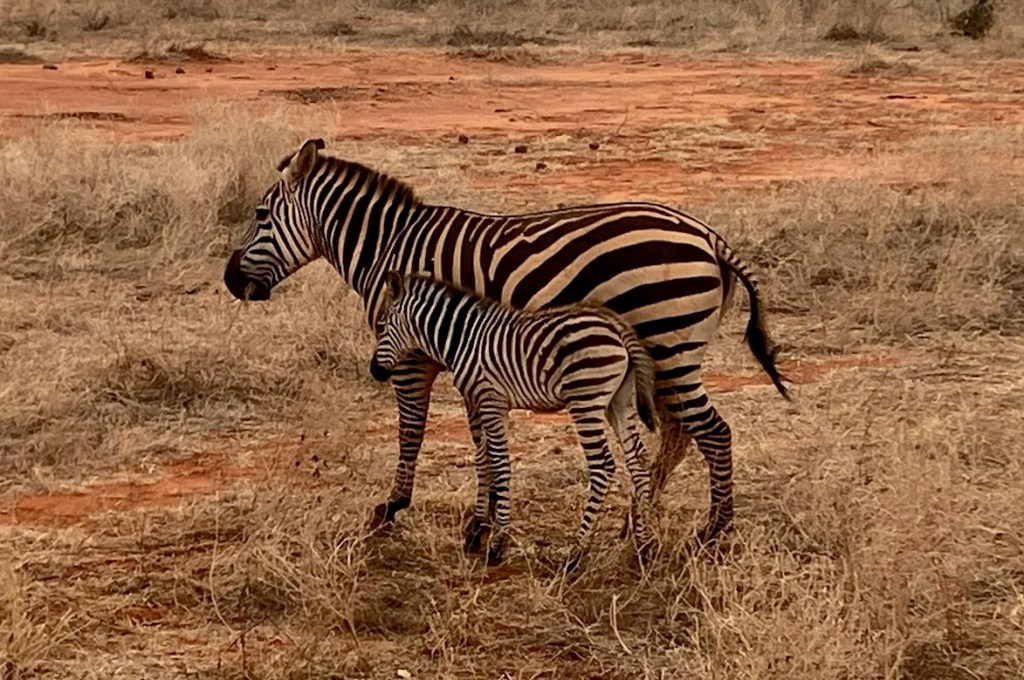
All of this sounds like we had a checklist, as many safari-goers do, but we tried to avoid that mentality. We sometimes saw trucks stop to take rapid-fire photos of an animal and then move on without even turning off their engine. Through the happy convergence of our interests and two knowledgeable, patient guides, we spent a lot of time with the engine off. Sometimes we just stood still and observed, as graceful giraffes grazed on treetops, gazelle babies nursed under their mom’s belly, or zebras nuzzled each other’s necks. Sometimes we stopped for birds, of which there are hundreds of brightly colored species chirping out melodic, unusual calls, not to mention a half-dozen different eagles we had never seen before. Rachel even spotted a rare, small, white Scope’s owl perfectly camouflaged deep within a bush; exactly the kind of thing you miss if you’re in a rush and only looking for the Big Five.
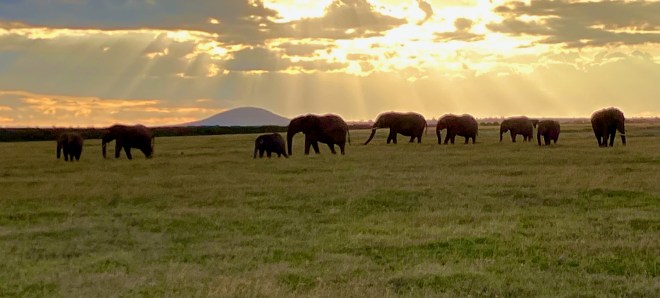
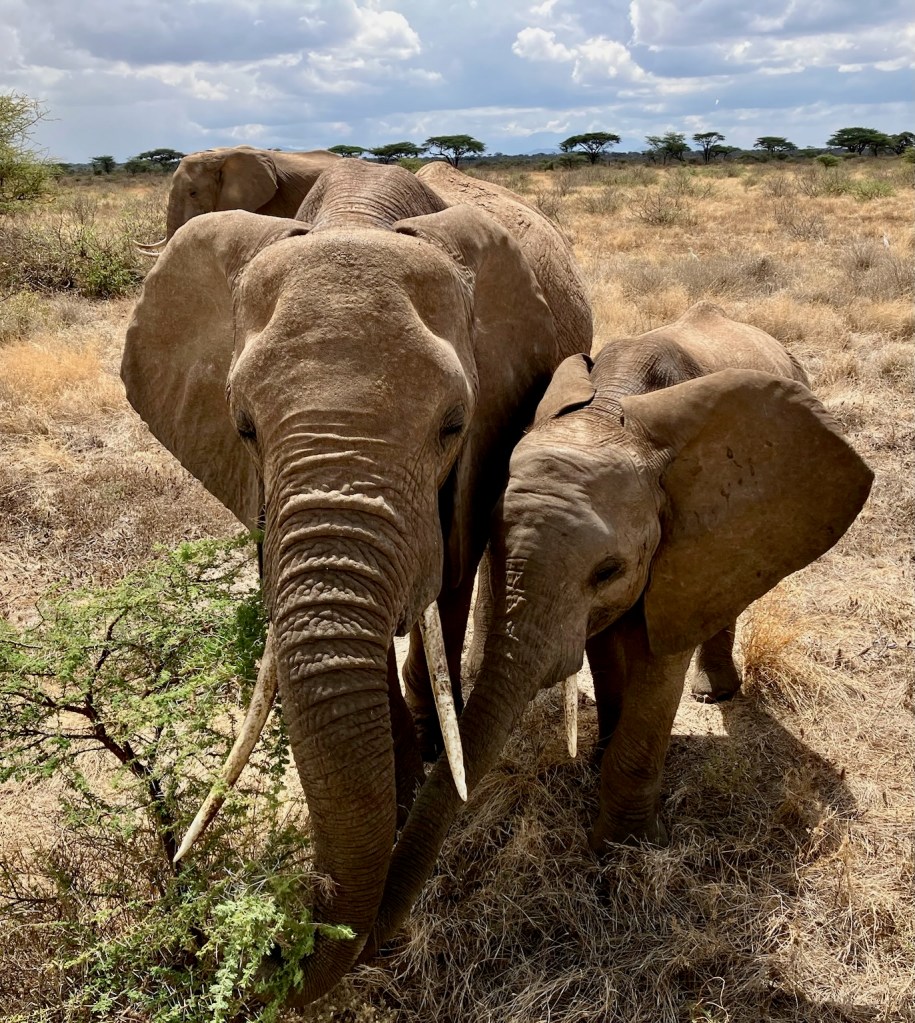
Other times, we stood in hushed silence as a black rhino stared us down before dashing into the bush, a leopard yawned and stretched while balanced on a tree branch, or lion cubs batted and wrestled each other like house kittens. We waited patiently for a large herd of elephants to make their way across an open field and finally pass by us on all sides, completely unconcerned about our quiet presence. No telephoto needed—we could nearly touch them.
There is a rhythm to each day on safari. It starts with a dawn “game drive” in the safari truck, hoping to see nocturnal animals heading home to rest, daytime animals warily eating breakfast, and slanted beams of the rising sun illuminating everything. Typically we would eat a quick breakfast ourselves and then keep driving until late morning, when the sun begins its intense midday beat-down. Lunch and downtime in the shade follow, and then a late afternoon game drive to catch the animals coming back out of their own shaded hiding spots in preparation for night. As the air cooled and the sun set over the surrounding hills, we would drive back to our camp for dinner, reading, and resting.

Accommodations ranged from rustic to luxurious. Some places served communal, hearty, “take it or leave it” meals, others offered western-style buffets, and still others provided white tablecloths, fine dining, and attentive service. The former felt a bit like eco-tourism camping; the latter more a holdover from Kenya’s colonial days, when Europeans and Americans expected the luxuries of home to be served to them during their temporary stay in “exotic Africa.” When we had high-end treatment, it felt a little jarring, particularly after spending much of the day in the wild, but I guess the expectations of today’s tourists are not so different from the past. I can’t say we minded a little pampering toward the end of our eight days.
There were times when the life-or-death struggles of life on the savannah were painfully clear. A group of zebras (known as a “dazzle”!) often stand facing in all directions to keep watch. Different species of gazelles, zebras, and other prey often clump together toward the end of day for protection in numbers. We saw a pride of lions devouring (or waiting their turn to devour) an enormous buffalo, which must have been a mighty struggle to kill. We saw a fresh elephant placenta, indicating a recent birth, and knew that the mother had quickly ushered her newborn into the safety of trees and the protection of her extended family. Later we saw a very young elephant limping on a hurt leg, struggling mightily to keep up with the others, and wondered if it would survive in that compromised state. We also saw patrols of armed park guards, keeping watch for poachers who still pose a threat to endangered rhinos, elephants, and others.
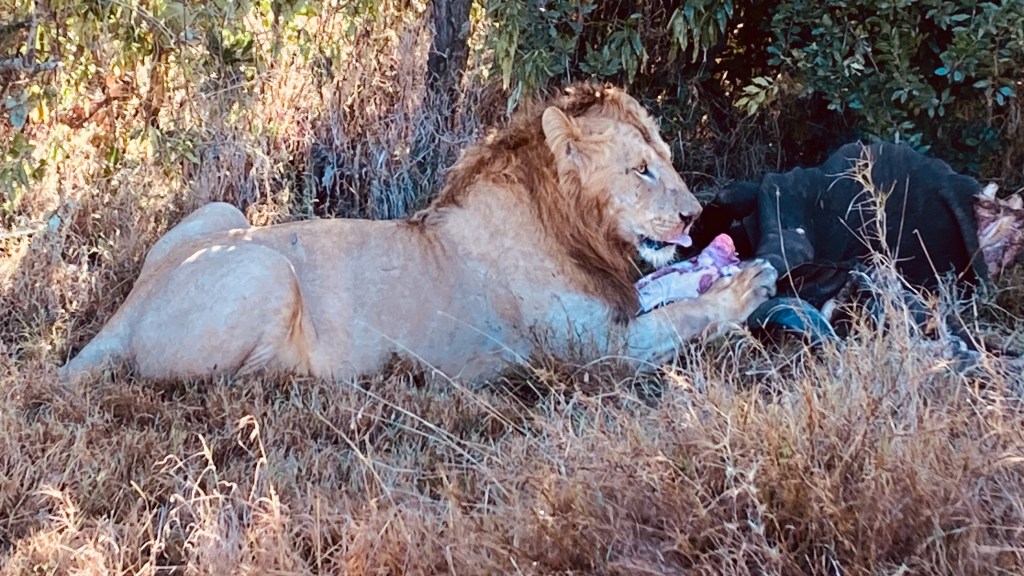
Nature wastes nothing in this land—when the lions are sated, hyenas move in to crack bones and eat what’s left, followed by jackals looking for smaller leftovers, then vultures, and then the ants take over. If we were quiet and respectful, the animals seemed to care little about us observing them. We did not register as prey, predator, food, or mate, and those are the only things that matter.
Perhaps that’s why our culture shock upon leaving was even greater than the shock of arriving. We had settled into a calm, quiet pace linked to the sun’s rise and fall. We had connected with a natural world that knows and cares nothing about humanity’s trials and struggles. About the only issue that affects us all is climate change, to which the animals must adapt (or die) without knowing why. Being “on safari” is as good an excuse as any to disconnect, because it truly feels like a different world. So when we emerged to learn the U.S. news of November 6 at a rest stop along the highway, it hit us like a punch to the gut. Whether the doomsday politics of the States or the life-and-death drama of the Kenyan savannah is more “real” is a question we’re still pondering.
NOTE: To see more of our safari photos, use the pull-down menu above to go to Photos>Safari Photos or click here.
| We are so grateful to have benefited from the knowledge, expertise, and connections of Iain at Leckie Safaris, who listened to what we wanted and planned all of the details of these amazing trips. We also loved our two guides, Timothy and Lutta, who always seemed to know exactly where to go and shared in our enthusiasm of discovery. If anyone thinking about a safari in Kenya wants a referral, please message us. |
 Seeing the World, One Year at a Time
Great post, beautifully written. I felt like I was there with you guys. Thank you for continuing to share!
LikeLike
Thanks Beth! Maybe someday you’ll bring Teddy on safari!
LikeLike
What a great adventure! Thanks for the vivid telling of it.
LikeLike
Thanks Steve! I still feel our worlds will collide again somewhere in the world but it’s great to follow your adventures too.
LikeLike
Dear Al and Rachel,
Thank you for a wonderful debrief and photos of your safari, and so glad that you had some quietude before the news of the past week hit you. I’ll look forward to hearing from you both again soon.
Leslie
LikeLiked by 1 person
Nice essay. Beautiful photographs.
LikeLiked by 1 person
Mesmerizing and enriching as always. Love your captivating descriptions and photos. Multi thanks. And…truly amazing that you managed to get past all those trucks. Surreal.
LikeLiked by 1 person