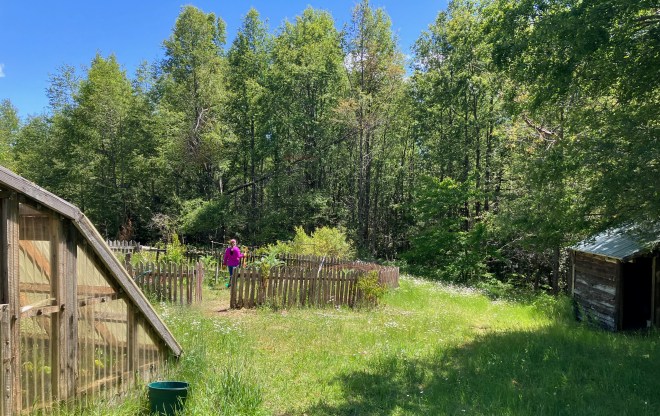
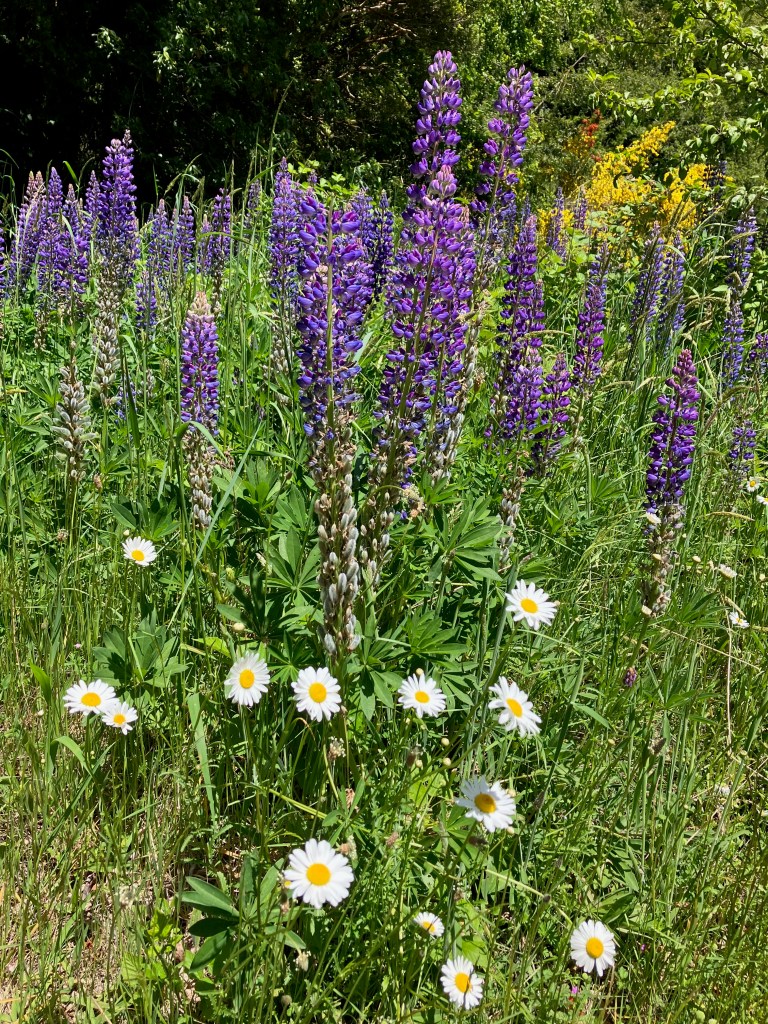
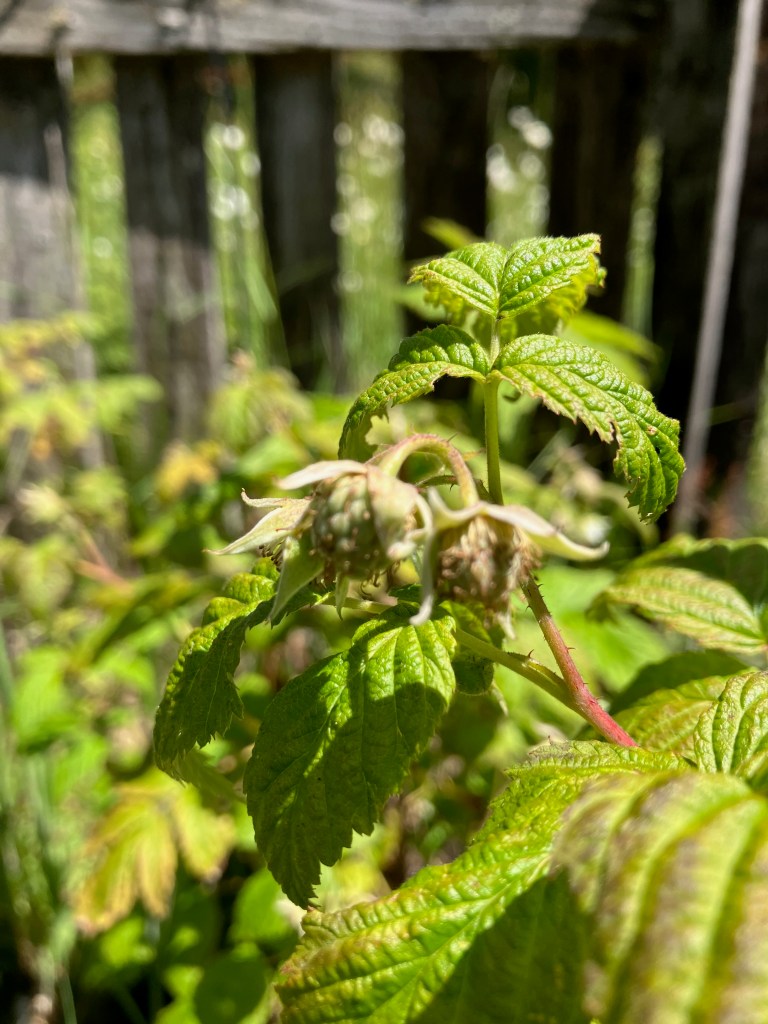
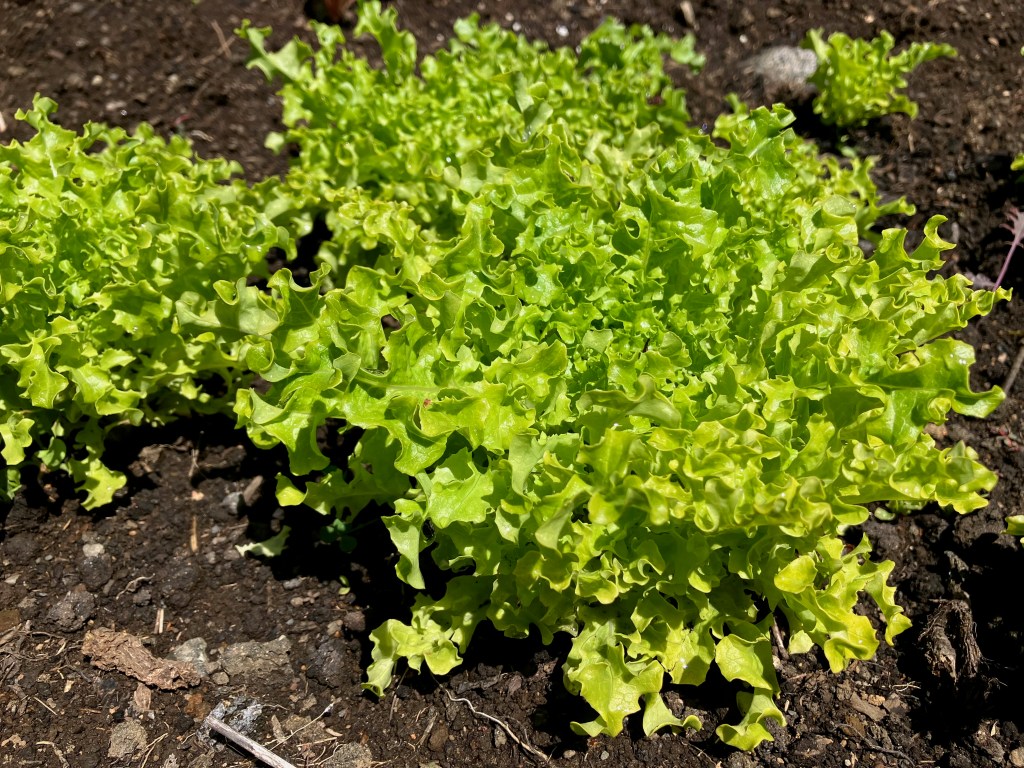
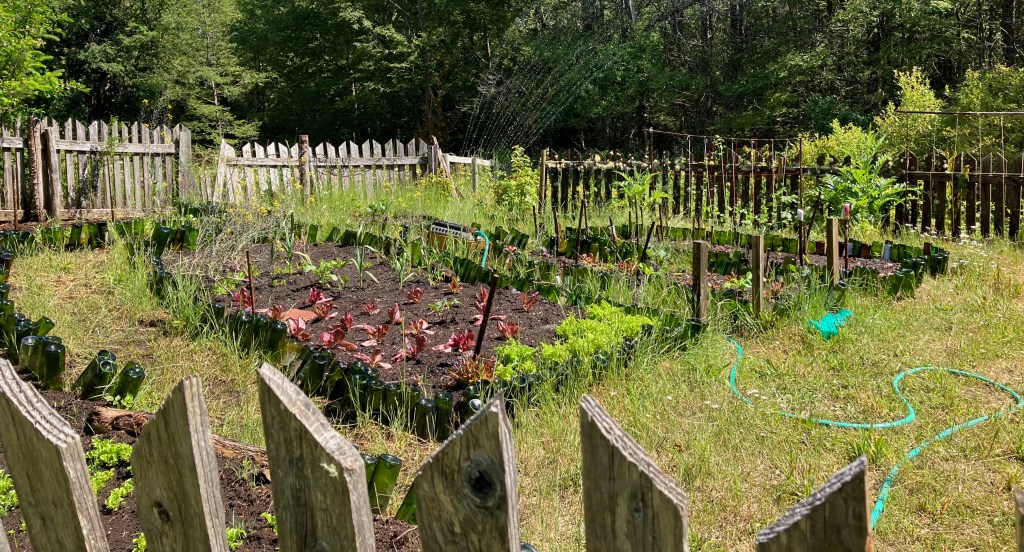
It’s finally spring on our mountainside near Pucón. Lupines and daisies splash purple, white, and yellow across the green hill below us. In the garden, tiny raspberries and baby artichokes are just starting to appear on the bushes. The pea vines are reaching up to grab the twine we strung for them to climb. Some of the early lettuces, radishes, and greenhouse chard are ready to eat, while others are just poking through the dirt. Tiny grapes are hanging from the vines in the greenhouse. We smell fresh earth, dew-dampened grass, and fragrant lilacs, abuzz with pollen-drunk bees, when we make our way down the hill to the garden. It needs watering every morning, we’re told, and the weeds never take a day off from encroaching on our budding harvest.
True confession: this was Rachel’s idea for a post. But she’s in the garden now, and she gave me her blessing to write about it. Some people do things, others write about people doing things. I guess some people do things and then write about them, but let’s not go crazy here. The point is that she finds peace and purpose in the garden, doing the work that’s needed to help living things thrive. I have helped with hauling out invasive blackberry vines, setting up irrigation hoses, constructing the pea-vine scaffold, and even doing some of the weeding. But mostly I’m in it for the eats.
For her, gardening is a metaphor for life. That idea came out of a conversation with a dear friend in which they were pondering what was really important to them at this stage of their lives. They talked about the work and persistence that’s required to get what you want, how the work itself provides its own form of satisfaction, how there are things you can’t control, and much more. Of course, thinking of a garden as a metaphor for life is as old as the Garden of Eden story, but it’s a big enough idea for everyone to put their own spin on it.
My biggest contribution to the household has been splitting firewood for the near-daily fires we need. Mornings here have rarely been above 45 degrees F, so fires have been necessary to at least take the chill off until it warms up (and sometimes when it’s rainy we feed the wood stove all day). Chopping wood could also be a metaphor for life I suppose: You work hard and burn up natural resources until they’re just a pile of ashes you have to dump somewhere. Hmmm. I think I like the garden metaphor better.
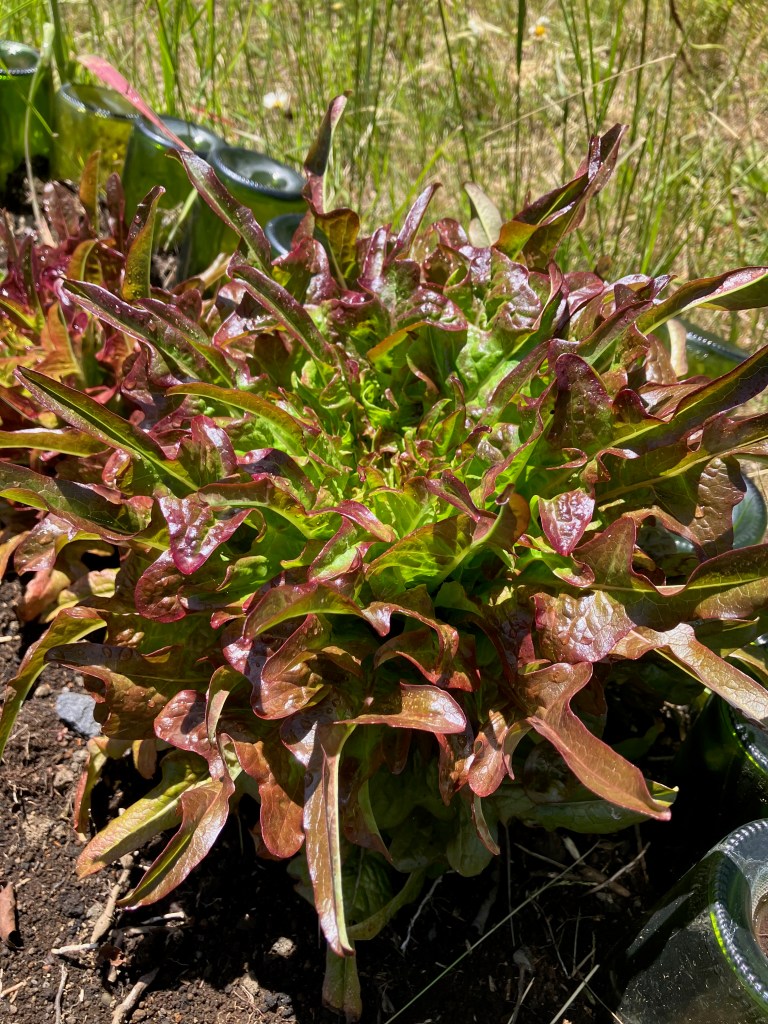
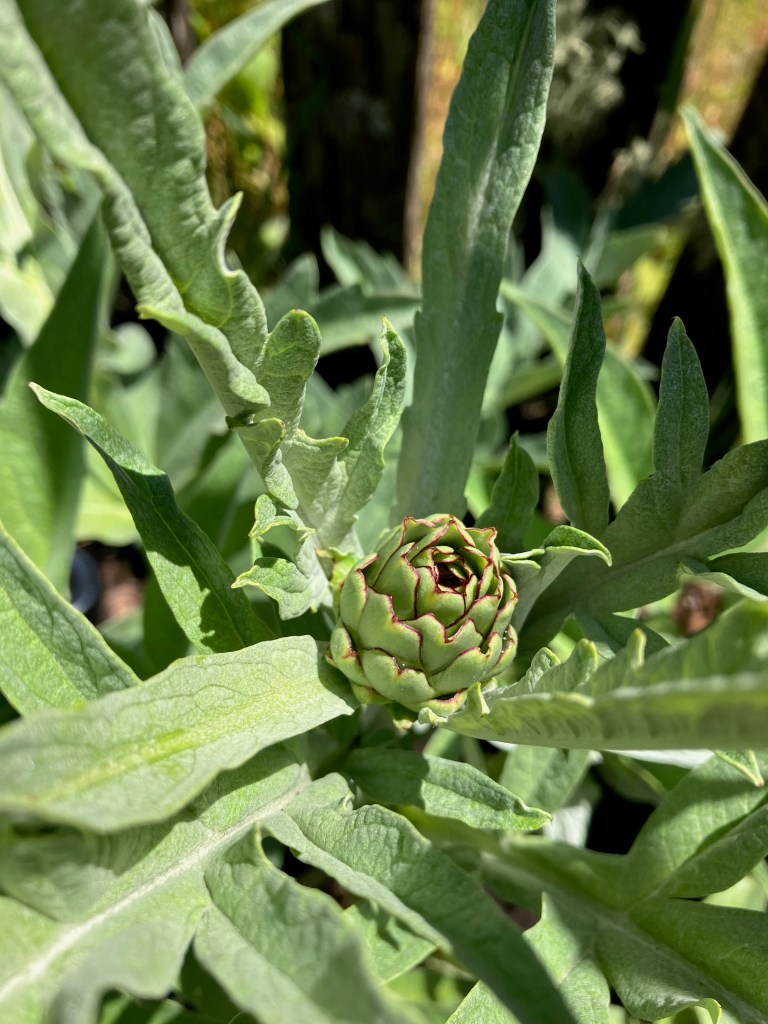

So here goes: Why gardening is like life.
Start with a solid foundation and the right ingredients. I’ve certainly learned that the science of early childhood development confirms this for humans: A nurturing, healthy environment that surrounds a baby provides the key ingredients that set that child up well for a lifetime. For a garden, it means putting in the most effort early—turning over and enriching the soil with nutrients by spreading manure and compost, pulling weeds so those nutrients are directed to more useful plants, mending fences, fixing hoses, and setting sprinklers so they’re ready when you need ‘em. All that before a single seed is planted. The planting is easy by comparison, but it will fail if seeds are dropped into unprepared soil.
Timing is key. Again, the science of early childhood development concurs: A critical factor in healthy development is having certain foundational experiences at the right time in development. The same is true across the lifespan. If we have some experiences or opportunities before we’re ready (or too late), they are of less value than if we have them at the right time. Planting a garden at the right time in the spring, giving it water when it’s newly planted, harvesting before the plants have gone to seed – all of these are time-sensitive. The Farmer’s Almanac even designates particular days as good or bad for planting, and some of the best gardeners we know follow those recommendations rigorously.
Patience is not just a virtue, it’s a requirement. Gardens do not grow overnight, no matter what you read in Jack and the Beanstalk. Doing your daily watering and weeding, you might see incremental progress, but you won’t see the plants growing like they do in those time-lapse nature videos. The raspberries will ripen on their own timetable, not ours. In life, too, we do a lot of waiting. Some of it is unnecessary (who hasn’t wasted an hour on a so-called “customer service” hotline?) but a lot of it is just life. I remember hearing when the kids were young that the days will crawl but the years will fly, and it’s true. If you have patience with the everyday tedium, you’ll be rewarded with a multitude of joyful moments that seem to flash by in retrospect. We also need to have patience with ourselves, when we’re learning something challenging, cleaning up after mistakes we’ve made, or just not quite where we want to be in life—yet. It’s important to take the long view (in gardening that might just be the growing season!) and yet also take pleasure in every step, every day along the way.
Both the satisfaction and the cost are greater than you anticipated. Plants are expensive and a lot of work! But damn, do they taste great when they’re freshly picked. And while fresh veggies are fairly inexpensive at the farm stands here, growing our own is a lot cheaper than Whole Foods, despite the up front investment. In fact, the National Gardening Association says that a $70 investment in produce gardening can yield, on average, a $600 return on the investment. And here in Chile, we had the incredible good fortune of starting with a full tool shed, two greenhouses, abundant blueberry and raspberry bushes, and well-defined garden beds. Of course, the cost of a garden is a drop in the bucket compared to the cost of living. Some estimates say it costs around $300,000 to raise a child to adulthood in the U.S. (in today’s dollars)—it’s a good thing plants don’t need college! But, oh, the satisfaction of graduating, of succeeding in something you’re passionate about, of traveling the world? As they say, priceless.
Some things are beyond your control. “Into each life, some rain must fall,” said Henry Wadsworth Longfellow, but how much, when, and how hard is always a crapshoot. Not to mention wind, cold, drought, and infestations of pests (snails are the little buggers here that chew on everything). A strange influx of swarming horseflies has also driven us to distraction at times, although, oddly, they don’t seem to bite—just swarm and annoy. The winter has lasted so long here that everything is late to grow. Just last week we had temperatures in the 30s and needed to cover some of the tender sprouts. Some things just don’t grow, despite our best efforts. And in the end, everything we’ve planted will die. That’s not sad – it’s inevitable. The only question is did we get the most out of the time we had.
This last point is playing out now in our own lives. Just as we are beginning to reap the rewards of this bountiful garden, we have had to pivot. The owner of this wonderful house that we have been privileged to live in for two months has discovered that the leaky roof we all knew about needs a bigger repair job than anticipated. As is the case anywhere there’s a long winter, the only time the work can be done realistically is over the next two months, Chile’s summer. After a lot of thought and a search for alternatives, we decided that, having lived through house renovations before, we don’t want to do it again in the limited time we have here in Chile. Our host graciously allowed us to back out of our agreement (and offered us an open invitation to visit the garden). Otherwise, we think of our work so far as paying it forward to some future guests here. We’ve benefited from those who came before us, and now we can pass it along.
So in two weeks, we will take a road trip through the Seven Lakes region of Argentina, and then settle into a new apartment near the lake in Pucón for the summer. We’ll be sad to leave here but are excited for the new experiences we’ll have. And we’ll be back to see how our garden grows.
 Seeing the World, One Year at a Time
A wonderfully poetic philosophical metaphor that deserves a wider audience.
I’m going to forward it, but it really belongs in a magazine.
To other readers: can you just smell the pleasing garden aromas? I can!
Les
LikeLiked by 1 person
What a joy to read about your adventures. I have always loved gardening especially the pleasure of eating vegetables and fruit that I have watched slowly grow to maturity. Your description of the life you are leading is so beautiful. Enjoy every moment.
Rosamund
LikeLiked by 1 person
Thank you, as always, for an inspirational blog. The combination of nurturing a garden and a child is brilliant. This entry deserves wide distribution and, perhaps, to be read at every dinner table.
Love,
Lane
LikeLiked by 1 person
As always your writing brings us into your journey with sensory pleasure and depth. I admire your generosity of focusing on others appreciating your harvests after you leave.
LikeLiked by 1 person
Thanks April! And we send that admiration right back to you and Denny for your own courage, tenacity, and generosity of spirit! Please give our best to Denny and your whole family!
LikeLiked by 1 person