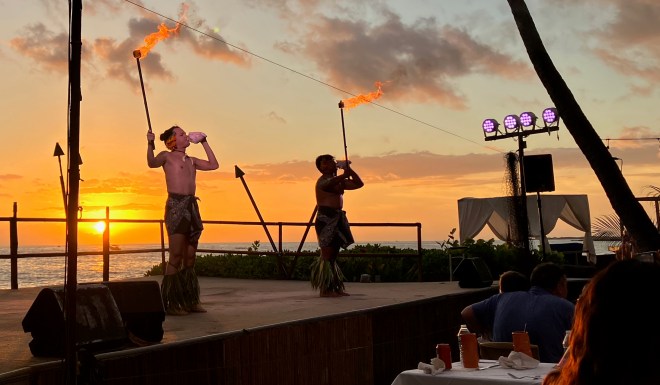
It’s completely unfair to compare the places we’ve been, and yet it’s also impossible to resist. It’s unfair because each place deserves to be appreciated on its own merits, not in comparison to some other place. Trying to “be here now” means focusing on where you are, not imagining a different place and time that takes you away from the present moment. But since I have not achieved Zen master status (nor will I ever), comparisons still seep into my mind. If anyone reading this is a Zen master, you should probably skip this post as it will only frustrate you (if Zen masters get frustrated…).
Anyway, having spent the last two plus weeks on the Big Island of Hawai’i, I consider myself an unequivocal expert on all things Hawaiian, and so have a right – no, a duty – to share my assessment with anyone considering a trip here. As luck would have it, I am equally an expert on another volcanic archipelago many miles from any continent, having spent a month in the Galapagos two years ago. The two island groups are both major tourist destinations for good reason—they are equatorial, offer unique experiences in nature, and feature picture-perfect tropical flowers, palm trees, and sunsets. But which is a better destination?
Note: all photos here are from Hawai’i. If you’d like to compare them to photos of Galapagos, see our three photo galleries here.
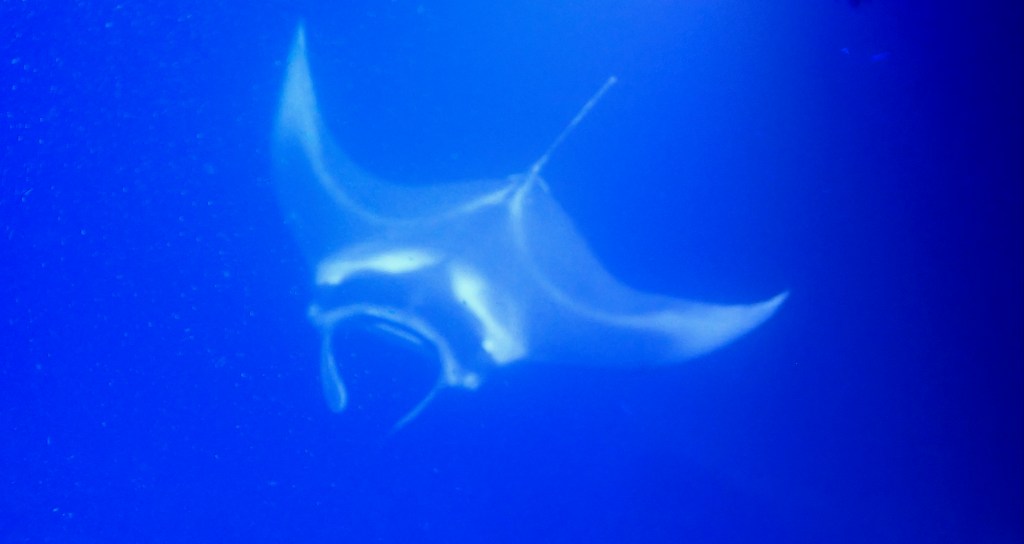
Nature: Galapagos. It may be the ultimate unfair comparison. Nearly the entire Galapagos archipelago has been a protected national nature preserve since 1970 and before that was the inspiration for Darwin’s Origin of the Species, for crying out loud. But seriously, the giant tortoises and ubiquitous sea lions alone eclipse anything Hawai’i can offer. Throw in blue-footed boobies, frigate birds that inflate their red throat like a balloon, land- and sea-based iguanas, a huge assortment of marine life, from seahorses to sharks, and, oh yeah, penguins! That’s just not fair – I doubt any place on Earth can compare. Hawai’i does have night-time snorkeling with manta rays, which is truly remarkable. But the unfortunate introduction of so many invasive species has robbed these islands of their bio-uniqueness. One example: After rats aboard British ships began to infest the islands (and destroy sugarcane crops), plantation owners brought in mongooses to deal with the problem. Oops! Turns out mongoose hunt in the day and rats come out at night, so instead of killing off the rats, they feasted on the eggs of endemic birds. Bye bye birdies! Even the first Polynesian canoes in 1000 A.D. carried dogs, pigs, chickens, and a number of invasive plants that eventually wiped out most of the endemic species that had been here. So while it’s fun to see a mongoose among the rocks, goats poking around everywhere, and wild chickens pecking on every street corner, it doesn’t quite compare to a 500-pound Galapagos tortoise.
Convenience: Hawai’i. This one’s easy. When you land in Hawai’i, your phone works, your credit card works without extra fees, the internet is fine, and everyone speaks English. You don’t need a passport, renting a car is easy, and the grocery stores are the same as anywhere else in the U.S. It’s a long flight to be sure (from the East Coast, it’s at least two flights) but getting to the Galapagos will likely require three flights and a ferry. While there are plenty of English-speakers there, Spanish is the official language, and internet access is spotty. They use the U.S. dollar, but it’s a cash economy for the most part; credit cards often don’t work, even for excursions costing hundreds of dollars. That said, in Galapagos you can catch fast ferries between the islands easily and cheaply – in Hawai’i, island-hopping requires a flight.
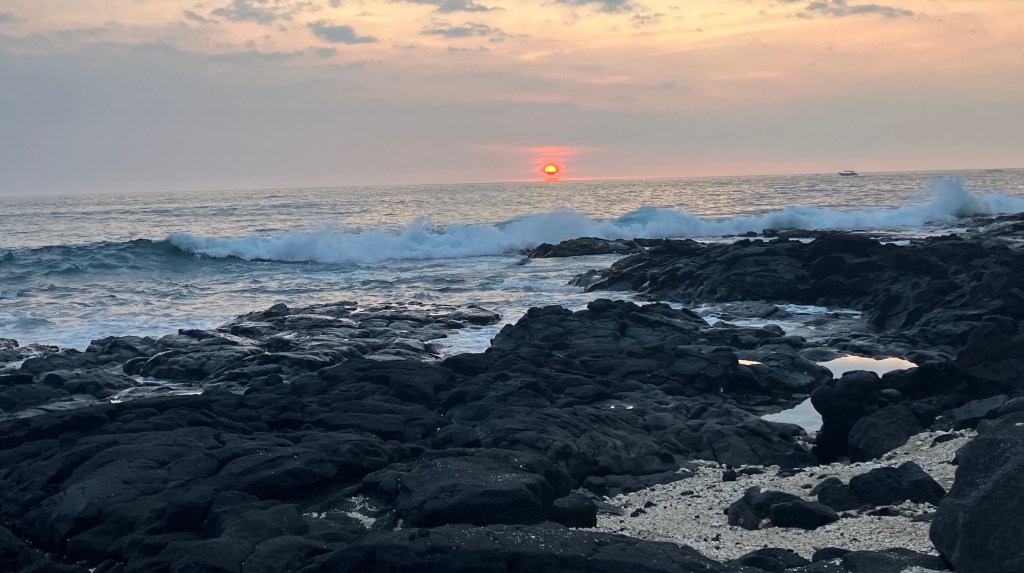
Beaches: Galapagos. Surprised? I was. The sandy, uncrowded beaches of the Galapagos are not why people go there, but they should be. Warm, turquoise water, gentle waves, the finest sand my feet have ever felt – what could be better? It’s true, Hawai’i does have some beautiful beaches, but often they are far more crowded and ringed by expensive resorts, or in many places the volcanic rocks that line the shore can make it nearly impossible to get in the water. It’s also true that other Hawaiian islands like Maui and Oahu have more famous (and probably better) beaches than the Big Island. And if TV and movies are to be believed, islands like Oahu certainly have big wave surfing. There is surfing on the Big Island, but in fewer locations that are harder to reach. Often local surfers hang ten off of a rocky shore that is dangerous for beginners. Even boogie boarding seems hard to find on the Big Island (where boogie boarding was invented) except in places that are either crowded or dangerous. But who would have guessed that I would be able to take a surfing lesson in the Galapagos and have the entire sandy beach to myself and my instructor?
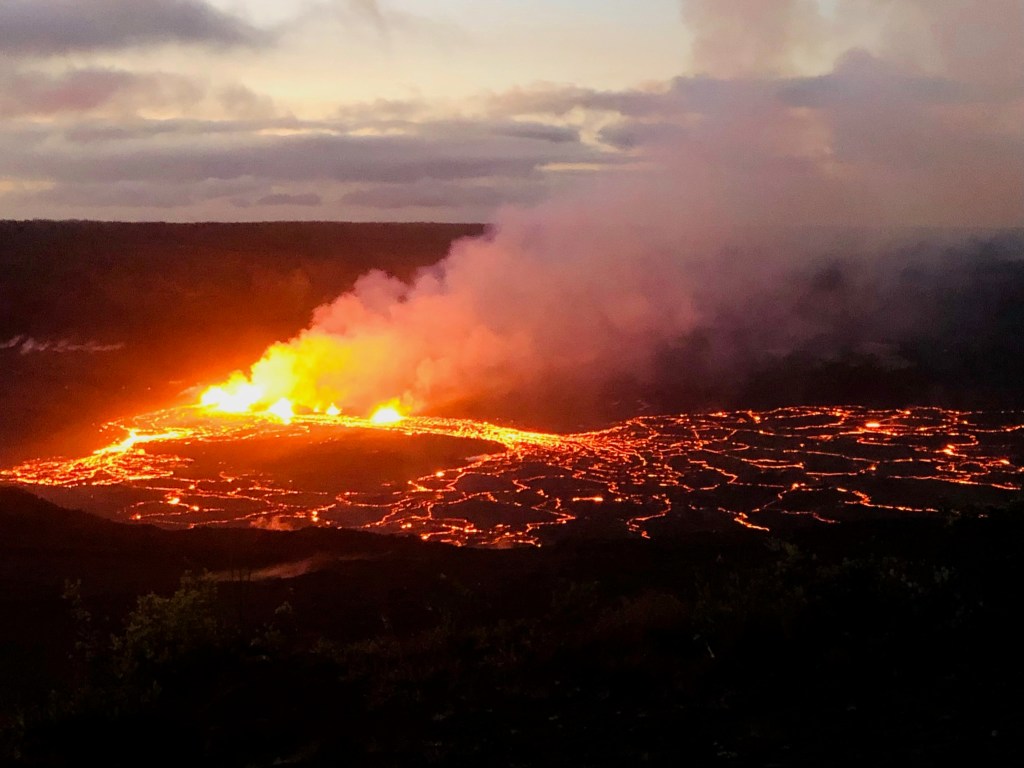
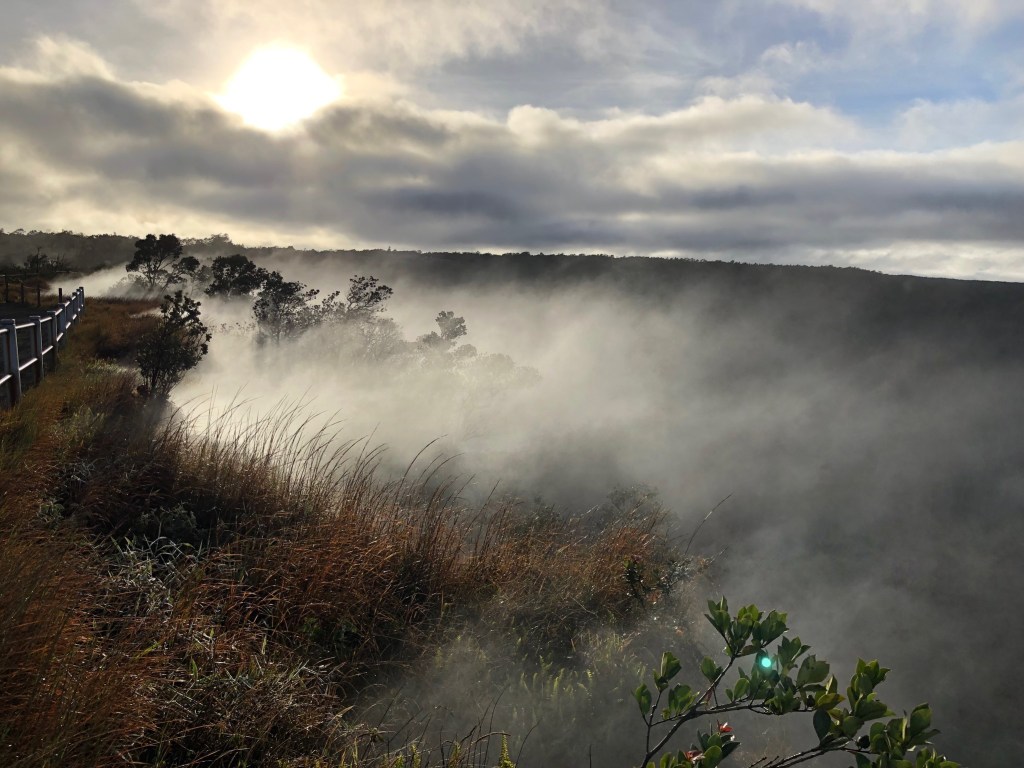
Volcanoes: Hawai’i. This was almost a toss-up, because both island chains are made by volcanoes, still have active volcanoes, and offer opportunities to hike on, around, and even into dormant volcanoes. But the fact that Hawai’i boasts Volcanoes National Park, which includes hikes through steaming vents in the earth and hardened lava flows, informative signs, and a jaw-dropping Chain of Craters driving tour, tips the scales. As an added bonus, Kīlauea started erupting the day after we arrived here, giving us the opportunity to drive up to the rim at night to see its red-hot molten lava bursting up (from a safe distance). In Galapagos, hiking around the volcanic landscape is equally impressive, but the most active volcano is not accessible in the same way. Hawai’i’s volcanoes are also huge – Mauna Kea and Mauna Loa are nearly 14,000 feet above sea level, and if you count from their base on the ocean floor, they are taller than Everest. It’s a magical experience to drive from sea level up to the visitor’s center above 12,000 feet, take a short hike and sit above the clouds to watch the sunset and then stargaze (some of the most powerful observatories in the world sit atop Mauna Kea because its night sky is so clear).
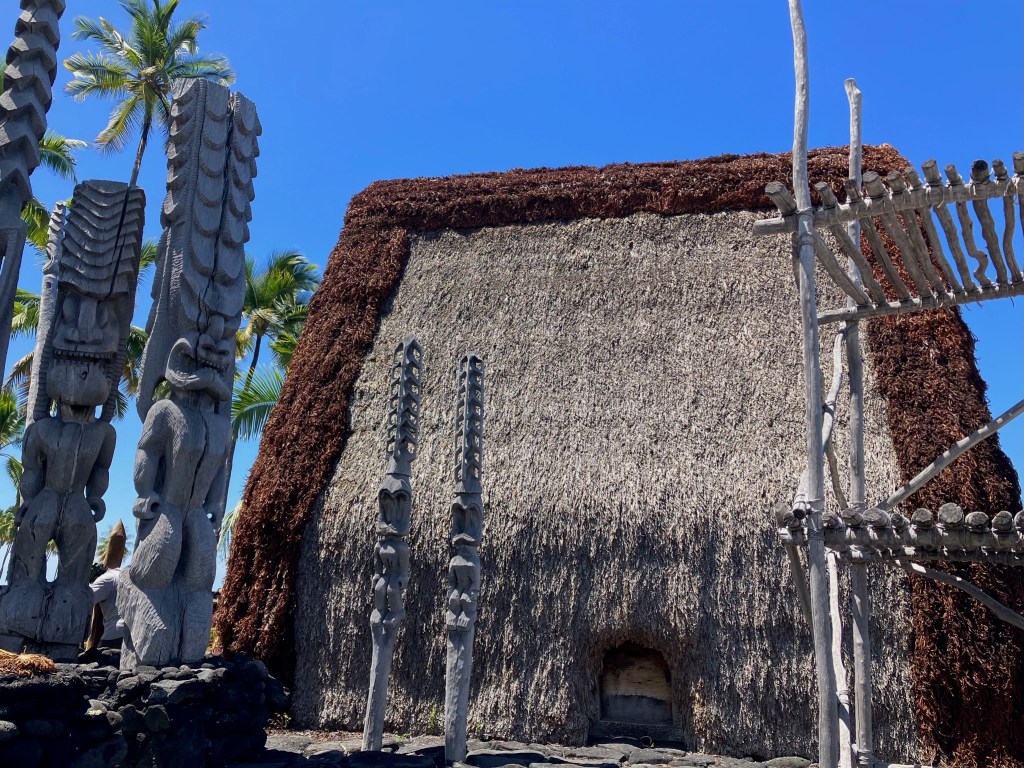
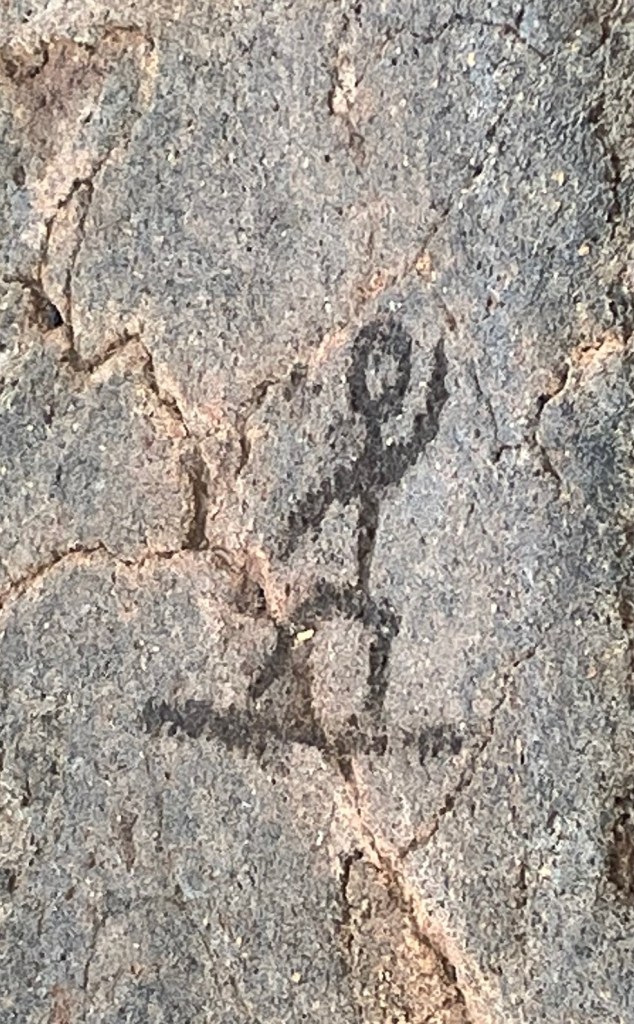
HIstory/Culture: Hawai’i. This one is a bit unfair too—there was a thriving culture in Hawai’i for at least 700 years before European contact, and Galapagos seems to have had no residents other than migratory pirates and whalers, a short-lived penal colony, and the occasional shipwreck victim until the 20th century. Both islands have experienced more than their share of exploitation, but there’s little “early history” in Galapagos other than geological. On the other hand, efforts to preserve the language and culture of Hawaiian natives have expanded significantly in recent years after centuries of attempts to repress them. Hawaiian language is everywhere and preserved historical sites recount the legacy of King Kameameah, who first united the islands, showcase petroglyphs carved into the volcanic rocks, and recount the legends, religious beliefs, and cultural traditions of the people who first figured out how to live here sustainably. Even touristy luaus are filled with information and respect for the culture. Galapagos has a lot on Darwin but otherwise the emphasis is rightly on the animals.
Cost: Galapagos. We had sticker shock in the Galapagos, but it was nothing compared to the prices in Hawai’i. We had come from mainland Ecuador, where the cost of living is much less than in the U.S. The prices for food, lodging, and entertainment in the Galapagos at that time were on par with most U.S. metropolitan prices. But Hawai’i is on another level entirely. You could say that’s because nearly everything is flown in, but that is also true for the Galapagos, and how do you explain a $9 local Hawaiian mango? A couple of fish tacos at a roadside stand cost upwards of $20. It’s a few hundred dollars less expensive to get to Hawai’i from the East Coast, but once you’re here, watch your wallet (and not because of pickpockets!). Hotel rooms run $300-800 dollars a night; 45 minutes in the water with manta rays will cost $120 or more per person, and 2 hours in a helicopter might be $800 per person or more. I admit we are still not used to post-inflation prices even in the U.S. so our eyebrows are raised easily. Fortunately, with some digging, it IS possible to find free or low-cost ways to enjoy the Big Island (and Galapagos for that matter).
Food: Hawai’i. Is it any surprise that fresh fish is the star of the dining show in Hawai’i? Mahi-mahi is plentiful of course, but we also sampled ono (also known as wahoo) and especially ahi (yellowfin tuna). Sushi is an art form, poke (“poh-kay”) bowls (diced, marinated raw fish, usually ahi, often served with rice, mango, and seaweed salad) are amazing. There are also thriving ranching and dairy farms in the center of the island, so roasted pork and artisanal ice cream (not to mention ice pops made with local tropical fruit) are delicious. We found a few farmers’ markets and sampled lilikoi (a kind of local passionfruit that we came to know as granadilla in Ecuador), papaya, mango, and some varieties of squash and long string beans that we had not seen before. While elevated local food is possible to find in Galapagos, it’s rare, and the street food is, like mainland Ecuador, mostly bland: piles of starchy rice and potatoes with a bit of overcooked meat or fish. Fortunately, both island groups have thriving microbreweries, so we could at least find a tasty IPA in both places!
When we came to Hawai’i, I did not intend to compare it to anything other than the images of paradise that are everywhere. When I was a kid, I had been fascinated by a book about the Polynesians, and I grew up with Hawai’i 5-0, Magnum PI, and Wide World of Sports showing incredible surfers at the Duke Kahanamoku Classic. It was these media-driven images that I was comparing the real Hawai’i to. But when we arrived, the similarities to the Galapagos in the way these islands were formed and the current-day landscape widened the lens for me and became more real than the media images in my mind.
So what’s the bottom line? It would be overly simplistic to say “choose Galapagos for nature, beaches, and cost; Hawai’i for culture, food, and volcanoes.” Truth is you can find great examples of all of these in both places, and each has its own unique qualities. Travel exposes us not just to different landscapes, flora and fauna, people, and histories, but its value also lies in experiencing what it’s like to be in a place. In Hawaiian, mahalo means “thank you” and embodies a spirit of respect and gratitude. So I offer mahalo to both archipelagos, which a real Zen master might say are beyond compare.
 Seeing the World, One Year at a Time
Hi, Alan and Rachel!
I’ve been neglectful about responding to your recent posts – my apologies! I’m already enjoying your take on the archipelago comparisons, and certainly enjoyed reading how you both spent your summer. Here’s to continuing informative, entertaining, and thoughtful blogs as you describe your next destination and landing spot in Pucon. I’ll be thinking of you two!
LikeLike
No worries, Leslie, it’s great to hear from you! And an update on Pucon: I just learned that the volcano that is only 15km away is now threatening to erupt! So I guess our volcano viewing experience may not be limited to Hawai’i and Galapagos! Yikes!
LikeLike
Thanks for the lovely essay. I choose both and I choose you and Rachel, both, as my guides.
Lane
LikeLiked by 1 person