In Spain we were not just travelers; we were time travelers. We had the chance to sleep in a 15th century castle. We walked where prehistoric humans created some of the oldest art. We imagined ourselves clanking around in suits of armor and ran our hands along the same stone walls as the ancient Romans. And just as the country likely surprised those early settlers who arrived in boats and across mountains, we were surprised, too. Surprised to discover canyons and caves, fall in love with vermouth and Velazquez, and stand at all the points of the compass rose. As I reflect back over the last ten months living and traveling on the Iberian peninsula, some of our favorite surprises leap out.
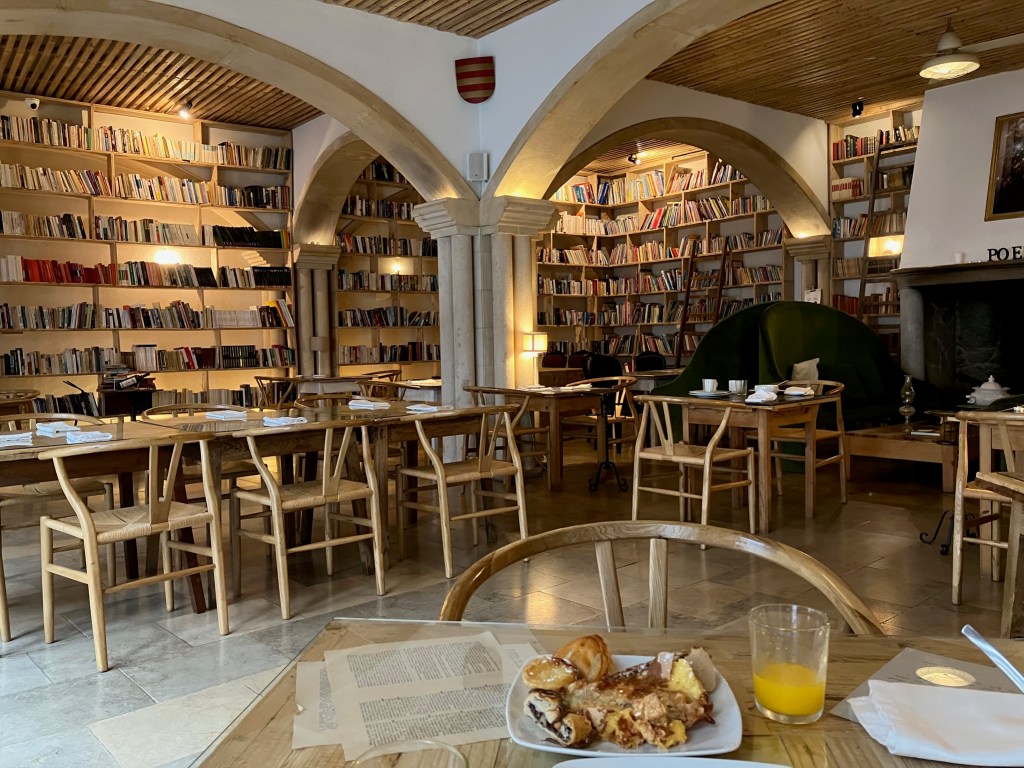
- We slept in 40 different beds, which is slightly fewer than the previous year in Ecuador, but still a considerable number given that we rented an apartment for five of the ten months. We stayed in a castle perched atop a small mountain in Andalucia, in the chalet of some Spanish friends in a tiny Pyrenees village, at a traditional Parador inside a medieval palace, and in a posada (inn) at what felt like the end of the known world in the Picos de Europa mountains. We enjoyed staying near to the places where Visigoths, Romans, Jews, and Moors lived in the historic centers of Tarragona, Córdoba, Cádiz, Porto, and Gijon. One hotel in Obidos, Portugal, was crammed with thousands of books lining every available wall and stacked up on the flat surfaces throughout. Another stay offered musical instruments for guests to play at will. Some beds were better than others to be sure, but all in all, we enjoyed the variety, were once again grateful to avoid picking up bed bugs, and for so many reasons loved having a long-term rental in Spain to call home for a spell.
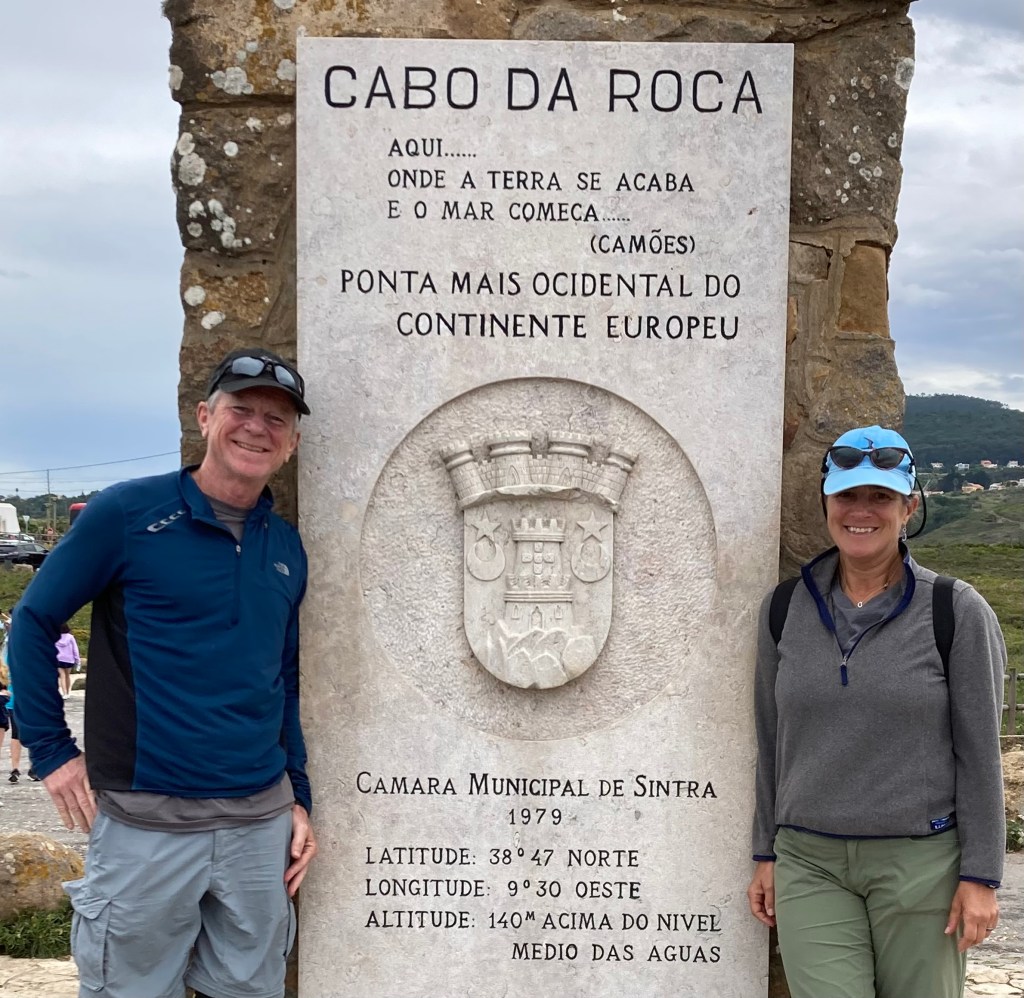
- In our travels through and around the Iberian peninsula, we managed to stand on the most northern, southern, eastern and western points. We made certain to take our rain gear to Estaca de Bares in the province of A Coruña, Galicia, the northernmost point of Spain, being that it is one of the rainiest places in all of Europe. True to form, we got rained on. There we admired yet another one of so many working lighthouses, this one constructed in the 19th century, and imagined spying Celtic boats that brought settlers south from the British Isles in pre-Roman times. On the west coast of Portugal, gazing out at the vast Atlantic from Cabo da Roca, we envisioned 15th-century explorers standing in the same spot and dreaming of adventures and riches beyond the horizon. To the south, Tarifa gets bragging rights, being just eight miles from continental Africa, whose Atlas mountains are easy to see on a clear day, and standing at the confluence of the Mediterranean and the North Atlantic waters in the Strait of Gibraltar. It is famous for wind and kite surfing, as the area is whipped by near-constant, powerful winds. And lastly, to the east, we got to check two boxes—the easternmost point on the Iberian mainland as well as the easternmost point of Spain. Without crossing water, we enjoyed stunning views of the Mediterranean a mere 16 miles from the border of France on the Cabo de Creus peninsula in Catalonia, bracketed to the west by the majestic Pyrenees range. This area also suffers blasting winds known as the tramontana, which have been featured in the films Volver by Pedro Almodóvar and Tramontana by Ramon Gieling. Check them out if you want a sense of the way these winds impact the lives of the locals. Off shore, on the little island of Menorca, we hiked the coast near the town of Mahón (see Island Time: 7 Days in Menorca) and thought about ancient sailors taking refuge from storms there as they crisscrossed the Mediterranean trading goods and expanding their empires.
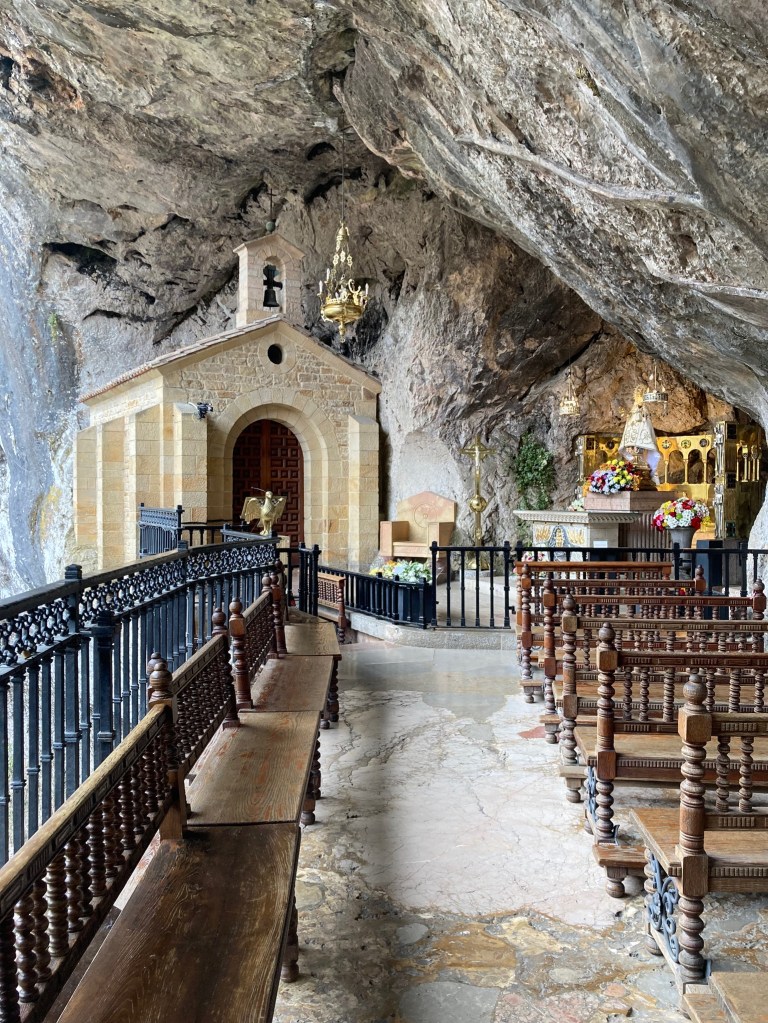
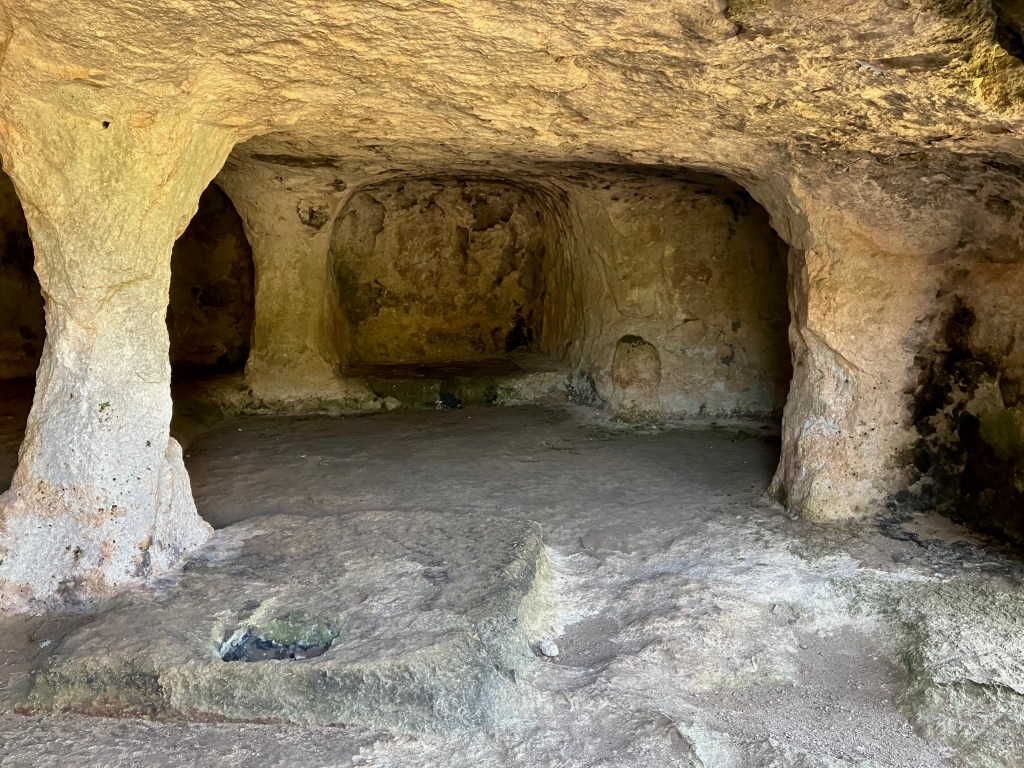
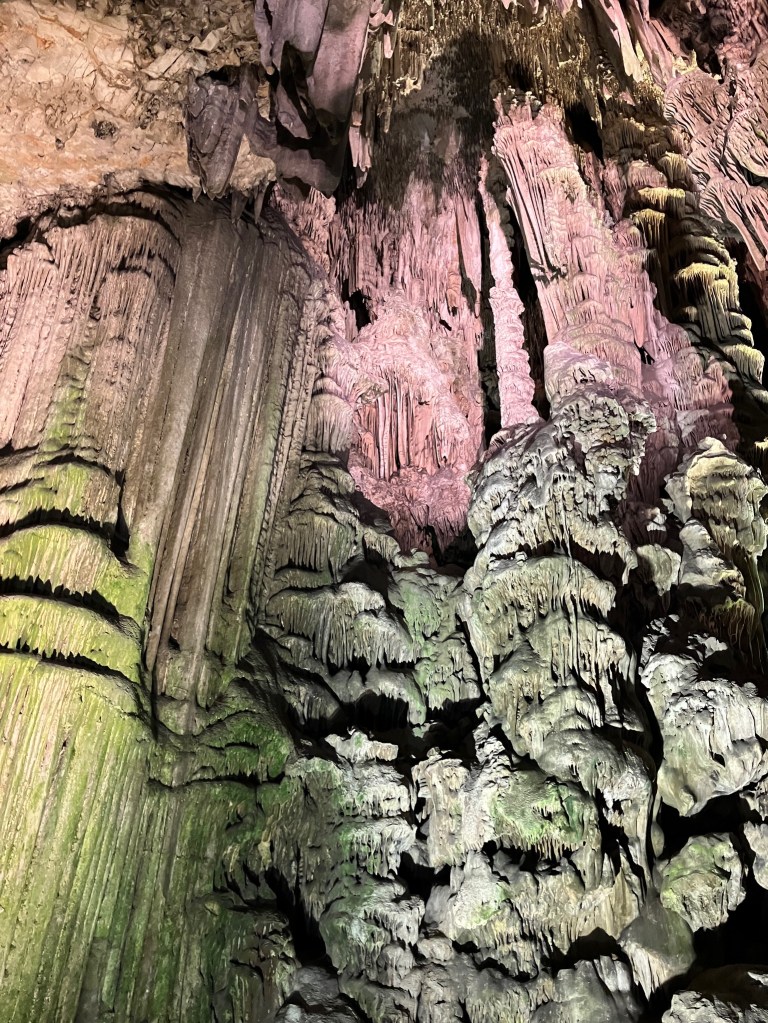
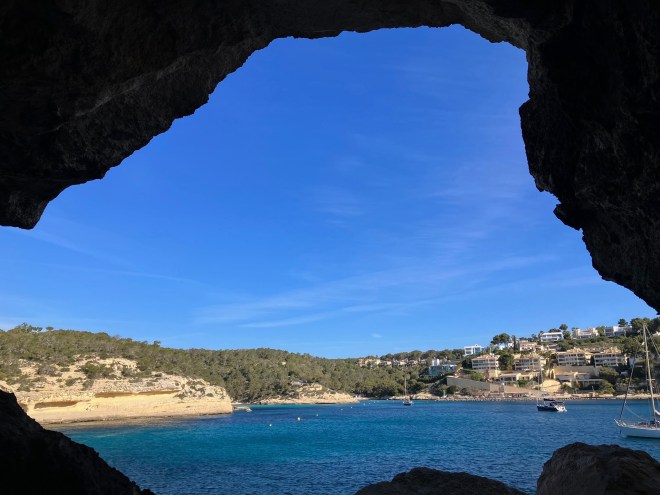
- Unexpectedly, we discovered that Iberia is home to a myriad of different kinds of caves. Early on in our time there we took a day trip to English-owned Gibraltar, where we explored “The Rock” inside and out. We were surprised to learn that Gibraltar has more linear miles of roads inside the stone mountain than through the city around it. During World War II, the tunnel builders took advantage of natural caves to install a hospital, barracks for the soldiers, an enormous mess hall, and more. Additionally, inside one area of the mountain there is a network of caves filled with massive stalactites and stalagmites, which have been colorfully illuminated in a rather kitsch and over-the-top way but still kind of cool to see. In the north, at the site where supposedly the “reconquest” of Spain began (by Christians, expelling the Moors), we visited the Santa Cueva (Holy Cave) de Covadonga, an 8th century chapel tucked inside a cliffside cave. In the south, we saw a whole village built inside caves! (See Pueblos Blancos Photo Gallery.) Along the coast, we found caves carved from the soft lime and sandstone by millennia of water erosion. Some were accessible only from the water; others we could walk to without getting our shoes wet. On Mallorca we happened upon a small network of caves with a former hermit’s hidey hole and makeshift shrine inside it. Mallorca also boasts enormous caverns as big as cathedrals—a bit on the touristy side, with chatty guides and cheesy music, but spectacular nonetheless—while in Menorca we stooped through caves carved out for burial sites 3,000 years ago. And perhaps most surprising of all were the ones we were not allowed to photograph: the prehistoric Cuevas de Pindal on Spain’s north coast. Inside this long, dark cave were wall paintings of horses, reindeer, and even a wooly mammoth, which brought us chills—not caused by the damp, cool air, but by the idea that people stood where we were standing to make these paintings some 15-20,000 years ago.

- The paintings of Pindal represent some of the earliest known art in existence—yet some of it looks surprisingly like modern paintings we saw in the grand survey of European art we were exposed to while in Spain. Among the most modern was the collection in the famous Guggenheim Bilbao museum, with its amazing architecture by Frank Gehry. Little did I know that the art inside would stun me as much as the building. The works are edgy, large-scale, and beautifully displayed. On the more traditional side, churches throughout Spain and Portugal are chock-a-block full of religious art, which was used to educate the illiterate population of past times to the story of Christianity, the teachings of the Bible, parables, consequences of wrong-doings, and morality tales. (If I never see another gilt-bedecked, emotionless, religious-themed Gothic painting, that will be just fine.) That said, there were some gems to be found amongst all that Gothic gallimaufry. We loved the small, unassuming town churches that happened to have a painting by one of Spain’s famous sons—the Mannerist painter El Greco or The Golden Age’s Zurbarán to name a couple. In stark contrast, the museum in the town of Figueres, designed by surrealist Salvador Dalí to house his work, is as delightfully twisted and bonkers as the artist himself. And then there is Picasso. I could write an entire blog post about his powerful imagery and prodigious volume of works. We saw Picasso’s art in the south, east, middle, and north of Spain. We saw the entire span of his life’s works from childhood ink drawings done in the 1890s to the frenetic interpretations of fellow Spaniard Velazquez’s famous Las Meninas dashed out in a matter of weeks during the 1950s. I was gut-punched by his staggering, horrifying image of the traumas of war in the massive, monochromatic Guernica hanging in the Reina Sofia museum in Madrid. And the sheer scope and quantity of historic art in Madrid’s renowned Prado is mind-blowing (including the original Las Meninas that Picasso was so fixated on), but touring it can also be exhausting and an exercise in jockeying for position in galleries jam-packed with people. Painting, sculpture, architecture, mosaic, ceramic, metal, ancient, medieval, modern, and everything in between—Spain does not disappoint in the arts, and we were fortunate to see so much of it in our time there.
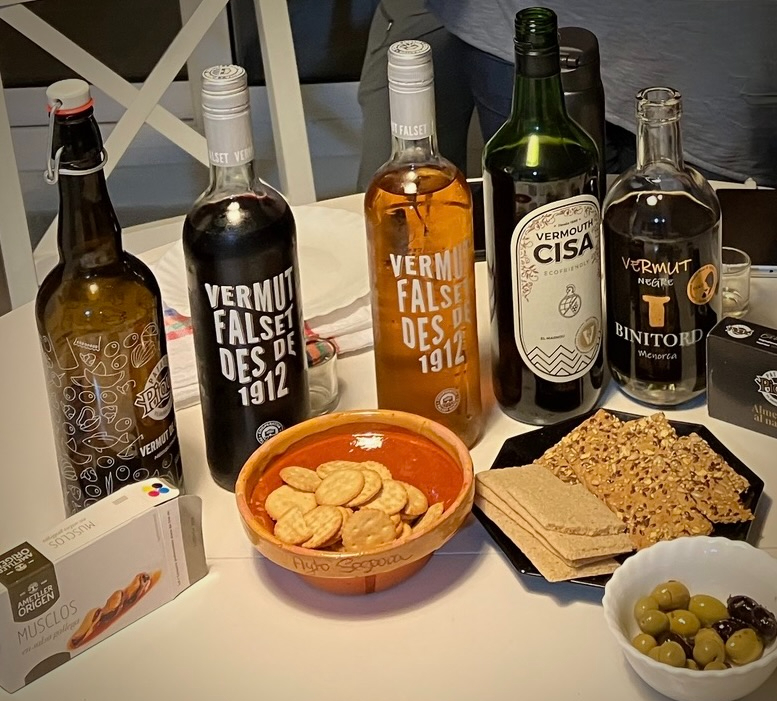
- And lastly, we come to vermut (aka vermouth). Ah, vermouth. In advance of our time in Spain our good friend Vivek, who, in my opinion, knows just about all there is to know about libations, tried to educate us in the ways of Spanish vermouth. But we were underwhelmed. Once in Spain we found that la hora de vermut—essentially vermouth happy hour—is one of Spain’s greatest pleasures and is not relegated to a particular hour of the day. It usually happens before eating, which you might imagine means it can happen numerous times in a day. Vermut comes in white and red, sweet, spicy, herbaceous, earthy, on ice, occasionally mixed with seltzer, always served with a slice of orange and possibly an anchovy-stuffed olive. It is frequently accompanied by a salty snack (what’s with all the olives?!), costs about $3 for a long pour, and many bars, cafes, and restaurants have an in-house variety that is worth ordering. You know what they say: When in Rome…or in this case Spain. We jumped in with both feet and drank the kool-aid, er, vermouth. We became devotees enough so that as we were preparing to depart Spain for the United States, I chose to discard my hiking boots and t-shirts to make space in my luggage to sneak in a few bottles.
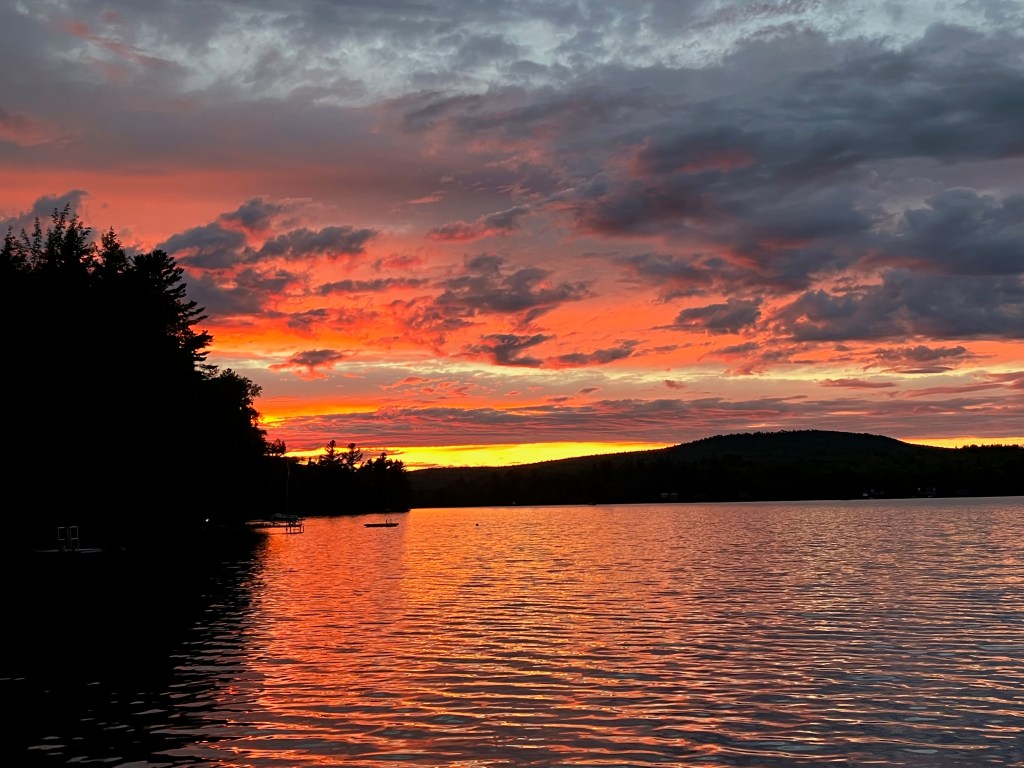
Now we’ve come full circle and are back in our little cabin in the Maine woods, in our own bed, with our material possessions, the songs of birds we can name, and the calm of familiarity settling on us like a well-worn sweater. Our pulses slow and our minds quiet as we resume our lake-life routines, reconnect with nature, and take off our wrist watches for the summer. Just for a brief couple of months, we’ll be still.
 Seeing the World, One Year at a Time
Lovely. And in some ways, the Maine cabin portion at the end was loveliest of all.
LikeLiked by 1 person
What a delightful post! I am so glad you left the Iberian Peninsula with such great memories. And you know who Zurbarán was!
I’m so envious that you got rained on!!! Still no rain here. Have a great summer.
LikeLike
I miss you two! Thank you again for being such amazing ambassadors of Spain for us when we were there. Stay cool (in more ways than one).
LikeLike
Oh, Rachel! This is a magnificent recap of an unforgettable year. It is written from the heart and reminds everyone who has had their feet on the ground in Spain of just how spectacular and diverse the country is. And then to appreciate the peace and quiet of your cabin on the lake in Maine! You and Al are a gift to us all.
LikeLike
Thanks Mom. I am so glad to have had the chance to share our experience and time in Spain with you and Dad. It is an amazing country.
LikeLike
Beautifully written. If I could have [another] wish for you and Al, it would be that thousands of people would find enchantment reading “Seeing the World, One Year at a Time.”
I love you.
LikeLike
Wow! From your mouth to G-d’s ears or better yet the reading public’s ears. I am just so happy that people we know and love are interested enough to read our little blog.
LikeLike
What a wealth of experience! We are richer from your journeying!
LikeLiked by 1 person
Rachel and Al
Reading your posts is like having my very own PBS program on Spain. You both are fearless and comfortable with the ambiguity long travels present. I have lists of places I want to visit or study and you have reignited my desire to travel after many years of complacency about adventures. I look forward to your posts. I’d love to catch up with you on the phone before your next adventure.
LikeLike
Hi Melanie. How wonderful to hear from you. Thanks for reading the blog. I so appreciate your feedback and I am glad it is inspiring you to consider travel.
LikeLike